About
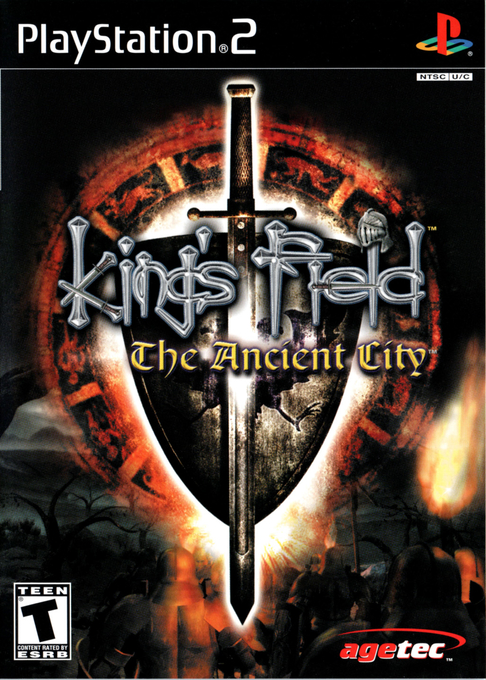
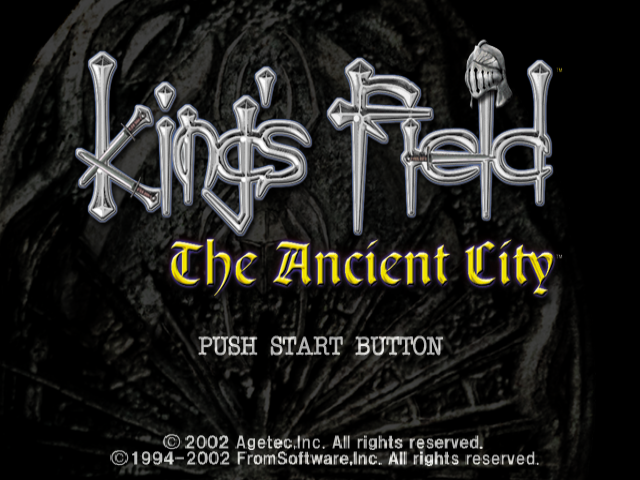
King's Field: The Ancient City for PlayStation 2 is FromSoftware's first-person action role-playing adventure, released in North America by Agetec in March 2002. It is the localized edition of 2001's Japanese King's Field IV, the fourth numbered main entry in the King's Field series. European players received the game as King's Field IV through Metro3D in 2003. Built around solitary exploration rather than party management, the PS2 game sends its hero into a vast, hostile ruin where careful navigation and an understanding of its systems matter as much as winning a fight.
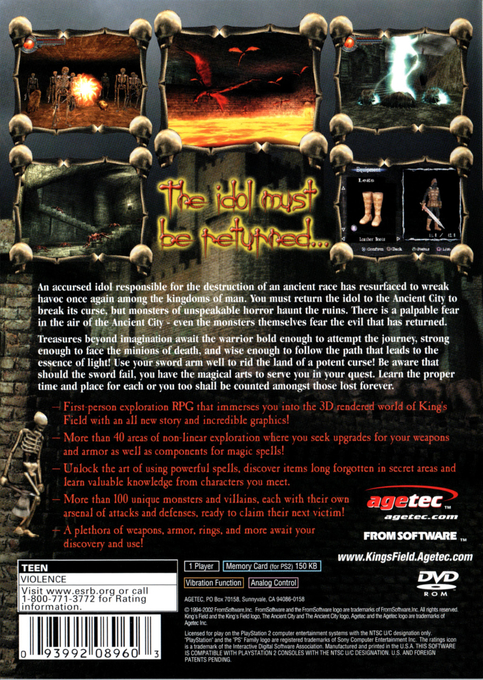
The story begins with the Idol of Sorrow, a cursed object whose return has brought calamity to the kingdom of Heladin. In the North American version, Prince Devian of neighboring Azalin is entrusted with carrying the idol back to the ancient city in the Land of Disaster and ending its curse. The journey gradually uncovers the history of the Holy Land and the peoples connected to its downfall, including the Forest Folk, Earth Folk, and Dark Folk. Rather than presenting its world in a rush of exposition, the game lets its setting emerge through the places, characters, and discoveries encountered along the route.
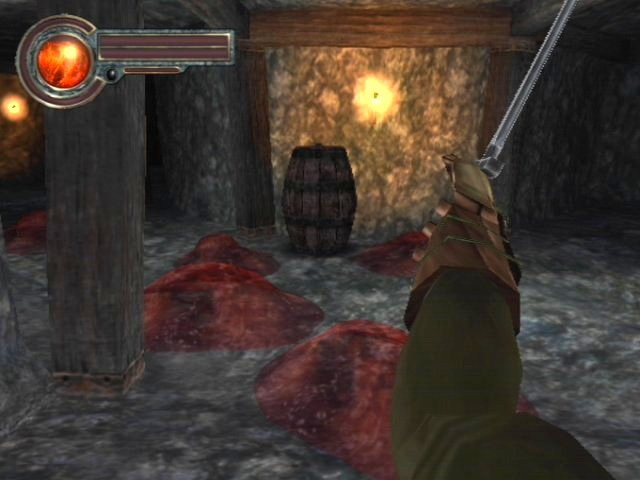
King's Field: The Ancient City is played from the protagonist's eyes. Movement through its connected caverns, halls, waterways, and exterior spaces is deliberate, and the player must watch the surroundings for routes, keys, switches, items, and dangers. Progress is tied to reaching new areas and solving the practical problems that block the way, so an apparently minor find can open a path much later. The game supports one player and keeps the focus on navigating its continuous, labyrinthine environment at the player's own pace.
Combat uses real-time first-person attacks, with a timing gauge governing the strength of weapon swings. Swords, clubs, axes, and bows provide different ways to approach enemies, while repeated use develops proficiency with a weapon type and can unlock stronger attacks. Magic is another important resource: elemental spells can be learned and cast, and continued use improves them while building the character's magical capability. This combination makes equipment choice, distance, and timing significant in encounters instead of reducing every battle to a single attack.
The adventure also gives its equipment physical weight within the world. Weapons and armor deteriorate through use, and a blacksmith can restore damaged gear. Treasures, healing supplies, armor, and spell-related items reward thorough searches, while swimming opens routes beneath the surface for a limited time. Non-player characters are part of the game world rather than untouchable scenery; actions toward them can have lasting consequences. These details reinforce the cautious, exploratory rhythm that distinguishes King's Field from faster-moving action RPGs of its era.
As a PlayStation 2 entry, The Ancient City continued a series that had begun on the original PlayStation while preserving its characteristic first-person perspective and methodical dungeon-crawling structure. The Japanese release is titled King's Field IV, while the North American subtitle identifies the same game as King's Field: The Ancient City. For players exploring FromSoftware's early console catalogue, it stands as a self-contained dark fantasy quest shaped by interlinked level design, sword-and-spell combat, and the slow uncovering of a ruined world's past.
Gallery
Details
- Developer
- FromSoftware
- Publisher
- Metro3D
- Genre
- JRPG
- Players
- 1
- Release Date
- March 25, 2002
- System
- PS2