About
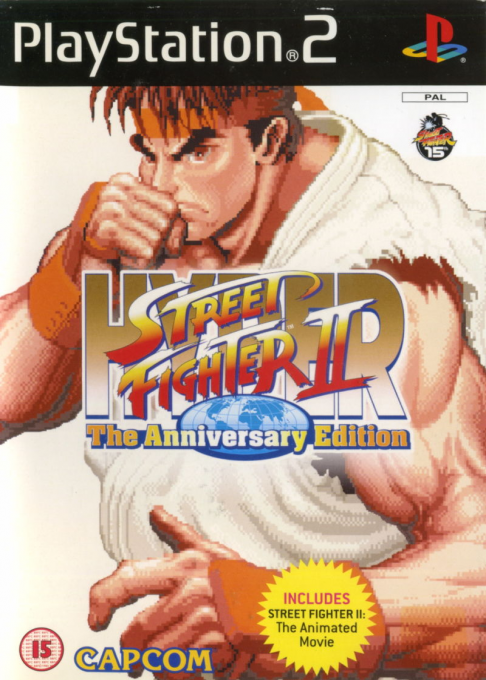
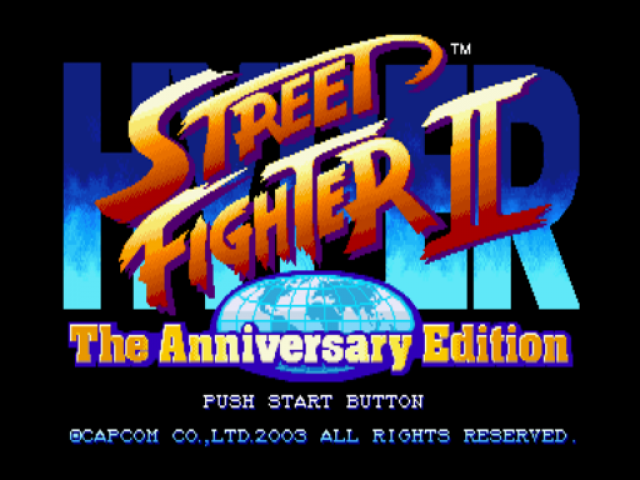
Hyper Street Fighter II: The Anniversary Edition is Capcom's 15th-anniversary celebration of the Street Fighter series, built around the arcade fighting game that helped define competitive one-on-one combat in the 1990s. Released for PlayStation 2 in 2003 in Japan and represented here by its 2004 European release, it is not a simple anthology of separate ports. Instead, Capcom reshaped Super Street Fighter II Turbo into a single crossover edition where fighters can draw their rules, moves, animation, voices, and balance from several distinct stages of Street Fighter II's evolution. The result is both a playable history lesson and an unusually flexible versus game for fans who know how differently each revision handled its cast.
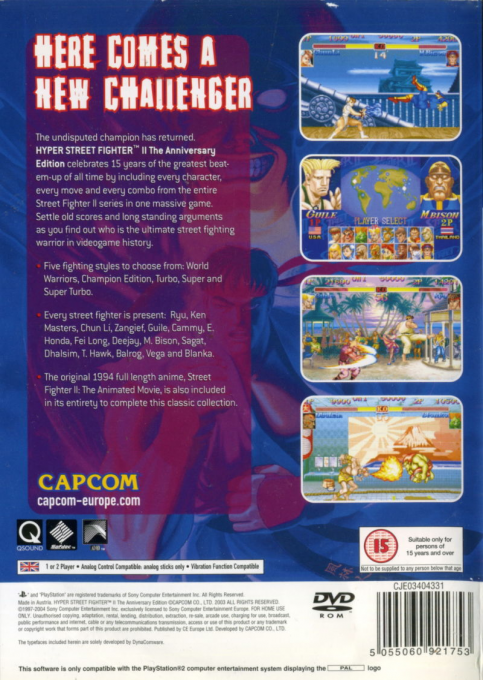
Before a match, players choose one of five styles: the original Street Fighter II: The World Warrior, Street Fighter II': Champion Edition, Street Fighter II' Turbo: Hyper Fighting, Super Street Fighter II: The New Challengers, or Super Street Fighter II Turbo. That choice is more than a cosmetic label. It determines which roster is available and which version of a chosen fighter enters the ring. A World Warrior Ryu, for example, uses the older game's move set, sprites, sound effects, and limitations, while a Super Turbo Ryu plays according to the later revision. This makes it possible to create matchups that never existed in the original arcade releases, pitting different eras of the same long-running cast against one another.
The combined selection spans 17 unique characters and 65 character variations. The earliest style centers on the original eight world warriors, Champion Edition opens the four boss characters to players, Hyper Fighting brings its faster pace and revisions, Super adds Cammy, Dee Jay, T. Hawk, and Fei Long, and Super Turbo introduces Akuma alongside the series' Super Combo system. Every style preserves important period details, from a fighter's available attacks and animation frames to portrait art and voice work. Even the rules retain historical quirks: if both players choose the original World Warrior style, mirror matches are unavailable, reflecting the limitations of that first version.
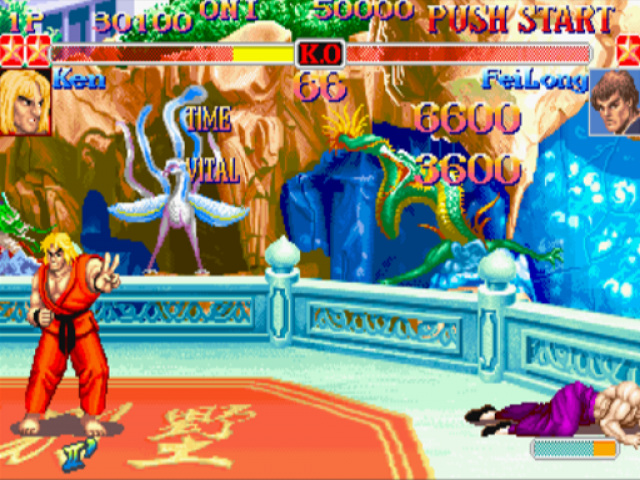
Matches still follow Street Fighter II's immediately recognizable structure. Two combatants trade punches, kicks, throws, special moves, and positional advantages over best-of-rounds bouts, with a health bar, timer, and the constant tension of turning an opening into a damaging sequence. Fireballs, dragon punches, spinning kicks, charge attacks, and throws remain simple to understand but demanding to execute well. The edition-selection system gives those fundamentals extra strategic texture, since an older version of a character may offer a different tool set, speed, or vulnerability than a later one. It rewards curiosity as much as reflexes, inviting players to compare changes that Capcom made across years of arcade competition.
Hyper Street Fighter II uses Super Street Fighter II Turbo as its structural base, so its stages and endings largely follow that landmark release. It also restores selected visual details that disappeared as the series advanced, including elements such as the breakable signs on Ryu's stage and the palm tree in Sagat's. The animated pixel art, expressive character poses, and international stage settings preserve the colorful arcade identity of Street Fighter II, while the mix of older and newer assets makes the game feel like a deliberate retrospective rather than a replacement for a single classic version.
The PlayStation 2 release provides several audio choices for players who want to tune the presentation to a preferred era. Alongside arranged music, it offers selections based on the CPS-1 and CPS-2 arcade soundtracks, allowing the same fights to carry the leaner sound of the early games or the richer later arcade arrangements. Its opening sequence revisits the Super Street Fighter II introduction with imagery from the previous revisions, and the player-select music returns to the Super Street Fighter II theme. These details make the package especially appealing to longtime players, for whom music, announcer calls, and character voices are inseparable from the feel of a particular Street Fighter II version.
Capcom also included an edited version of Street Fighter II: The Animated Movie as a bonus on the home release, extending the anniversary package beyond the fighting modes. The feature underlines the game's archival spirit: Hyper Street Fighter II looks back not only at a sequence of balance updates, but at the wider cultural reach Street Fighter II achieved across arcades, consoles, animation, and competitive play. Its Japanese PlayStation 2 debut was followed by a limited arcade release on Capcom's CPS-2 hardware, making it the final game issued for that arcade platform.
For newcomers, Hyper Street Fighter II: The Anniversary Edition offers a direct route into the mechanics that made the series an enduring fighting-game standard. For experienced players, its real fascination lies in the chance to test the history of Street Fighter II in motion: an old ruleset can meet a new one, familiar characters can behave in surprising ways, and small design decisions become visible through play. The PlayStation 2 edition remains a focused Capcom tribute to an era when each revision of a fighting game could change how players approached the same iconic duel.
Gallery
Details
- Developer
- Capcom
- Publisher
- Capcom
- Genre
- Fighting
- Players
- 1-2
- Release Date
- May 28, 2004
- System
- PS2