About
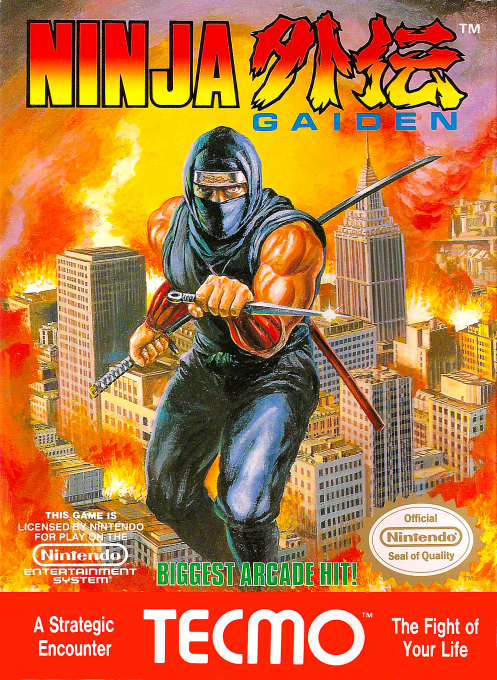
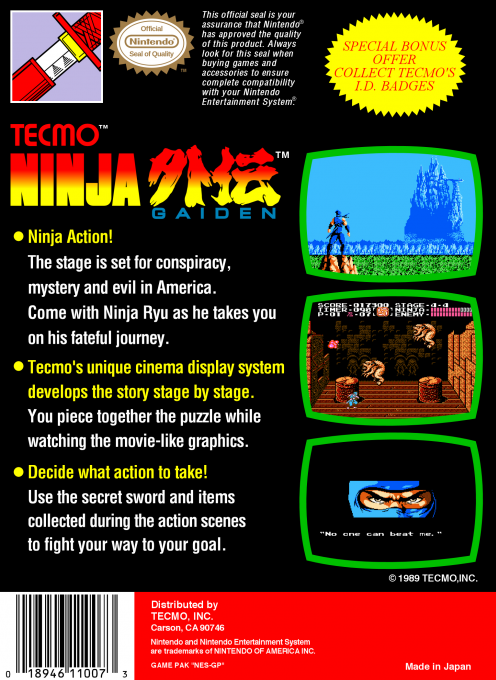
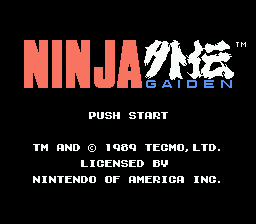
Ninja Gaiden for the Nintendo Entertainment System is Tecmo's single-player action-platform game starring ninja Ryu Hayabusa. Released in North America in March 1989 after its December 1988 Famicom debut in Japan, it is the NES edition of a project developed alongside, rather than as a conversion of, Tecmo's arcade game. The Japanese release is titled Ninja Ryukenden, while European NES players knew it as Shadow Warriors. The adventure follows Ryu from Japan to the Americas after a fatal-looking duel involving his father, Ken Hayabusa, draws him into a conflict over ancient demon statues.
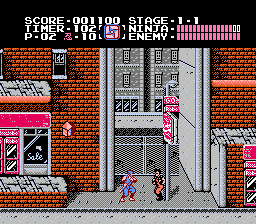
Play proceeds across six Acts comprising 20 side-scrolling stages. Ryu runs, jumps and attacks with the Dragon Sword, and each stage asks the player to negotiate hazards, reach its exit and survive enemies that approach from either direction. His health meter falls when he is struck, and a lost life or expired stage timer sends him back to continue the challenge. At the end of each Act, a boss encounter advances the story. The game is built around precise platforming as much as combat: jump timing, enemy positions and the route through a screen all matter when moving through rooftops, caves, wilderness and the final stronghold.
A defining movement option is Ryu's ability to cling to vertical surfaces. He can hang from walls and use repeated wall jumps to cross narrow shafts or gain height, giving stages a more vertical rhythm than a simple left-to-right run. Ladders offer another route through the scenery, while Ryu cannot use his sword while clinging or climbing. Lamps placed around a stage can be broken for items. These include score bonuses, health recovery, temporary invincibility, an enemy-freezing hourglass, extra lives and pickups that replenish the spiritual-strength gauge used for special techniques.
Ryu's standard sword attack is supplemented by ninpo and projectile weapons that spend spiritual strength. Available tools include throwing stars, returning windmill throwing stars and fire-based techniques, with the selected secondary weapon shown in the status display. The Jump & Slash technique lets Ryu attack downward during a jump, adding another option against enemies or obstacles below. This combination of close-range swordplay, item management and wall movement gives individual screens multiple concerns even as the goal remains reaching the next stage and ultimately confronting the force behind the statues.
The narrative is presented between Acts through Tecmo's cinematic cutscenes, known in the game as Cinema Display. These sequences introduce characters including archaeologist Walter Smith, CIA agent Foster and Irene Lew, and follow Ryu's pursuit of the antagonist Jaquio. The story eventually takes him to an Amazonian temple where the two statues can be used to awaken the demon Jashin. The cutscenes connect the stages into a continuing action story instead of treating each level as an isolated mission, while also establishing the characters and stakes behind Ryu's journey.
Ninja Gaiden on NES should not be confused with the contemporary arcade Ninja Gaiden, which is a beat 'em up with substantially different gameplay. This NES/Famicom game began the original console trilogy, followed by Ninja Gaiden II: The Dark Sword of Chaos and Ninja Gaiden III: The Ancient Ship of Doom. Its NES version later appeared in the Super NES Ninja Gaiden Trilogy compilation and in Nintendo re-releases such as the NES Classic Edition and Nintendo Switch Online's NES library. For players exploring the 8-bit series, this first chapter establishes Ryu Hayabusa, the Dragon Sword and the action-platform approach that its two NES sequels continue.
Gallery
Details
- Developer
- Tecmo
- Publisher
- Tecmo
- Genre
- Platformer
- Players
- 1
- Release Date
- March 2, 1989
- System
- NES

/Puyo_Puyo.png)