About
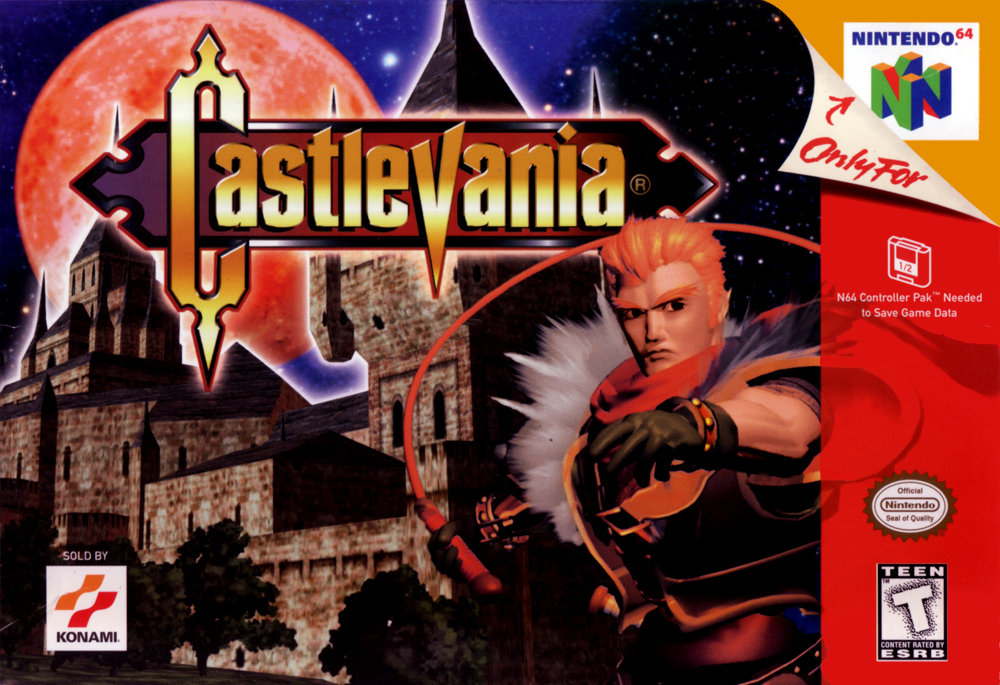
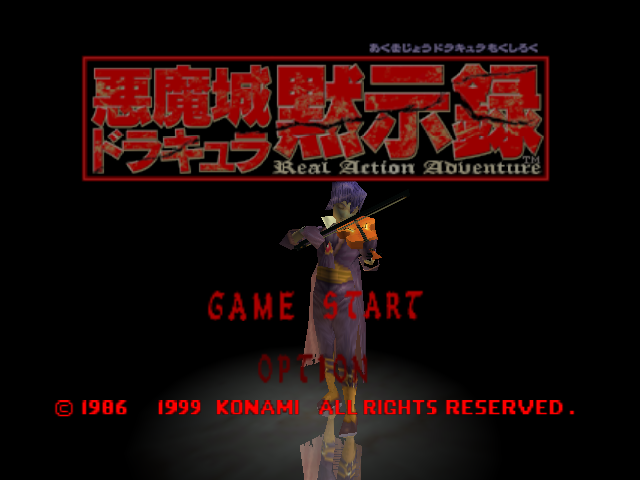
Castlevania, often called Castlevania 64, brought Konami’s vampire-hunting series to the Nintendo 64 in 1999. Developed by Konami Computer Entertainment Kobe and published by Konami, this is the original Nintendo 64 release, not the later expanded Castlevania: Legacy of Darkness. It shifts the series’ familiar Gothic action from side-scrolling stages into a fully three-dimensional adventure, sending its heroes toward Dracula’s castle through misty forests, an abandoned villa, underground passages, clock towers and other hostile corners of Transylvania.
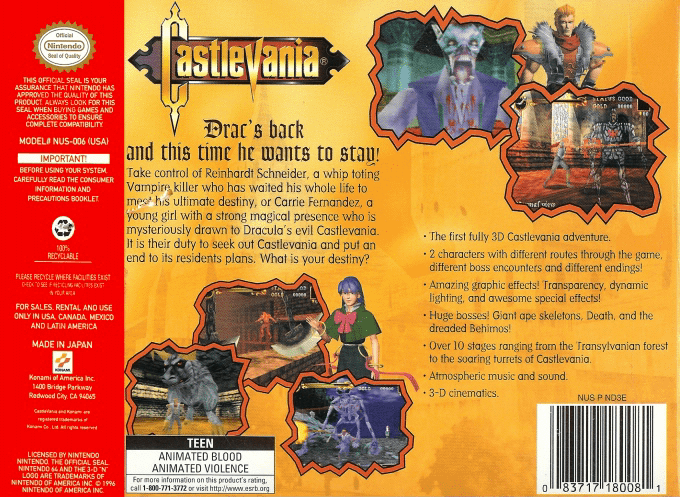
Players choose between two protagonists with separate story routes. Reinhardt Schneider is a whip-wielding descendant of the Belmont clan, while Carrie Fernandez is a young orphan with formidable magical ability. Their approaches give the game a different flavor: Reinhardt relies on the Vampire Killer-style whip for ranged attacks, whereas Carrie fires homing energy orbs. Both can use close-range attacks, find equipment and healing items, and collect the series’ recognizable sub-weapons, including the knife, axe, cross and holy water. Rather than hearts, these secondary weapons consume red jewels.
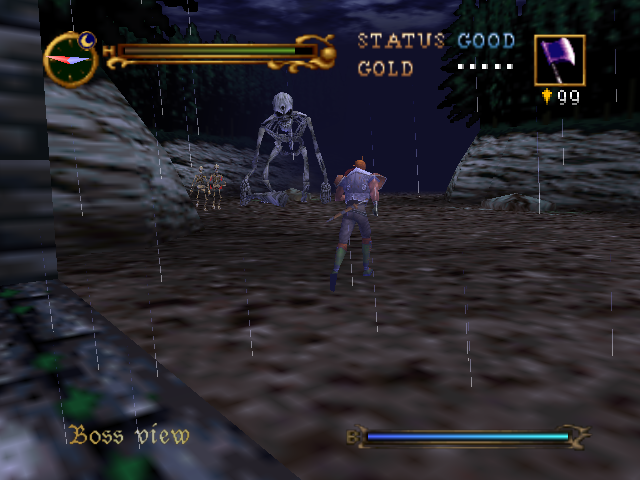
The campaign combines combat, platforming, exploration and puzzle solving. A targeting system helps the heroes confront monsters in 3D spaces, but careful movement is just as important when crossing narrow ledges, riding moving platforms or navigating traps. The adventure regularly turns its own setting into a threat, from crumbling floors and rotating platforms to timed encounters and the hazardous magic-nitro sequence. Large areas such as the Villa and Castle Center encourage players to search for keys, items, clues and characters that can open the way forward.
Its persistent in-game clock is one of Castlevania’s most distinctive ideas. Day and night change as the journey progresses, influencing enemy strength, access to certain doors and the availability of events or conversations. Sun and moon cards can move time forward to sunrise or sunset, while some secrets depend on reaching a location at the right moment. The clock also affects the ending: taking too long to reach the final stretch can alter key story events, giving the game a tangible sense that Dracula’s domain is working against the player.
The story is set in 1852, when Dracula’s return is sensed after a long dormancy. Carrie and Reinhardt enter the Count’s estate to stop him, meeting allies and uneasy figures such as vampire hunter Charles Vincent, the tragic Rosa, the merchant Renon and the mysterious child Malus. Their paths lead through encounters with Dracula’s servants and a succession of supernatural bosses. Character-specific developments and multiple endings give the two campaigns their own emotional turns while keeping the central mission focused on preventing Dracula’s resurgence.
Konami used the Nintendo 64 entry to experiment with a more atmospheric, survival-horror-inflected take on the series. Limited visibility, enclosed monster battles, enemy ambushes and the isolated soundscape emphasize unease as much as direct action. The game offers difficulty settings, though Easy mode ends at Castle Center and directs players to Normal mode to continue further. Hard mode becomes available after meeting its unlock condition, increasing enemy durability and the cost of sub-weapons. North American and PAL cartridges save through a Controller Pak rather than an internal battery save.
The game’s presentation draws on European Gothic imagery. Its environments were inspired by real-world architecture and gardens, including French chateaux, while Dracula’s castle evokes the dramatic silhouette of Mont Saint-Michel. Yasuomi Umetsu created the character designs and artwork. Tomoya Tomita served as sound producer and director, and Masahiko Kimura, Motoaki Furukawa and Mariko Egawa composed the score, which uses ambient electronic textures alongside a violin performance of an arrangement of Bloodlines from Castlevania: Rondo of Blood.
Castlevania was a significant, ambitious transition point for the franchise: its first 3D installment on Nintendo 64, with character selection, time-dependent events and a more exploratory castle adventure. Its camera, precision platforming and controls divided reviewers, but its ominous atmosphere, unusual clock system and set-piece boss encounters have made it a memorable entry for players interested in the series’ move into three-dimensional action. Castlevania: Legacy of Darkness later reworked and expanded the Nintendo 64 material, but this 1999 release remains the separate Reinhardt and Carrie adventure that established the foundation.
Gallery
Details
- Developer
- Konami
- Publisher
- Konami
- Genre
- Platformer
- Players
- 1
- Release Date
- January 26, 1999
- System
- N64