About
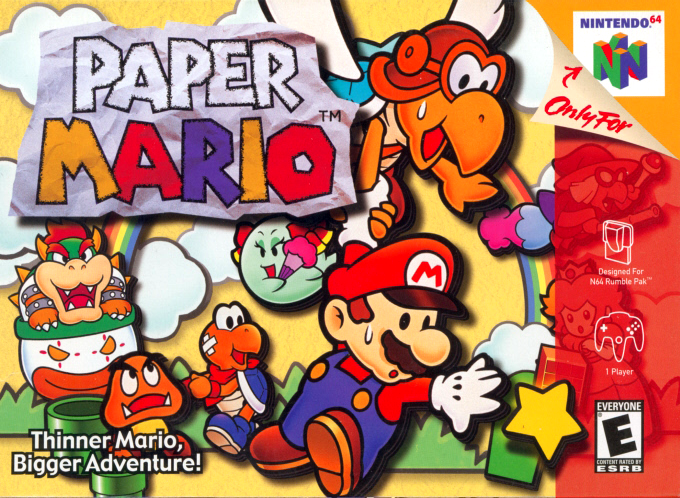
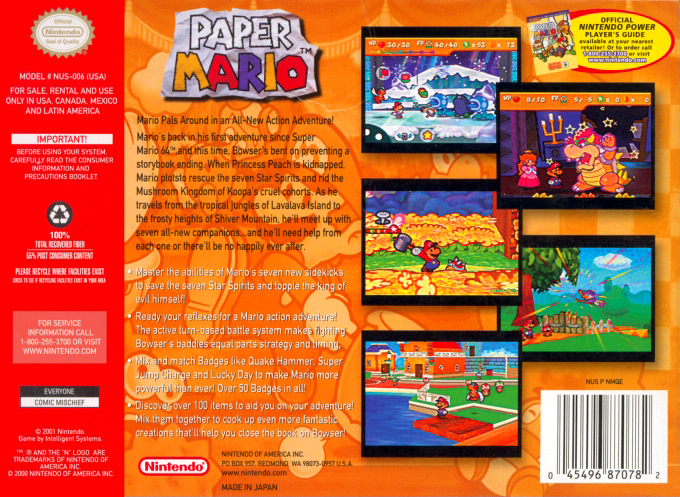
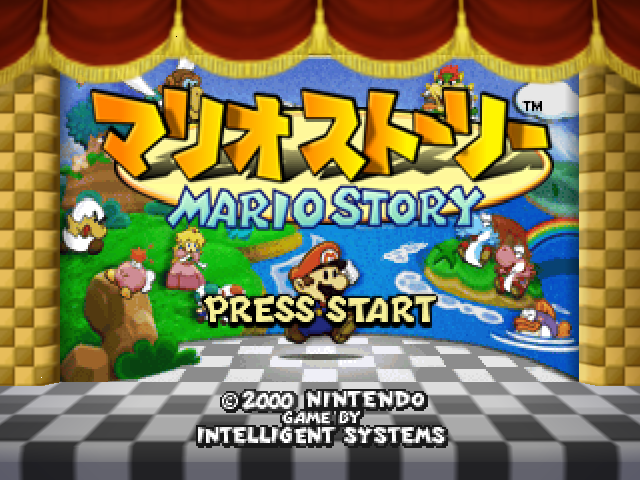
Paper Mario Nintendo 64 is a role-playing adventure developed by Intelligent Systems and published by Nintendo. Released in Japan in 2000 as Mario Story and internationally in 2001, it introduced the paper-styled branch of the Mario series on a Nintendo 64 cartridge. The game combines exploration, conversations and light platforming with menu-driven battles, presenting the Mushroom Kingdom as a colorful storybook world of flat characters and theatrical scenery.
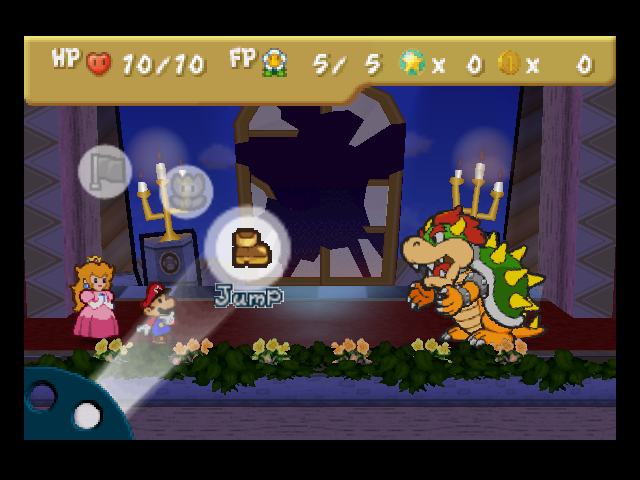
Bowser steals the Star Rod, uses its power to become invincible, raises Peach's Castle into the sky, and imprisons the seven Star Spirits whose power can counter him. After being defeated, Mario begins a journey across the Mushroom Kingdom to free each Spirit and reach the castle. The quest moves through locations including Goomba Village, Dry Dry Desert, Boo's Mansion, a toy-filled chapter, Lavalava Island, Flower Fields, Shiver City, and the Crystal Palace, with townspeople and unusual enemies supplying clues, errands, secrets, and comic detours.
Exploration keeps Mario's familiar jump and hammer at the center of the controls. The A Button handles jumping and talking, while the hammer breaks blocks and opens other routes; the 3D Nintendo 64 environments use these simple moves for switches, gaps, hidden items, and puzzles. Eight partners join the adventure, and one can accompany Mario in the field at a time. Goombario can identify people and foes, Kooper can send his shell across a distance, Bombette can blast fragile walls, Parakarry can carry Mario over wide gaps, Lady Bow can make him transparent, Watt lights dark places, Sushie helps him travel on water, and Lakilester carries him over hazardous ground.
Battles are turn-based but reward timing as well as selection. Mario and his active partner choose jumps, hammer strikes, items, or special techniques; properly timed button presses and controller actions strengthen attacks or soften incoming damage through Action Commands. Victories award Star Points, allowing Mario to raise health, Flower Points for special moves, or Badge Points. Badges are equippable abilities and bonuses, but their Badge Point cost limits how many can be active at once, giving players room to shape Mario around extra attacks, defensive effects, status recovery, or other useful options.
Partners fight alongside Mario without a separate health meter, becoming temporarily unavailable after taking enough damage until they recover. Their battle moves complement their field talents, so choosing a companion matters both in a dungeon and in combat. As Mario frees Star Spirits, he gains access to their powers through a Star Energy meter, adding another set of support and attack options. Hidden Super Blocks can promote partners to stronger ranks, while shops, Toad Houses, collectibles, and optional badge finds encourage examination of the world beyond the main route.
Paper Mario also periodically shifts control to Princess Peach inside Bowser's airborne castle. These short sequences let her investigate Bowser's plans, work with the young star Twink, and try to send useful information to Mario, so the rescue story has a second playable perspective. The original Nintendo 64 release is a one-player game and the first entry in the Paper Mario series; its distinctive visual presentation, partner-focused exploration, timed battle inputs, and chapter-based adventure established ideas revisited by later installments.
Gallery
Details
- Developer
- Intelligent Systems
- Publisher
- Nintendo
- Genre
- JRPG
- Players
- 1
- Release Date
- February 5, 2001
- System
- N64