About
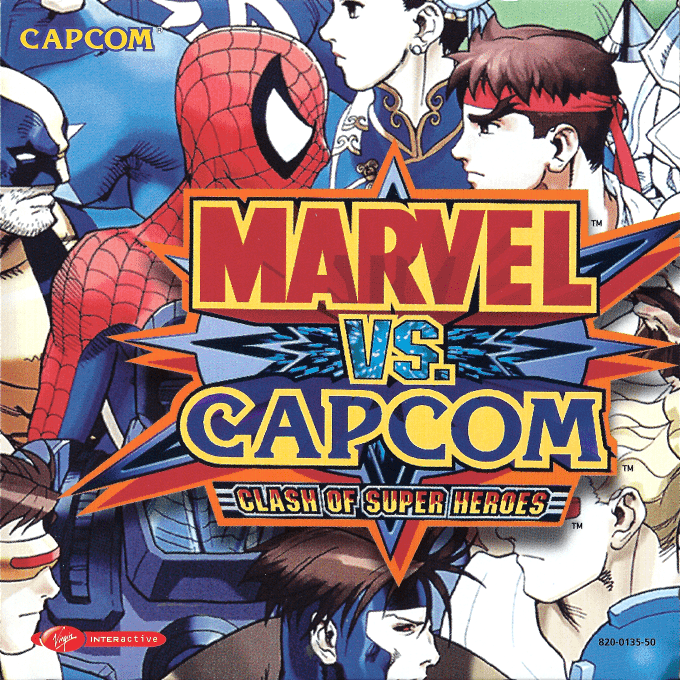
Marvel vs. Capcom: Clash of Super Heroes for Dreamcast is Capcom's fast-paced 2D crossover fighter, bringing Marvel Comics heroes together with characters from across Capcom's game catalogue. The game began in CP System II arcades in 1998, then reached Dreamcast in Japan and North America in 1999; this European release followed on 23 June 2000, with Virgin Interactive handling distribution. It is the third game to carry the Marvel vs. Capcom name and arrives between Marvel Super Heroes vs. Street Fighter and Marvel vs. Capcom 2: New Age of Heroes.
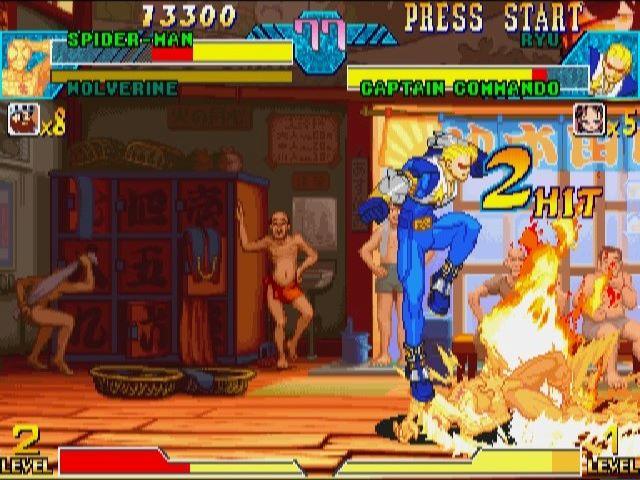
Matches are built around two-character teams. Each player chooses two fighters, controls one at a time, and can switch to the partner during a round. A resting character gradually recovers some health, so deciding when to tag out can matter as much as landing an opening attack. Victory goes to the team that depletes both opposing life bars, or to the side with more health when time expires. Local head-to-head play makes that changing team order and meter management central to every bout.
Combat combines normal attacks, jumping, throws, special moves, air combos and screen-filling Hyper Combos. The Hyper Combo Gauge fills as players fight, then fuels stronger techniques. The Dreamcast version offers control and difficulty options for practice or different skill levels, while the Training mode provides a place to learn move inputs and link attacks before taking them into a match. Its presentation is deliberately exuberant: animated sprites, dramatic special effects and comic-book-styled arenas keep the action readable even when both teams are moving quickly.
Clash of Super Heroes changes the support idea used by its predecessor. Rather than calling the inactive member as an assist, each side is given a limited-use Special Partner for the match. These guest characters come from both Marvel and Capcom worlds and can briefly intervene with their own attacks. The game also introduces the Variable Cross, often called a Duo Team Attack, which brings both selected fighters on screen for a short offensive burst. With the Hyper Combo Gauge available during that sequence, it can turn an advantage into a rapid succession of supers.
The playable cast is notable for widening the Capcom side beyond Street Fighter. Marvel representatives include familiar figures such as Spider-Man, Captain America, Hulk and Wolverine, while Capcom draws from series including Street Fighter, Mega Man, Darkstalkers, Strider and Captain Commando. Ryu, Chun-Li, Mega Man, Morrigan, Strider Hiryu and Captain Commando share the roster with their Marvel counterparts, and selectable hidden variants add further choices. Arcade mode leads through computer-controlled teams to Onslaught, reflecting the Marvel comic storyline used as the game’s final confrontation; completing the mode unlocks a character-specific ending.
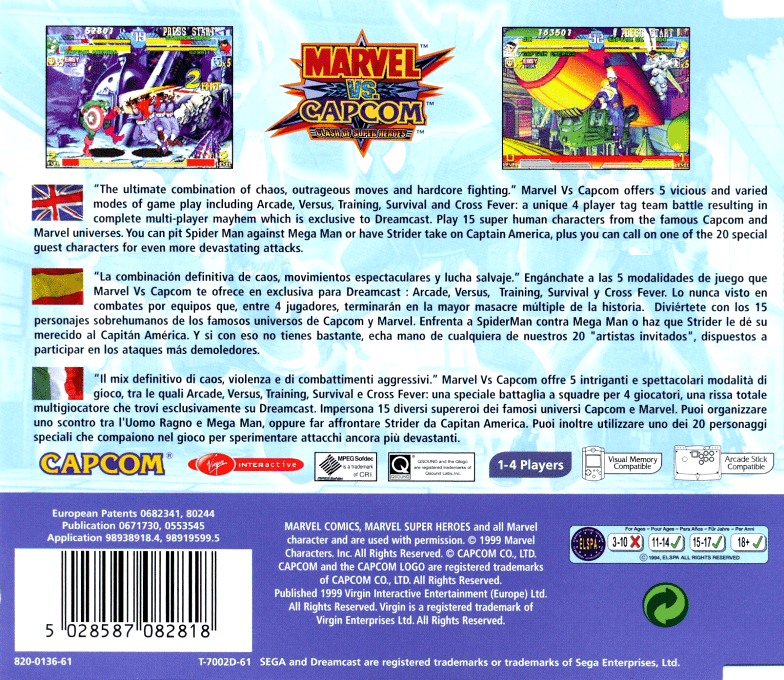
Dreamcast gives the game a particularly feature-complete home format. Arcade, Versus, Training and Survival modes cover solo practice and local competition, while Cross Fever supports four players in two-on-two battles when enough controllers are connected. That mode distinguishes the port from the PlayStation version, whose memory constraints changed much of its team-play structure. For Dreamcast owners, Marvel vs. Capcom: Clash of Super Heroes preserves the arcade game’s tag-based design while setting the immediate stage for the larger three-on-three sequel that arrived in 2000.
Gallery
Details
- Developer
- Capcom
- Publisher
- Virgin
- Genre
- Fighting
- Players
- 1-2
- Release Date
- June 23, 2000
- System
- Dreamcast