About
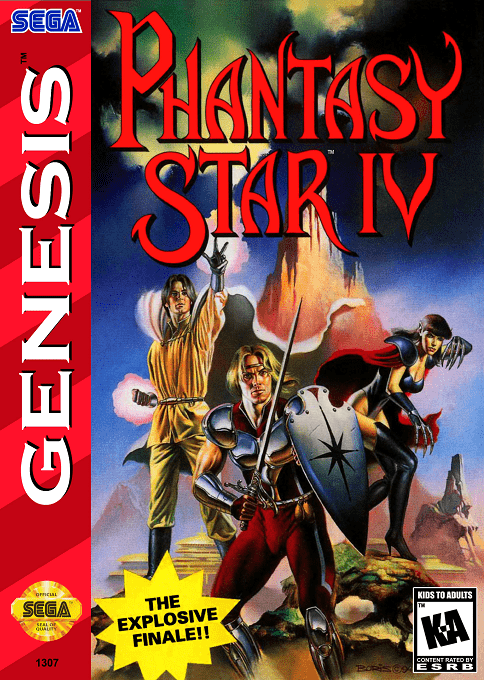
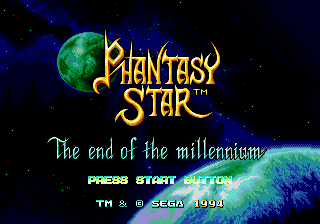
Phantasy Star IV: The End of the Millennium is Sega’s science-fiction role-playing game for the Sega Genesis, known as the Mega Drive outside North America. Developed and published by Sega, it arrived in Japan on December 17, 1993; the North American Genesis edition followed in 1995 under the shorter box title Phantasy Star IV. It is the fourth main entry in the original Phantasy Star sequence and brings that long-running Algol star-system story to a close. The title screen retains the End of the Millennium subtitle, while Japan used the name Phantasy Star: Sennenki no Owari ni.
The adventure begins on Motavia, where experienced hunter Alys Brangwin takes her young apprentice Chaz Ashley on a routine assignment for Piata Academy. The job soon leads them into an ecological crisis: the technology that once helped sustain life on the desert world is failing, while dangerous biomonsters have become increasingly common. From towns, academies, caves, and deserts to the other worlds of Algol, Chaz’s party follows the cause of the disturbances and uncovers connections to the history of the earlier Phantasy Star games. The setting deliberately blends spaceships, satellites, artificial life, swords, and magic-like techniques rather than treating science fiction and fantasy as separate worlds.
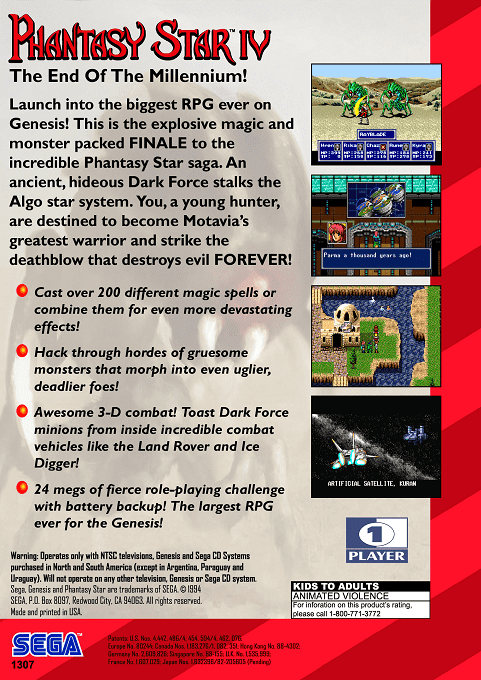
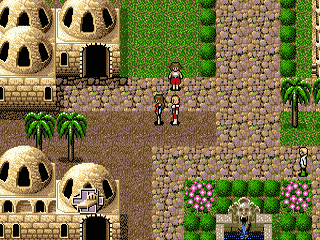
Like its predecessors, Phantasy Star IV is a single-player, turn-based RPG. Players guide the party through overhead towns and field areas, speak with residents, search locations, visit shops, accept Hunter’s Guild work, and enter battles against hostile creatures. Victories earn experience and money, and characters develop through level gains and equipment choices. Weapons, armor, and usable items change how a party performs, while human and other organic characters use Technique Points for special abilities known as Techniques. The game’s command menus make it possible to choose attacks, defenses, items, or Techniques for the active party members before a battle round is resolved.
Combat expands on the series’ established formula with a useful macro system: players can save a set of commands for the current party and call it up again in later fights. The game also supports combination techniques, in which particular abilities used together produce a different result. Party members have distinct equipment options, statistics, and Techniques, encouraging players to account for enemies, health, and resource use rather than relying on one universal approach. Battles are not limited to the travelling group on foot; a few sequences place the party in vehicles while retaining the game’s command-driven combat structure.
Phantasy Star IV tells its story with character portraits and comic-book-like illustrated panels between and during key events, giving major conversations a presentation different from its dialogue windows and exploration screens. Alys and Chaz are joined by a changing group of allies, including the mystic Rune Walsh and the artificial human Rika, and the story’s party changes give later sections a different tactical shape. Optional Hunter’s Guild assignments offer additional goals outside the main route. The broader narrative takes place a millennium after Phantasy Star II, and its events draw on the legacy of Algol’s past conflicts without making the game’s first chapter inaccessible as a standalone adventure.
As the final game of the original four-part Phantasy Star saga, Phantasy Star IV is closely associated with Sega’s 16-bit RPG catalogue. Sega’s Mega Drive Mini material describes it as the series’ fourth installment and culmination, and it later returned in several Sega compilations, including Phantasy Star Collection for Sega Saturn in Japan and collections for newer systems. Those re-releases preserve the original Genesis/Mega Drive adventure rather than replacing it with a remake. For players exploring Sega Genesis role-playing games, Phantasy Star IV remains the conclusion to the classic Algol storyline and a substantial example of how the Mega Drive era combined party-based RPG systems with a space-fantasy setting.
Gallery
Details
- Developer
- SEGA
- Publisher
- SEGA
- Genre
- Action RPG, Fighting
- Players
- 1
- Release Date
- January 1, 1994
- System
- Genesis/Megadrive