About
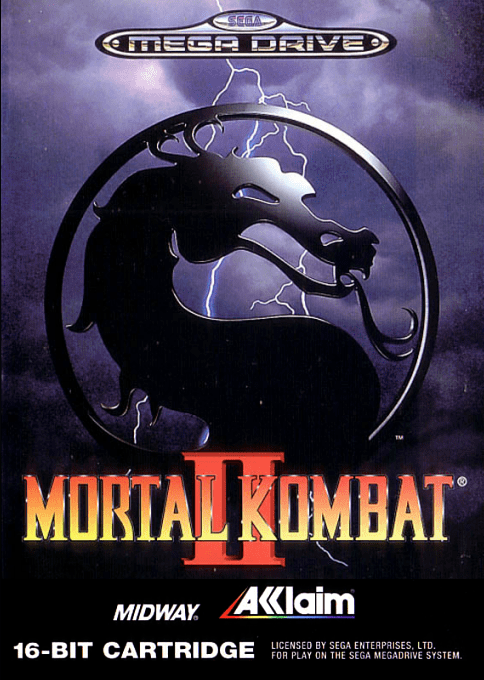
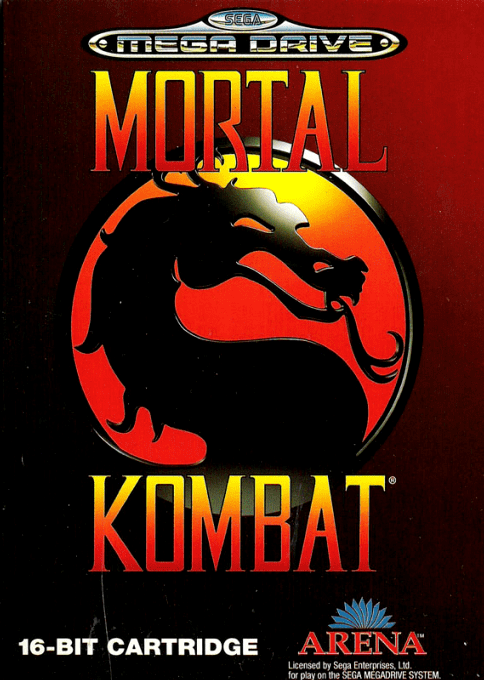
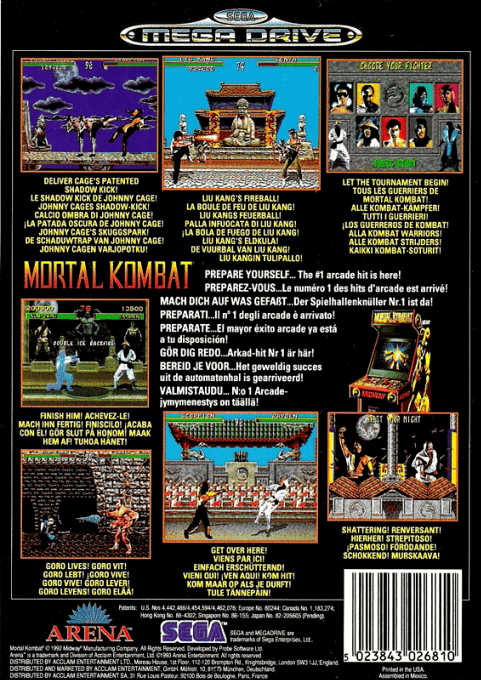
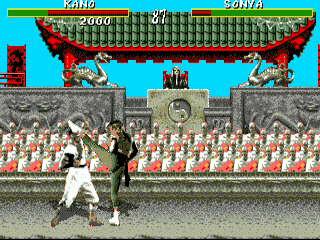
Mortal Kombat for Sega Genesis is Probe Software's 1993 conversion of Midway's landmark 1992 arcade fighting game, published by Acclaim Entertainment during the September "Mortal Monday" home launch. This Genesis/Mega Drive release brings the first chapter of the series' martial-arts tournament to Sega's 16-bit system. Its seven selectable contenders—Liu Kang, Johnny Cage, Sonya Blade, Kano, Raiden, Scorpion, and Sub-Zero—fight beneath the looming threat of Outworld's conquest of Earthrealm.
Each bout is a one-on-one contest in which the first fighter to claim two rounds wins. Players use directional inputs and the Genesis controller's attacks to throw punches, kicks, sweeps, uppercuts, throws, and character-specific special moves. Spacing matters: attacks can behave differently at close range and from farther away, while a dedicated defensive command lets a fighter block and look for an opening. The game supports head-to-head local matches as well as a solo arcade ladder against computer-controlled opponents.
The single-player route begins with battles against the other playable warriors, then raises the pressure through endurance fights in which a second opponent arrives before the player's health meter is restored. A victory path eventually leads to the four-armed champion Goro and the sorcerer Shang Tsung. Between fights, the Test Your Might bonus game asks players to build power with rapid button presses and smash increasingly tough materials, providing a brief change of pace from the tournament matches.
Mortal Kombat's setting centers on Shang Tsung's island, where Earthrealm warriors enter a tournament that has long been controlled by Outworld. Liu Kang represents the Shaolin order, Sonya pursues Kano and the Black Dragon, and the masked rivals Scorpion and Sub-Zero bring their own deadly feud into the arena. Raiden joins the contest as Earthrealm's thunder god and protector. The game's digitized performers gave its fighters a distinctive appearance, while the character roster established figures that would remain central to the franchise.
The Genesis version is especially associated with the home-release debate surrounding Mortal Kombat's violent content. It retains the arcade game's blood and Fatality finishing moves when the player enters its hidden code, whereas the contemporaneous Super NES edition altered much of that material. The conversion also adapts the original five-button arcade layout to Sega hardware, so controls and presentation differ from the coin-op even as the core combat, stages, tournament ladder, and major characters remain recognizable.
Originally an arcade hit, Mortal Kombat became a defining early-1990s fighting game and the foundation for a long-running series of sequels and spin-offs. The Genesis release captures the moment when the game arrived in living rooms alongside versions for other systems, turning its fantasy tournament, digitized combatants, secret techniques, and dramatic finishers into a major part of the era's console rivalry. For players exploring the series' roots, it remains a direct route to the first clash between Earthrealm's champions and Shang Tsung's forces.
Gallery
Details
- Developer
- Probe Software
- Publisher
- Acclaim
- Genre
- Fighting
- Players
- 1-2
- Release Date
- September 13, 1993
- System
- Genesis/Megadrive