About
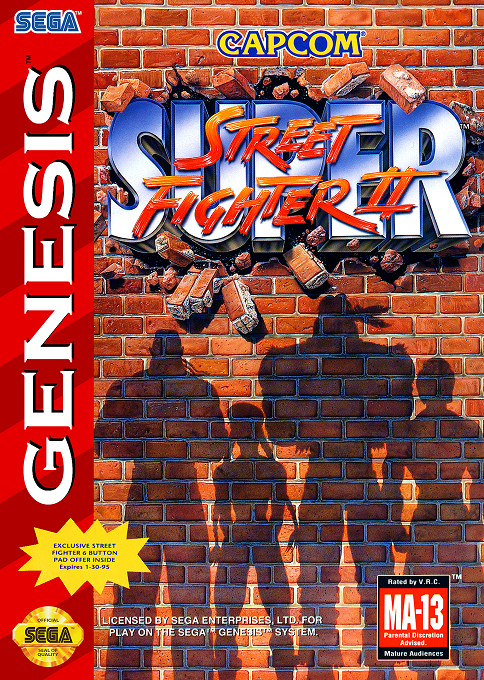
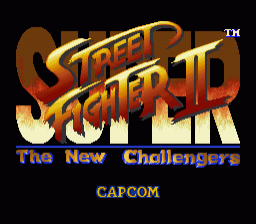
Super Street Fighter II: The New Challengers brought Capcom’s defining one-on-one fighting series to the Sega Genesis/Mega Drive in 1994. This 16-bit release adapts the 1993 arcade update of Street Fighter II, preserving its familiar best-of-three-round structure while expanding the tournament’s cast, presentation, and options. Two players can face each other locally, while solo players travel the world to defeat computer-controlled rivals and the returning Grand Masters. Its Genesis release arrived alongside the Super NES version, making the new arcade roster available on both major 16-bit consoles.
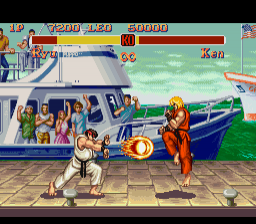
The core is the readable, demanding Street Fighter formula: movement, jumping, crouching, normal attacks, throws, blocks, and character-specific special moves all matter in the narrow space between two fighters. Successful play relies on spacing, timing, anticipating jumps, and turning an opening into reliable damage. Ryu’s Hadouken and Shoryuken, Chun-Li’s rapid kicks, Guile’s Sonic Boom, and Zangief’s grappling game still give the returning World Warriors sharply different rhythms. Capcom also adjusted moves and balance across the established cast, so the game is more than a new selection screen layered on the previous version.
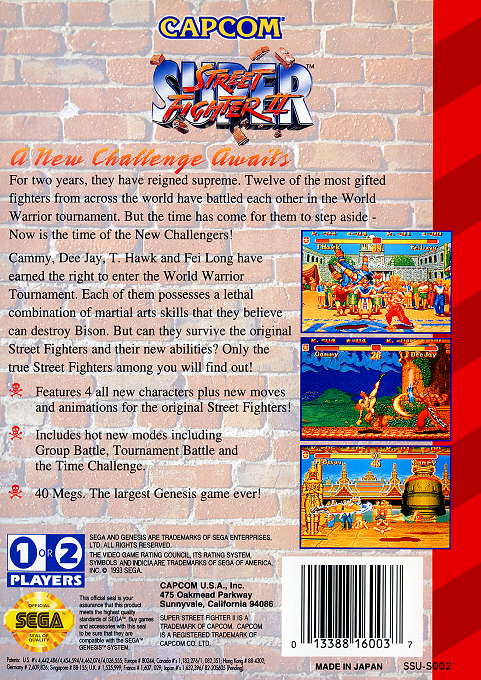
Its major addition is four new challengers: Cammy, the quick British special-forces operative; Dee Jay, the Jamaican kickboxer and musician; T. Hawk, the large Mexican grappler; and Fei Long, a Hong Kong action-film star whose close-range techniques evoke martial-arts cinema. With the original twelve fighters returning, the Genesis game offers sixteen playable characters. Each has a distinct stage, portrait work, animations, fighting style, and ending, and the expanded lineup lets matchups range from projectile duels to pressure-heavy rushdown and commanding throws.
Super Street Fighter II also refreshes the look and sound of the series. Character portraits, stages, interface graphics, opening sequence, music, effects, and announcer work were extensively revised for the arcade update. The Mega Drive/Genesis edition shipped on a 40-megabit cartridge, an unusually large release for the system. It includes extra announcer voice clips, including spoken fighter names, and retains the large sprites, colorful arenas, and instantly recognizable themes that made the series a centerpiece of competitive living-room play. The port reflects the hardware’s strengths while translating Capcom’s CPS System II presentation to a cartridge console.
The home version supplements Arcade and Versus play with options designed for repeated sessions. Players can choose speed settings and tune difficulty, while its Super Battle setting offers Normal and Expert paths; Expert extends the computer opposition from the arcade sequence to all sixteen fighters. Group Battle and point-based challenges bring alternatives to the standard arcade climb, and the console edition includes an eight-player Tournament mode for local brackets. These modes make the game useful both as a focused practice game and as a social competition built around controllers being passed from match to match.
For Genesis and Mega Drive owners, Super Street Fighter II is a substantial snapshot of the series before Super Street Fighter II Turbo introduced later changes such as Super Combos and Akuma. The New Challengers instead focuses on broadening the classic Street Fighter II language: familiar fundamentals, an enlarged roster, revised audiovisual work, and more ways to organize matches at home. Developed and published by Capcom, it remains an important 1994 fighting game for players seeking the final 16-bit console chapter of this particular Street Fighter II update.
Gallery
Details
- Developer
- Capcom
- Publisher
- Capcom
- Genre
- Fighting
- Players
- 1-2
- Release Date
- January 1, 1994
- System
- Genesis/Megadrive