About
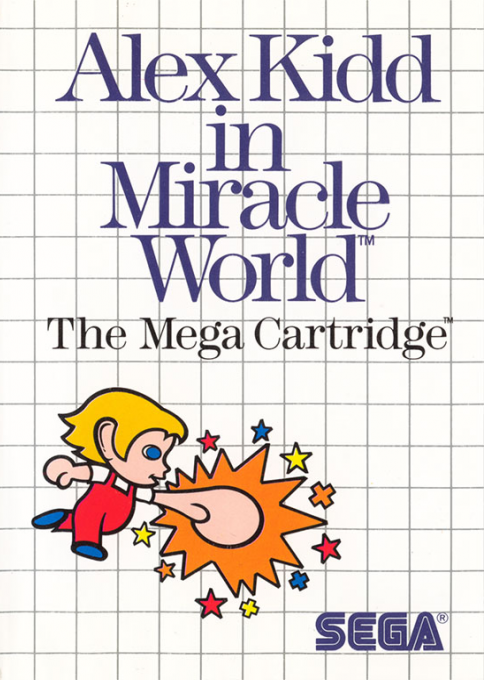
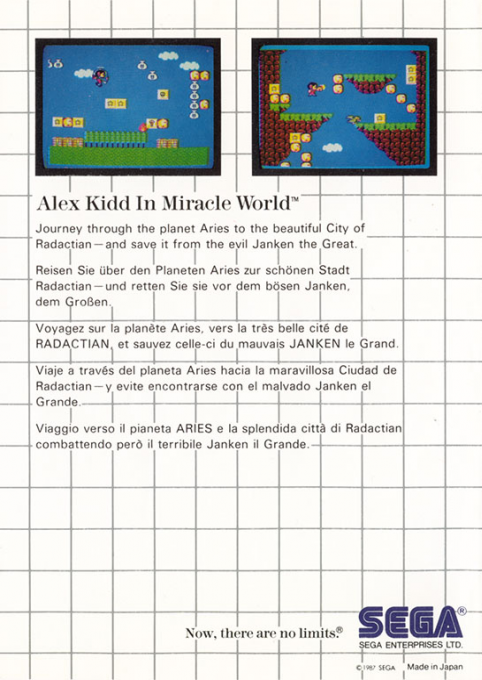
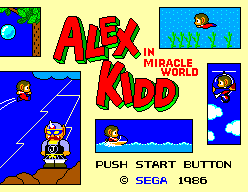
Alex Kidd in Miracle World is Sega's landmark 8-bit platform adventure for the Master System, developed and published by Sega. First released in Japan in 1986 and reaching other territories in 1987, it introduced Alex Kidd as a nimble young martial artist on a quest across the kingdom of Radaxian. The game became inseparable from the Master System's identity in many regions because later Master System and Master System II console models included a built-in version, letting owners begin Alex's journey without inserting a cartridge.
The story sends Alex from Mount Eternal after he learns that the peaceful kingdom is under the control of Janken the Great. Alex discovers his connection to Radaxian's royal family and sets out to recover what has been taken, rescue Prince Egle and Princess Lora, and confront the ruler behind the invasion. Its colorful fantasy setting moves from forests, waterways, caves and villages to more hazardous strongholds, with eccentric enemies and oversized stone heads giving the game a distinct character among early console platformers.
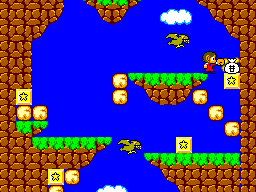
Moment-to-moment play combines side-scrolling action with single-screen challenges, simple puzzles and careful route reading. Alex can jump over hazards and punch enemies or break selected blocks, turning his martial-arts attack into both a combat tool and a way to uncover money, paths and useful objects. A single hit can cost a life, so learning enemy positions, moving platforms, spikes and other traps is central to making progress through the adventure.
Money collected during stages is spent in shops, adding unusual choices to the platforming formula. Players can buy helpful items such as the Power Bracelet, which gives Alex a projectile-like attack, along with vehicles including a motorcycle and the Peticopter for specially designed sections. These purchases can make a difficult stretch easier, but they also ask the player to weigh a limited supply of Baums against the hazards still ahead. Secret areas, item use and changing stage layouts give the journey a more exploratory feel than a straightforward run to the goal.
The game's most famous twist is its use of jan-ken-pon, the Japanese game of rock, paper, scissors. Before or during encounters with Janken's henchmen, Alex must win these sudden contests and then often deal with the opponent in action gameplay. Because failure carries a severe penalty, these meetings make progress feel tense in a way that remains memorable decades later. The design also includes a well-known continue input at the Game Over screen, rewarding players who learn its old-school rules and keep pressing onward.
Alex Kidd in Miracle World is also notable for its place in Sega history. It began as an attempt connected to the Dragon Ball property before Sega reworked the project into an original character and world. In the years before Sonic the Hedgehog became Sega's defining mascot, Alex Kidd provided the company with a recognizable platform hero and a game that demonstrated the Master System's bright visuals, detailed sprites and varied play ideas. Its demanding controls and unforgiving consequences are part of its period character, but its range of mechanics remains a major reason it is remembered.
The original cartridge version and the built-in Master System II version are not quite identical. In the integrated version, the jump and punch button assignments were reversed, and the transition image of Alex eating an onigiri was changed to a hamburger for Western releases. Later reissues have kept the Master System original available to new audiences, including Virtual Console, Sega Vintage Collection and Sega Ages editions. Alex Kidd in Miracle World DX revisited the adventure in 2021, underscoring the lasting appeal of the original Master System classic while preserving its peculiar mix of platforming, shopping, vehicles and rock-paper-scissors.
Gallery
Details
- Developer
- SEGA
- Publisher
- SEGA
- Genre
- Platformer
- Players
- 1
- Release Date
- September 1, 1987
- System
- Master System
/Fifa_International_Soccer.png)