About
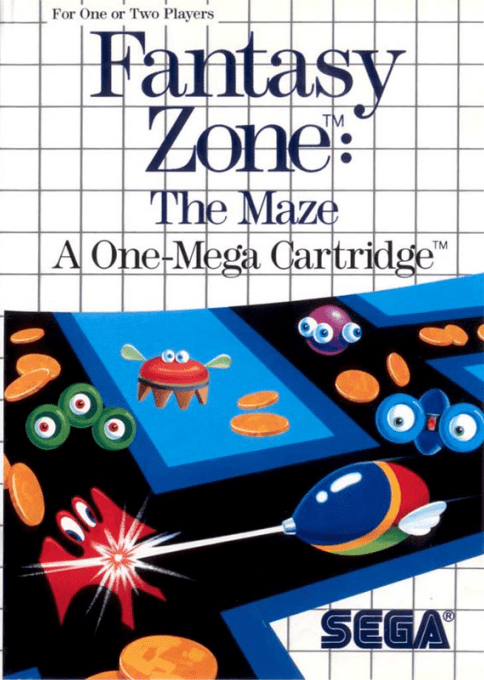
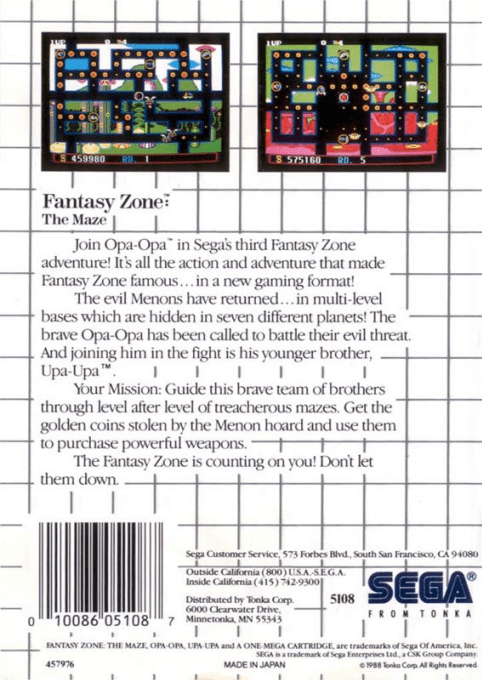
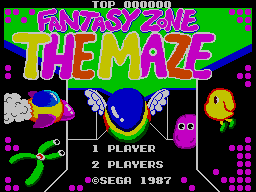
Fantasy Zone: The Maze for Sega Master System is Sega’s colorful maze-action spin-off from the Fantasy Zone series. Developed and published by Sega, it arrived in Japan in late 1987 as Opa Opa, then reached other regions in 1988 as Fantasy Zone: The Maze. Rather than continuing the series’ free-scrolling shooter format, this installment puts its winged hero Opa-Opa into compact, single-screen labyrinths. The result keeps the bright, whimsical look and coin-driven upgrades associated with Fantasy Zone while centering play on route planning, quick reactions, and clearing every collectible from a maze.
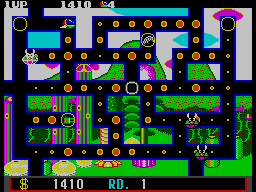
Each board sends Opa-Opa through corridors filled with coins and hostile creatures. Moving in four directions, the player must gather the coins spread across the stage while keeping clear of enemies; collecting the entire field is the condition for moving forward. The smallest coins add to the score, while larger ones are worth more, so a clean sweep involves both survival and scoring. When the coin field has been cleared, the remaining enemies become collectible coins for a short time, turning the end of a stage into a hurried reward grab before the next maze begins.
The game does more than simply ask players to avoid enemies. A generator in the middle of each maze produces replacements for foes that have been defeated. Opa-Opa can fly over the generator’s flashing energy to interrupt the arrival of more small enemies, creating a useful decision between pursuing coins, buying time, or confronting threats. Contact with an enemy costs a life, and a lost Opa-Opa leaves behind a coin that can be collected after returning. This mix of maze clearing, enemy pressure, and score-chasing gives each small playfield a constantly shifting rhythm.
Coins also serve as the game’s currency. Item stations placed around the mazes offer familiar Fantasy Zone-style equipment, including weapons and speed-related upgrades, but an item can only be bought when Opa-Opa has earned enough. A failed attempt displays a refusal and sends the player back to collecting. Weapons make it safer to cut through dangerous corridors, while movement upgrades help reach coins and escape pursuers more efficiently. Choosing when to spend matters because the same coins that raise the score can provide the equipment needed to survive later mazes.
Fantasy Zone: The Maze is also notable for its simultaneous two-player option. A second player joins as Opa-Opa’s younger brother, Upa-Upa, and both characters share the task of emptying the maze while navigating the same enemy-filled space. The cooperative format changes the pace: partners can divide up corridors, help contain danger, and compete informally for coins and pickups. Its stages draw their themes from locations in the original Fantasy Zone, connecting this change of genre to the larger series even as its top-down maze structure gives it a very different feel.
Although the Master System version is the game associated with its overseas title, Sega also issued Opa Opa in Japanese arcades on System E hardware. That arcade edition closely follows the home version, with differences such as enhanced audiovisual presentation and altered layouts. The game later appeared in Sega Ages 2500: Vol. 33 – Fantasy Zone Complete Collection for PlayStation 2 in Japan. For Master System players, Fantasy Zone: The Maze remains an unusual chapter in Opa-Opa’s history: a Sega maze game that reworks the series’ recognizable coins, shops, enemies, and cheerful science-fiction world into a focused arcade challenge.
Gallery
Details
- Developer
- SEGA
- Publisher
- SEGA
- Genre
- Maze
- Players
- 1-2
- Release Date
- January 1, 1988
- System
- Master System