About
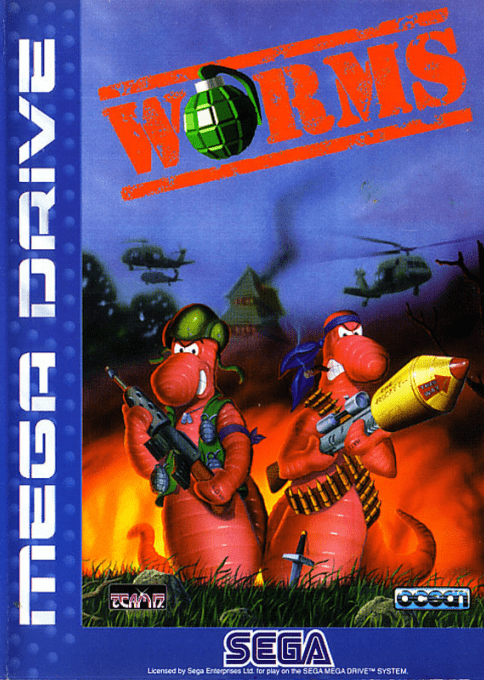
Worms for Sega Genesis and Mega Drive brings Team17's influential turn-based artillery game to Sega's 16-bit console. Published by Ocean Software in 1996 and credited in this version's catalog data to East Point Software, it adapts the debut entry in a series created from Andy Davidson's original concept. The premise is immediately readable but supports a surprising amount of tactical thought: small teams of armed cartoon worms take turns across a destructible 2D battlefield, and the last team with a surviving worm wins.
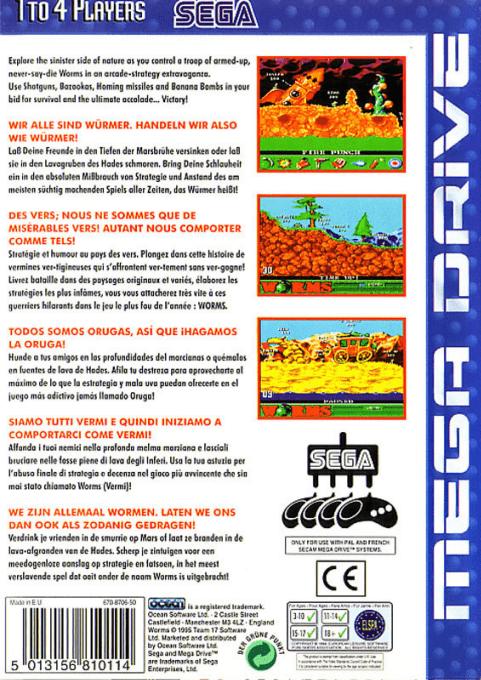
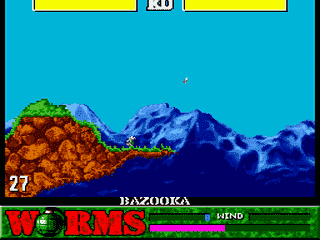
Before a match, players organize teams and set rules that shape the kind of conflict they want. The battlefield is generated from a code, so a familiar terrain theme can still produce different hills, ledges, tunnels and water hazards. That changing geography is central to every game. A high ridge can be a firing position, a narrow shelf can become a trap, and a blast can turn safe ground into a drop toward the sea. Saved or shared level codes also give the generated-landscape idea a memorable social dimension.
A turn gives one worm limited time to move, choose a tool or weapon, aim, and commit to an attack. Walking and jumping are the basic ways to get around, while movement equipment such as the ninja rope and bungee can reach otherwise awkward positions. The essential skill is judging direction and power. A bazooka shot or grenade may arc cleanly into an enemy formation, bounce back into danger, or tear open the terrain under the attacking team. Wind and the layout make simple-looking attacks into calculated risks.
The arsenal turns those decisions into slapstick warfare. Conventional firearms and explosives sit beside outsized comic weapons and useful utilities, while supply crates can change the options available during a match. Explosions remove pieces of the landscape rather than merely playing an animation, meaning that every successful hit can alter routes, cover and future firing angles. Worms lose health when damaged and are eliminated when it reaches zero, but a fall into the water or off the edge can be just as decisive. The resulting matches reward both accurate shots and a good understanding of position.
Worms is designed to be as entertaining to watch as it is to play. The tiny combatants, exaggerated weapons, voice samples and grave markers soften the competitive premise with the series' characteristic absurd humor. A carefully planned turn can be followed by a wildly bad bounce, a misplaced explosive or an unexpectedly useful crate, producing the kind of reversals that make local multiplayer matches easy to remember. Computer-controlled teams provide a way to practice, but the changing terrain and custom rules make human opponents the natural focus.
The Genesis/Mega Drive release belongs to the broad wave of console conversions that followed the original Amiga launch in 1995. Its 1996 cartridge presentation brings the core format to a system better known for fast action games, preserving the deliberate turn structure, random battlefield generation and destructive-landscape tactics that defined the original. It is a useful snapshot of why Worms became a lasting franchise: the controls and objective are approachable within minutes, yet effective play asks for patience, spatial judgment, weapon knowledge and a willingness to accept the occasional spectacular disaster.
For retro strategy fans, Worms on Genesis/Mega Drive offers a compact form of tactical competition in which no two battlefields are quite the same. The game continually asks whether to pursue an immediate hit, protect a vulnerable teammate, reshape the ground, collect a crate or gamble on a difficult long-range shot. That combination of accessible rules, player-made drama and emergent terrain damage gives the 16-bit version its enduring appeal, whether played as a solo challenge against the computer or as a noisy match among friends.
Gallery

Details
- Developer
- East Point Software
- Publisher
- Ocean
- Genre
- Turn-Based Strategy
- Players
- 1-4
- Release Date
- August 8, 1996
- System
- Genesis/Megadrive