About
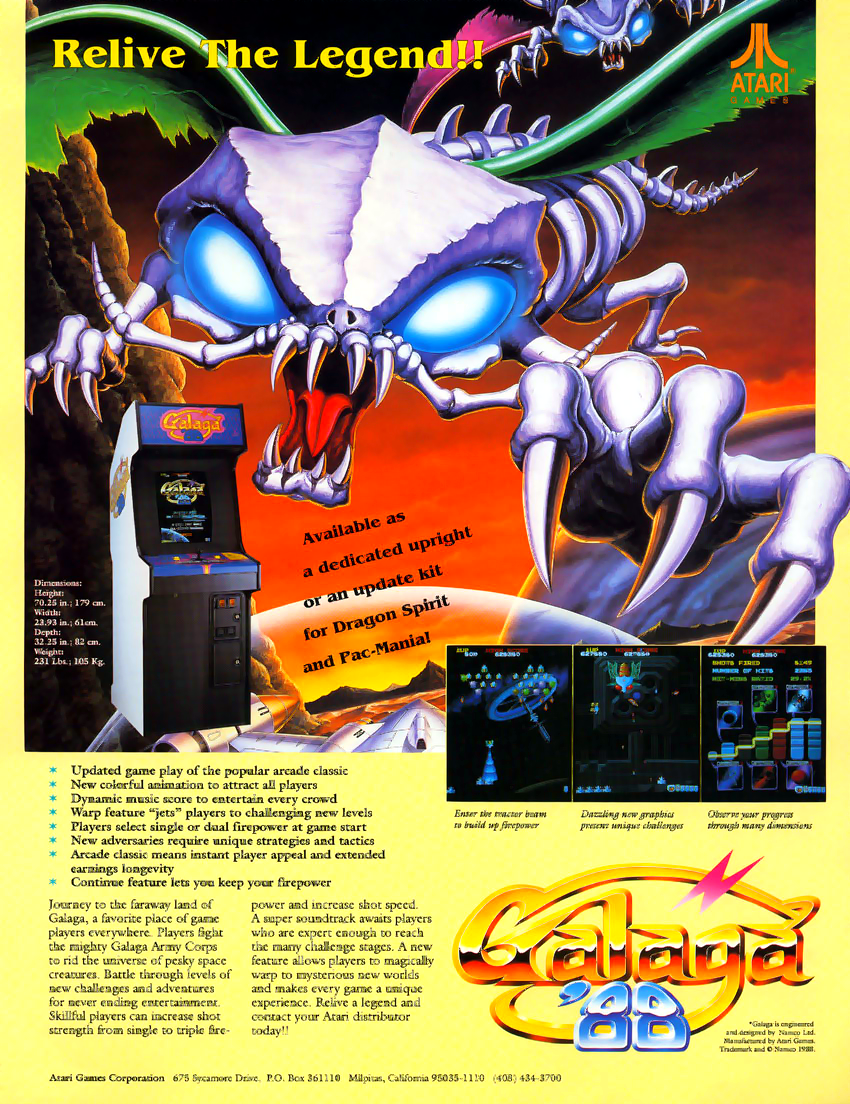
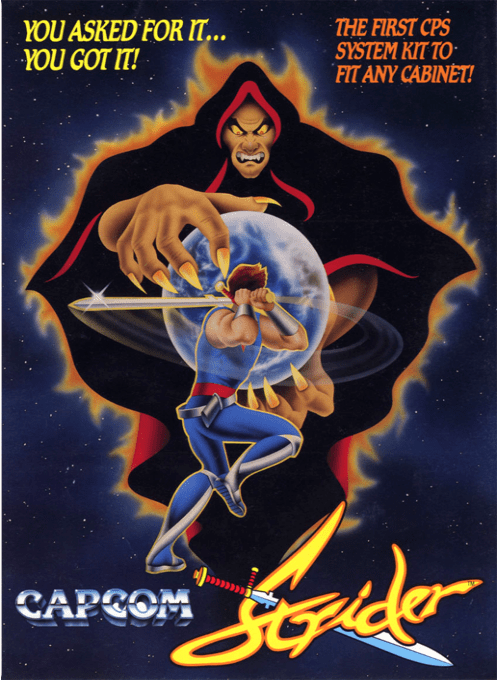
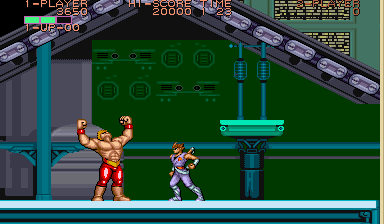
Strider Hiryu (USA, B-Board 89624B-2) is Capcom’s 1989 arcade action-platform game, released outside Japan as Strider. Running on Capcom’s CP System hardware, this U.S. version follows Hiryu, an elite member of the futuristic Striders, on a solo mission against the world-ruling Grandmaster Meio. Its fast, side-scrolling action combines sword fighting, climbing, acrobatic movement, and large-scale set pieces across a science-fiction world set in 2048.
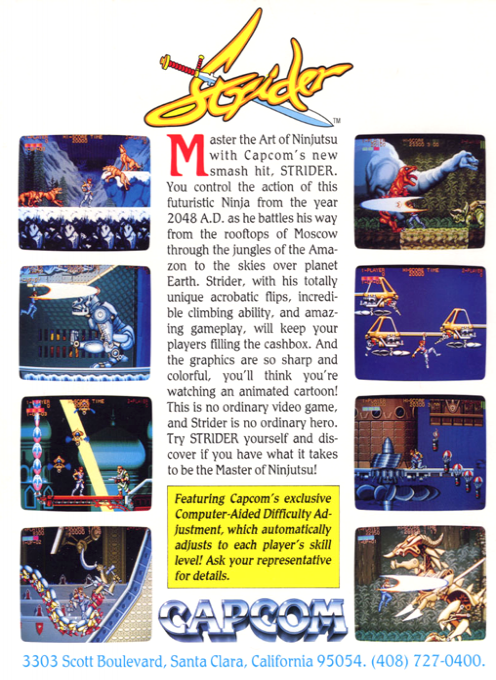
Hiryu uses an eight-way joystick and two buttons: one attacks with his Cypher plasma blade and the other jumps. The simple control layout supports a surprisingly mobile hero. He can make standing or forward-flipping jumps, slide through low openings and enemies, and use his blade during movement. Special surfaces let him catch on and travel beneath platforms or across walls and ceilings with a hook, turning vertical routes and escapes into an important part of surviving each area.
The arcade game moves through five distinct locations: the Grandmaster’s capital, the Siberian wilderness, the airborne battleship Balrog, an Amazonian jungle, and the Third Moon, Meio’s stronghold between Earth and the Moon. Each area is split into timed sections with checkpoints, hostile soldiers and machines, environmental hazards, and boss encounters. Hiryu’s health starts at three units, while falls, depleted health, and expired time all cost a life; continues allow a new attempt after the supply of lives is exhausted.
Carried item boxes provide much of the game’s tactical variety. Pickups can extend the Cypher’s reach for a limited number of strikes, restore or expand health, grant an extra life, or briefly make Hiryu invulnerable while adding attacking shadow images. He can also enlist robotic Options: small support droids, a robotic tiger, and a hawk. These companions attack alongside him and help make a run through crowded screens more manageable without replacing the need for precise movement.
The original arcade Strider Hiryu was developed and published by Capcom as part of a broader collaboration involving the character’s manga debut, although the arcade game and the separately made NES game tell different versions of the premise. Its rhythm comes from rapidly changing scenery and situations rather than a single repeated arena, moving from urban infiltration to wilderness, airship, jungle, and space-bound confrontation. The game’s striking hero and futuristic setting also established the foundation for the later Strider series and Hiryu’s crossover appearances.
This record represents the U.S. B-Board 89624B-2 arcade revision rather than a home adaptation. It is the export release on Capcom’s CP System, with an English Strider title treatment; the Japanese arcade release is titled Strider Hiryu. Later conversions and sequels should not be mistaken for this coin-operated original, whose two-button controls, stage order, and five-stage campaign define the arcade experience.
Gallery

Details
- Developer
- Capcom
- Publisher
- Capcom
- Genre
- Fighting, Platformer
- Players
- 1-2
- Release Date
- January 1, 1989
- System
- Arcade