About
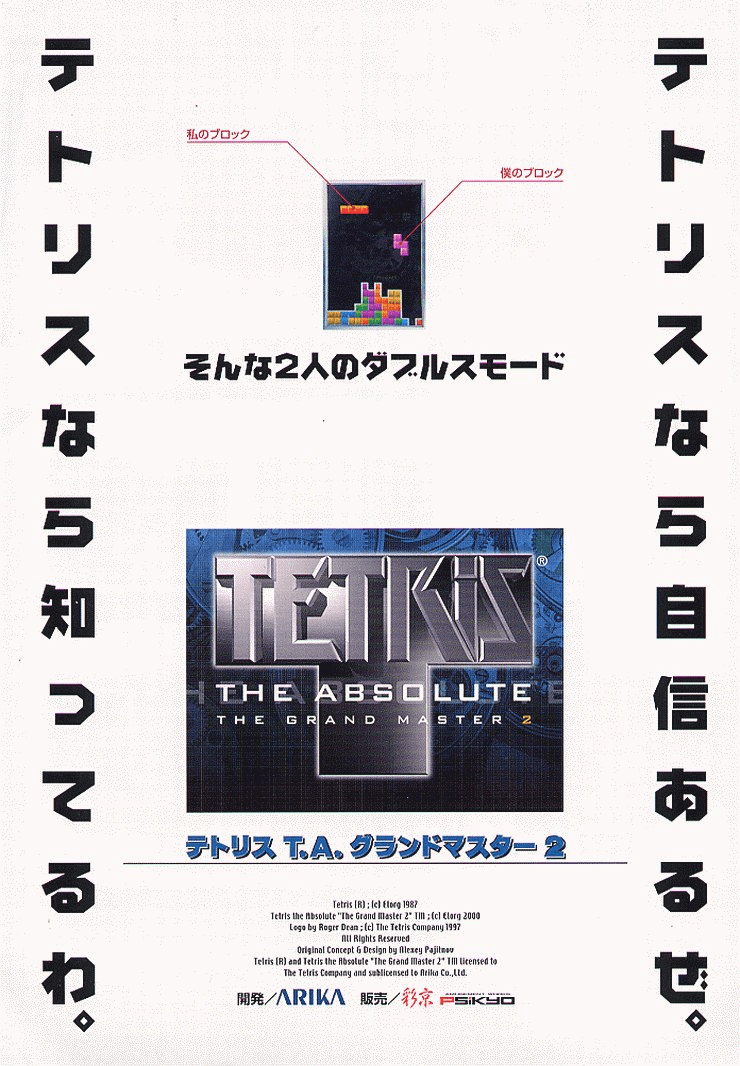
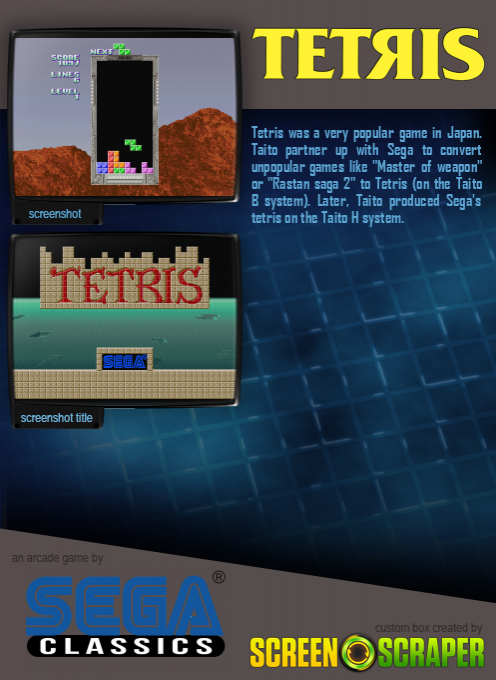
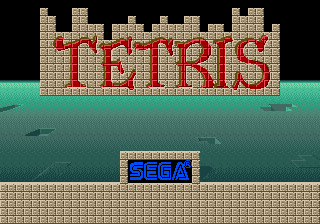
Tetris (set 4, Japan, System 16A, FD1094 317-0093) is Sega's 1988 Japanese arcade version of the landmark falling-block puzzle game. Developed and published by Sega for its System 16A hardware, this particular entry refers to a Japanese program set rather than a separate sequel. It brought Tetris's instantly recognizable challenge to arcade cabinets: arrange descending four-square pieces across a vertical well, complete horizontal rows, and keep the stack from reaching the top.
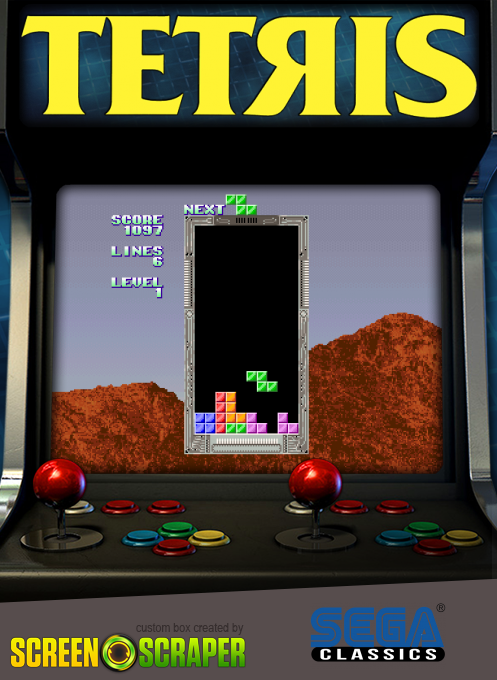
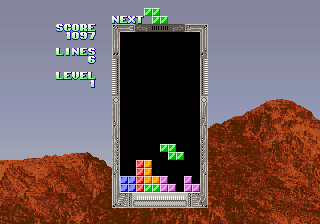
The rules are easy to understand but demand quick decisions. Seven colored tetromino shapes descend into a 10-by-20 playfield, and the player uses the joystick to guide each piece left or right, presses down to make it fall faster, and uses the buttons to rotate it into position. Filled horizontal lines disappear, opening space and awarding points. A poorly placed shape can leave awkward gaps, so success depends on reading the pile, preserving useful openings, and choosing whether to place a piece safely now or risk a more valuable setup.
Clearing several lines together is central to the scoring chase. The most rewarding play is a four-line clear, made by dropping the long straight piece into a one-column gap; in Tetris terminology, that move is a Tetris. As lines vanish, the level rises and the pieces accelerate, steadily reducing the time available to position them. Sega's arcade version reaches its top falling speed at level 15, turning the measured organization of the opening stages into a test of reflexes, anticipation, and controlled recovery.
A next-piece display gives players a brief look ahead, making planning part of every turn. The game does not ask players to finish a fixed adventure or defeat a final enemy. Instead, its lasting objective is survival and score improvement: build compactly, clear rows efficiently, and avoid creating holes that cannot easily be repaired. That focused design makes every session different even though the basic controls and playfield remain constant.
Tetris supports one or two players in the arcade setting. Its colorful blocks, quick feedback from line clears, and simple joystick-and-button control scheme made the cabinet approachable for newcomers while leaving room for experienced players to chase deeper scores. The System 16A edition is one of several 1988 Sega arcade hardware versions, but its FD1094 317-0093 designation specifically identifies this Japanese System 16A set in arcade catalogues.
Sega's 1988 Tetris became a major arcade success in Japan and remained a long-running attraction. Its play style helped establish familiar conventions for Japanese arcade Tetris, from the down control and rotation button to the escalating-speed endurance format. For players exploring classic arcade puzzle games, this System 16A release captures the direct appeal that made Tetris a worldwide staple: a few falling shapes, a crowded board, and another chance to find the perfect line clear.
Gallery
Details
- Developer
- SEGA
- Publisher
- SEGA
- Genre
- Tile-Matching Puzzle
- Players
- 1-2
- Release Date
- December 1, 1988
- System
- Arcade