About
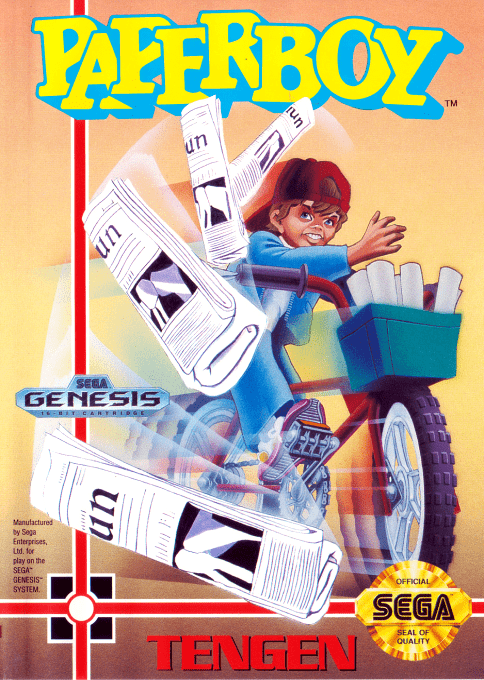
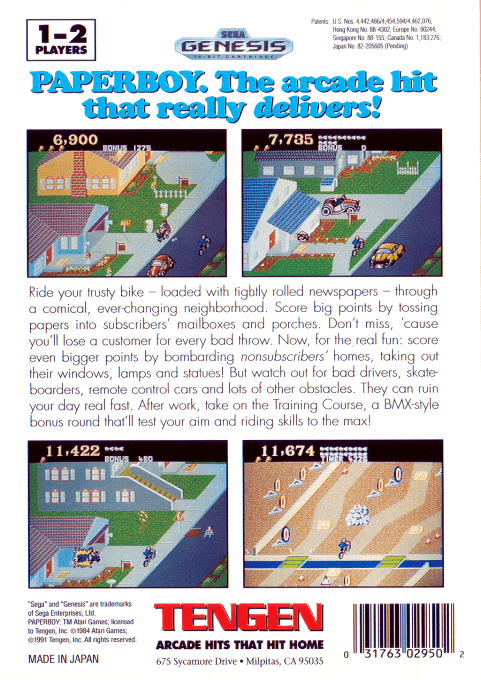
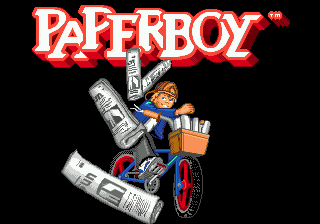
Paperboy for Sega Genesis and Mega Drive is a home-console version of Atari Games' newspaper-delivery arcade hit. Developed by MotiveTime and published by Tengen, it reached the system in the early 1990s, with releases in North America and Europe and a Japanese edition in 1992. The game turns a familiar neighborhood job into an isometric action challenge: guide a bicycle-riding paper carrier along a hazardous suburban route, make deliveries to paying customers, and try to survive a full working week.
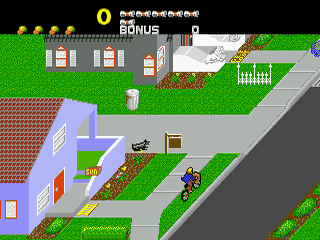
Each round follows one side of a street viewed from an angled overhead perspective. The paperboy pedals from house to house while the road scrolls diagonally beneath him. A directional pad steers the bicycle and regulates its pace, while the controller buttons send newspapers toward porches and mailboxes. Accurate throwing is important, but movement matters just as much. Cars, pedestrians, animals, rolling objects and other surprises can knock the rider from the bike, so a successful run demands quick corrections as well as careful aim.
The route begins with a set of subscribers marked by their brightly colored homes. Delivering a paper cleanly keeps a customer happy, whereas missed deliveries or accidental damage can cost that address its subscription. Houses that do not receive the Daily Sun provide a mischievous alternative target: papers can break windows and strike outdoor objects for extra points. This mix of responsibility and temptation gives Paperboy its distinctive rhythm, asking players to protect their delivery business while still exploiting safe opportunities to build a score.
Paper bundles lying along the street replenish the limited supply carried at the start of a run. Their placement encourages players to plan their position instead of simply riding down the center of the road. Reaching the end of a route leads to the training course, a separate bonus section with ramps, targets, walls and other features. There, the rider can throw freely at targets and attempt jumps without the delivery-day pressure, converting precision and timing into additional points before the next route begins.
The game is organized as seven increasingly demanding days, from Monday through Sunday. Paperboy offers Easy Street, Middle Road and Hard Way settings, with the tougher choices raising the point values while making the neighborhood less forgiving. The final Sunday papers are heavier, changing their flight and making delivery timing more difficult. A game can end through lost lives, the loss of every subscriber, or by completing the week, so the player is always balancing immediate score chasing against the need to preserve customers and avoid crashes.
MotiveTime's Genesis version brings the arcade concept to Sega's standard control pad rather than the original cabinet's unusual bicycle-handlebar controller. That change makes steering and throwing conventional console actions while retaining the diagonal street layout, the delivery/training-course structure and the recognizable neighborhood hazards. The port is part of a wide family of Paperboy conversions that appeared on computers and consoles after the 1985 arcade original, but its MotiveTime development and Tengen publishing distinguish it from the versions made for other Sega hardware.
Paperboy's appeal comes from the way its simple premise produces competing priorities. Staying alive, collecting bundles, preserving subscribers, lining up throws and chasing breakage points all share the same short stretch of road. Its suburban setting, exaggerated obstacles and alternating delivery and practice sections give the Genesis game a character unlike a conventional racing or shooting game. For players exploring Sega's early-1990s library, Paperboy offers a compact arcade-style test of steering, timing and split-second decision-making built around an everyday job made deliberately chaotic.
Gallery
Details
- Developer
- Motivetime
- Publisher
- Tengen
- Genre
- Other Sports
- Players
- 1-2
- Release Date
- February 1, 1992
- System
- Genesis/Megadrive