About
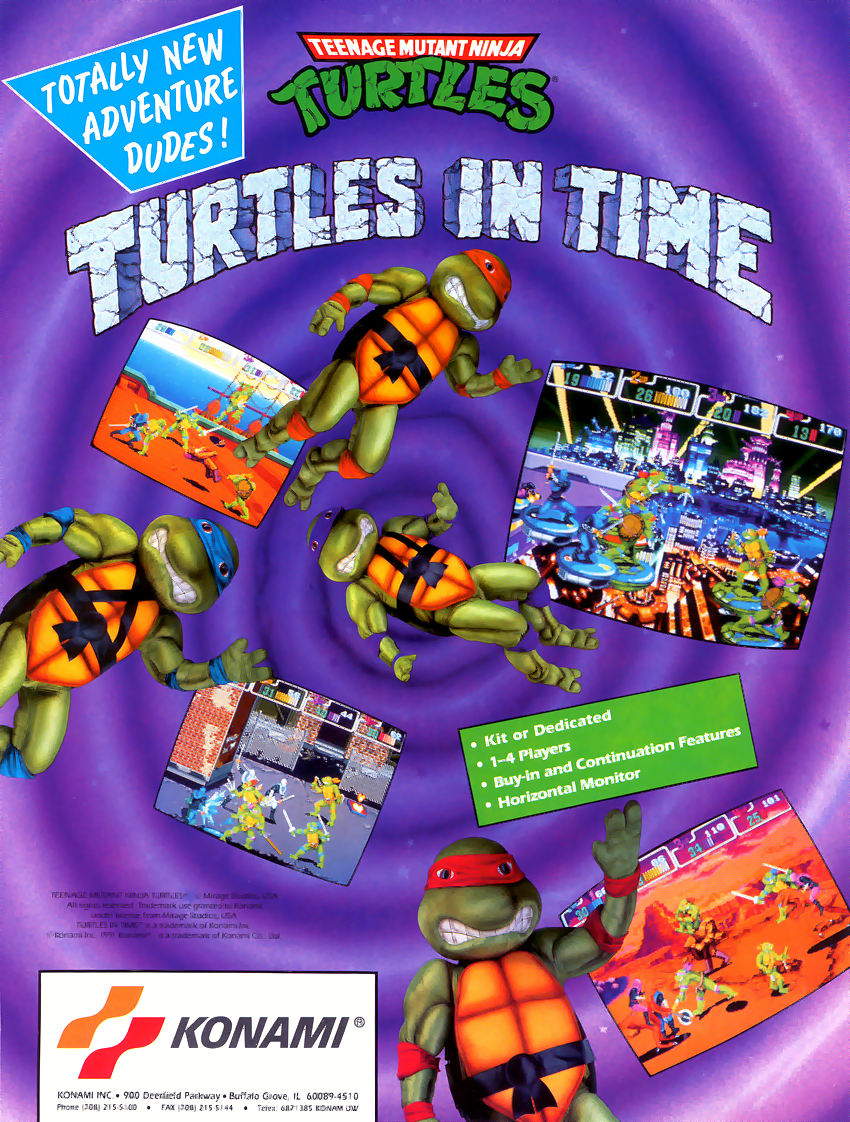
Life Force US arcade is Konami's 1986 scrolling shooter, released in North America under a title that distinguishes this version from the Japanese and European arcade game Salamander. A Gradius spin-off, it sends one or two players into a fast-moving science-fiction assault in which the familiar space-war setting is framed as a mission through a gigantic infected life-form. Konami developed and published the coin-op, pairing its vivid audiovisual style with a structure that shifts between side-view and overhead action.
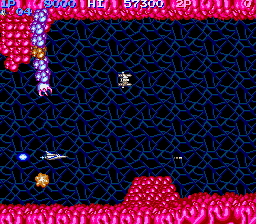
The arcade game alternates horizontal and vertical scrolling across six stages. Players pilot compact fighters through enemy formations, narrow passages, large environmental hazards, and a guardian encounter at the end of each area. The changing viewpoints are central to the design: a route that demands careful left-to-right navigation can give way to a vertically advancing battlefield, so threat placement and the available room to maneuver constantly change. The result keeps the basic shoot-'em-up objective clear—survive, destroy the opposition, and reach the next zone—while varying how the player reads the screen.
A two-player simultaneous mode gives the second pilot a ship of their own, making Life Force a cooperative arcade challenge as well as a solo one. Both players can collect capsules released by selected enemies and immediately turn them into upgrades. These pickups can increase speed, add missiles, replace the main shot with a laser or pulse-style wave attack, supply a protective shield, or add trailing support units known as Multiples. The weapons can be layered in useful combinations, although the laser and pulse weapon occupy alternative roles rather than operating together.
That direct pickup arrangement separates the original arcade-style system from the selection gauge associated with many other Gradius games. It also makes each capsule in a busy formation an immediate tactical decision: pursuing an upgrade may expose a ship to collision or enemy fire, while losing a life can greatly reduce its offensive reach. Multiples mirror the ship's movement and firing, allowing a practiced player to cover more of the screen and attack from safer angles. The balance between firepower, position, and survival gives the compact stages their arcade tension without changing the fundamental simplicity of the controls.
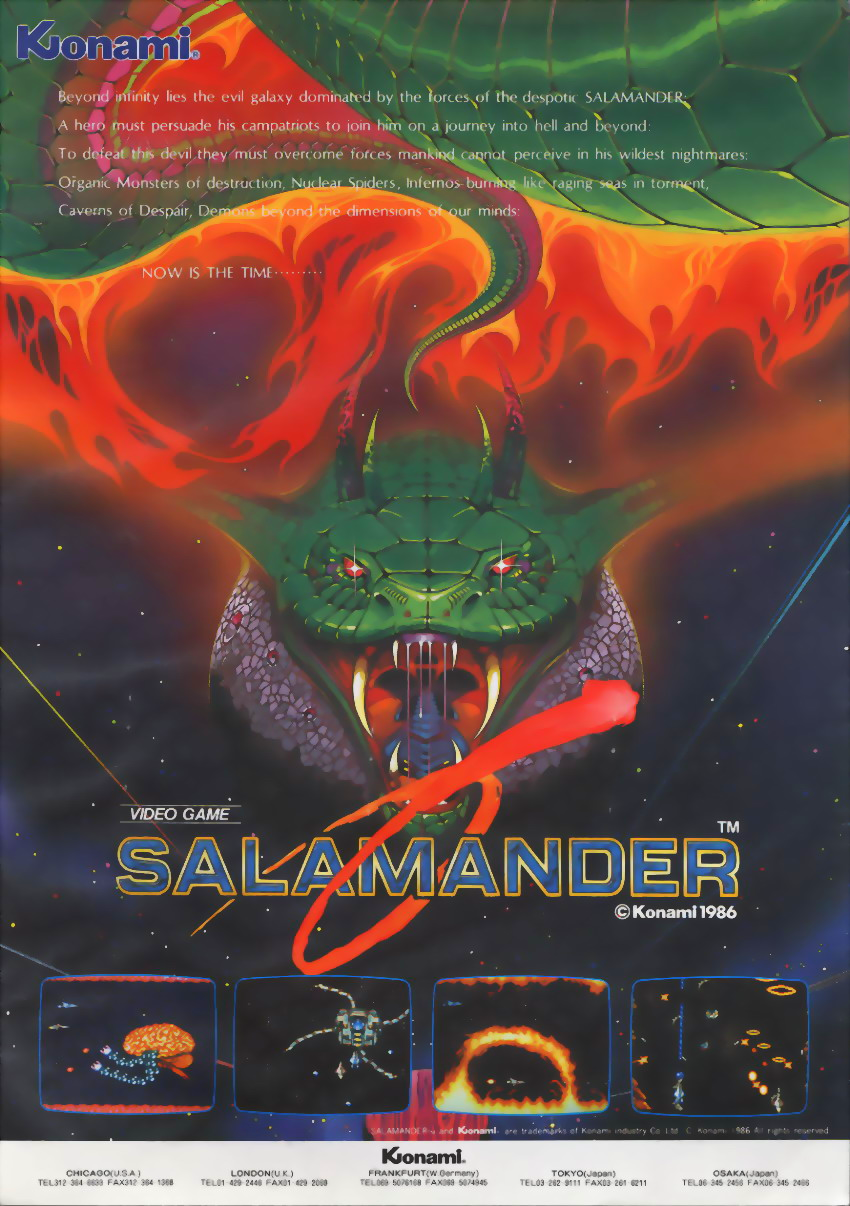
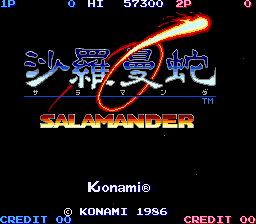
Life Force US arcade also has a deliberately different presentation from Salamander. Its North American story and stage announcements emphasize the biological setting, naming areas as parts of the enormous organism under attack. Several backgrounds were altered to support that theme, replacing starfield scenes with more organic imagery, and the American release uses its own power-up terminology. These changes matter when identifying the cabinet version: they are not simply the same as the later Japanese arcade re-release called Life Force, which was further reworked and uses a Gradius-like power-up gauge.
The game sits squarely in Konami's mid-1980s arcade shooter lineage, carrying forward the space-combat spirit of Gradius while giving the formula alternating scroll directions and simultaneous cooperative play. Its later home conversions and compilations helped keep the broader Salamander/Life Force branch visible, but the US arcade original remains defined by its immediate capsule upgrades, two-ship action, and unusual journey through a living, hostile interior. For players exploring classic Konami coin-ops, it is a distinct regional version rather than a substitute name for every Salamander release.
Gallery

Details
- Developer
- Konami
- Publisher
- Konami
- Genre
- Shoot 'em Up
- Players
- 1-2
- Release Date
- January 1, 1986
- System
- Arcade