About
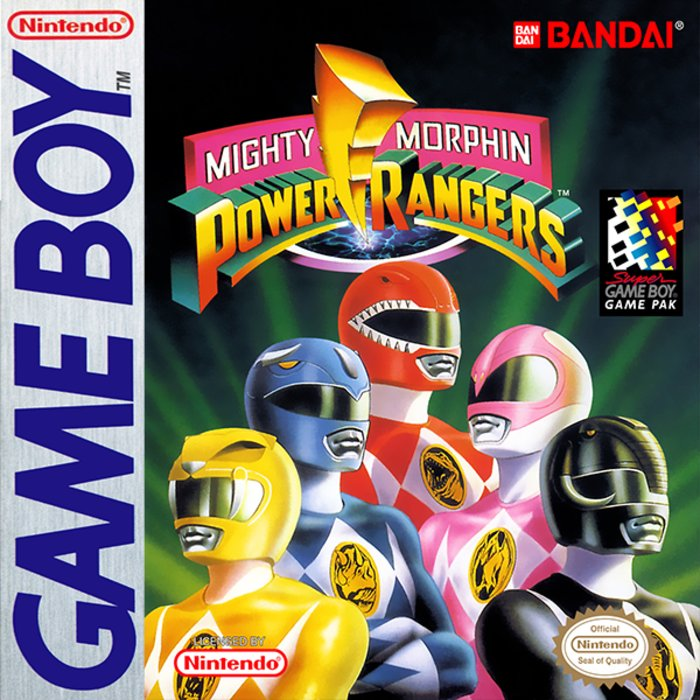
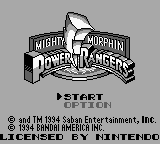
Mighty Morphin Power Rangers for Game Boy is a 1994 single-player action game published by Bandai and developed by Tom Create, adapting the first season of the television series for Nintendo's monochrome handheld. It is one of several very different games released under the same title that year, but this cartridge is neither the Genesis fighting game nor the longer Super NES brawler. Instead, it presents a compact side-scrolling adventure built around the original five-person team: Jason, Trini, Billy, Kimberly, and Zack.
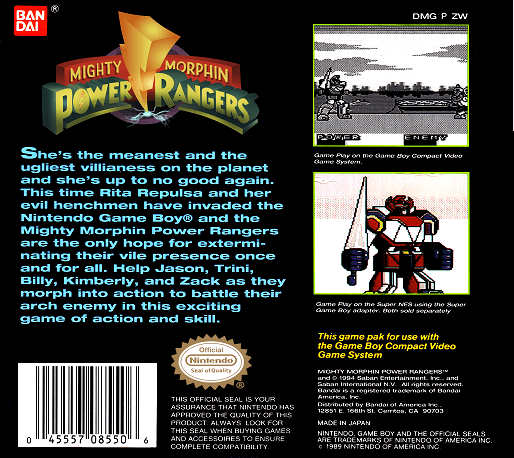
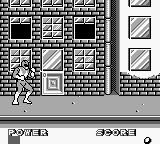
Each of the five stages begins by letting the player choose a Ranger. The selected hero travels through a side-view level, defeating Rita Repulsa's Putty Patrollers, avoiding hazards, and working toward the end of the area. Movement, jumping, and ordinary close-range attacks provide the basic tool set, while the Game Boy's limited controls make the action easy to grasp. The stages use locations inspired by the show's world, including Angel Grove and more hostile sites on the route toward Rita's lunar base.
The choice of Ranger gives the adventure a little more personality than a simple palette swap. Each member of the original team has an associated Power Weapon, and the Select button switches from the regular attack to that stronger option. The tradeoff is important: weapon use drains the Ranger's health gauge, so a powerful attack is also a decision about survival. Players can therefore save their energy for difficult enemies or use it more freely to clear a path, balancing damage against the life needed to finish the first half of a stage.
Reaching the goal changes the scale of the game. The Ranger section gives way to a Megazord battle against one of Rita's enlarged monsters, reflecting the two-part structure familiar from the series. The Megazord has its own standard sword strike and a more forceful energy-consuming attack, preserving the same risk-and-reward idea from the Ranger stages. This alternating format means every level moves from handheld brawling through platform obstacles to a one-on-one robot showdown rather than ending with an ordinary on-foot boss fight.
Mighty Morphin Power Rangers Game Boy also differs sharply from its 1994 siblings in roster and design. It focuses on the five original Rangers and Megazord encounters, rather than the Genesis version's competitive fighting modes or the Game Gear release's link-cable versus play. The Green Ranger, who is playable in those Sega versions after being unlocked, is not part of the Game Boy selection. The five-stage structure is also a streamlined alternative to the Super NES game's larger action campaign, making this a distinct adaptation rather than a portable conversion of either console release.
The Game Pak includes Super Game Boy support, an especially fitting feature for a team identified by color. When used with Nintendo's Super NES accessory, the Game Boy game can display a custom border and apply palettes associated with the Ranger chosen for a stage. That enhancement does not alter the campaign itself, but it gives the handheld version an optional burst of color while retaining its portable design.
Set during the early Power Rangers phenomenon of 1994, this Game Boy entry channels the show's recurring rhythm of Ranger combat followed by giant-robot action into short, repeatable stages. Its five selectable heroes, health-costing Power Weapons, hazards, and Megazord finales give the cartridge a clear identity among the many Mighty Morphin Power Rangers games. For players exploring the franchise on original Nintendo hardware, it is a focused first-season adventure designed specifically around the Game Boy rather than a remake of its better-known 16-bit counterparts.
Gallery
Details
- Developer
- Natsume
- Publisher
- Bandai
- Genre
- Beat 'em Up
- Players
- 1-2
- Release Date
- January 1, 1994
- System
- GB