About
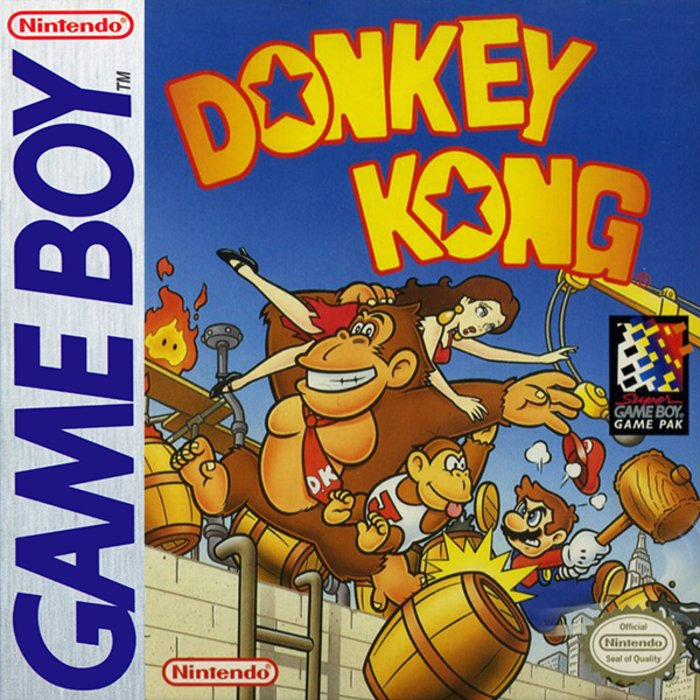
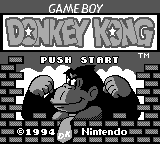
Donkey Kong for Game Boy, often called Donkey Kong ’94, is Nintendo’s 1994 puzzle-platform adventure starring Mario, Donkey Kong, and Pauline. Developed and published by Nintendo, it is a distinct Game Boy game rather than a straight arcade or NES conversion. Mario sets out to rescue Pauline after Donkey Kong carries her away, but the familiar premise quickly becomes a much larger portable chase.
Its opening stages deliberately echo the 1981 arcade game: Mario climbs girders, avoids barrels, rides elevators, and confronts Donkey Kong at the top of the construction site. That opening makes the game feel immediately recognizable to arcade veterans. Once those early stages are cleared, however, Donkey Kong reveals its real scope and moves far beyond the compact four-screen format of the original.
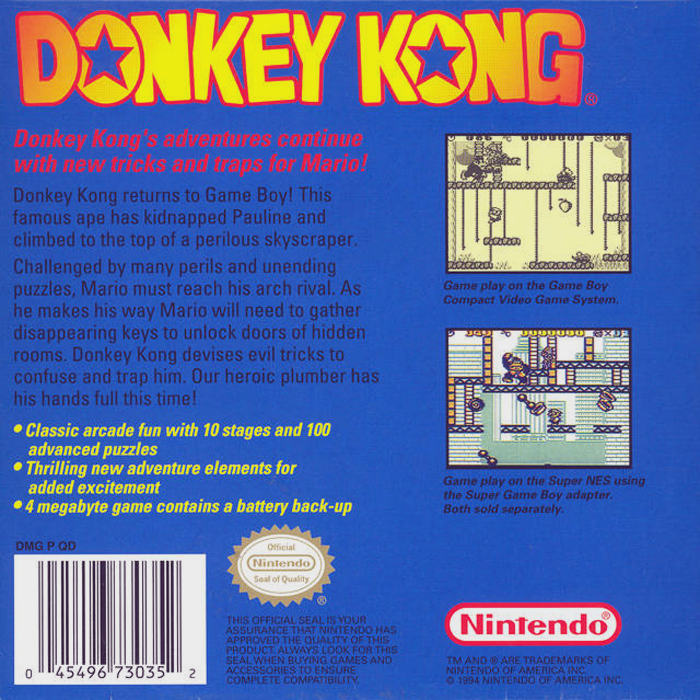
The adventure expands into a journey of more than 100 stages across varied worlds, following Donkey Kong through locations including the city, a ship, jungle, desert, and rocky mountain terrain. Each area turns the rescue into a series of tightly designed action puzzles rather than a simple race to the top. Mario must plan routes through hazards, platforms, doors, and changing terrain while continuing his pursuit of Pauline.
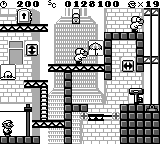
Keys are central to the puzzle design. Mario must locate a key, carry it safely through a stage, and bring it to the locked door that opens the way forward. The key can be moved and repositioned as part of the solution, so a level often asks players to create the route before they can finish it. Switches, moving ladders, jump stands, ropes, and other mechanisms make each screen a compact problem to solve under pressure.
Mario is far more agile here than in the original Donkey Kong. He can perform handstands, backflips, rope spins, and other acrobatic moves to cross gaps and evade danger. Those abilities give the game a distinctly Mario-like rhythm while also serving the puzzles: a move that clears an enemy or reaches a ledge can be the key to transporting an object into place.
Donkey Kong remains an active obstacle rather than just a final destination. Boss encounters break up the puzzle stages and ask Mario to survive the ape’s attacks, reach Pauline, or turn the stage’s own hazards back on Donkey Kong. Enemies, traps, and time limits keep the levels tense even when the solution is understood, giving the game both platforming precision and puzzle-game planning.
The Game Boy release also arrived in the early Super Game Boy era. Played normally, it is a substantial monochrome handheld adventure; used with Nintendo’s Super NES accessory, compatible Game Boy software could be shown on a television with added color treatment and a custom border. That context makes Donkey Kong an especially notable 1994 release: it bridges Nintendo’s arcade history with an expanded puzzle-platform format built for portable play.
Gallery
Details
- Developer
- Nintendo
- Publisher
- Nintendo
- Genre
- Platformer
- Players
- 1
- Release Date
- June 21, 1994
- System
- GB