About
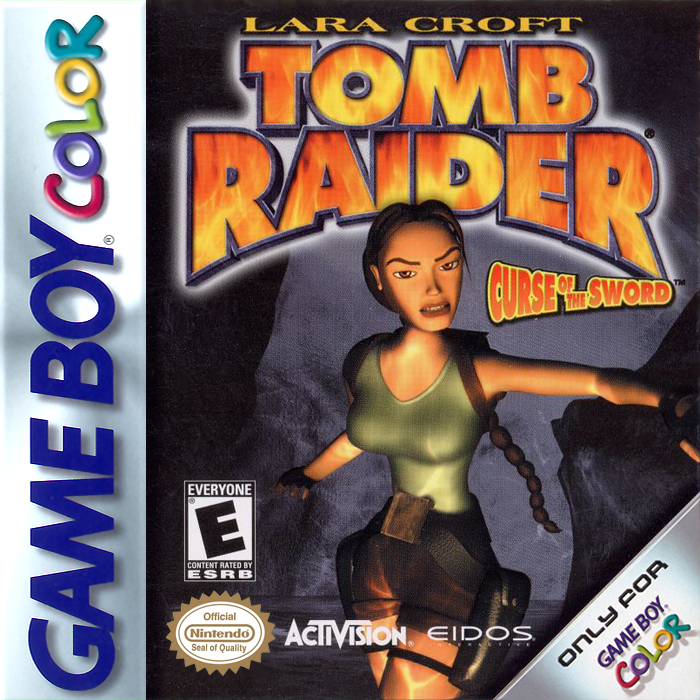
Tomb Raider: Curse of the Sword for Game Boy Color is a 2001 side-scrolling action-adventure starring Lara Croft. Developed by Core Design and published by Activision under licence from Eidos Interactive, it followed the developer's earlier Game Boy Color Tomb Raider adventure. The North American release arrived in June 2001, with Europe following in August. Rather than attempt to reproduce the console games' 3D presentation, this portable sequel reshapes their exploration, platforming, combat and environmental puzzles into a 2D format built for Nintendo's handheld.
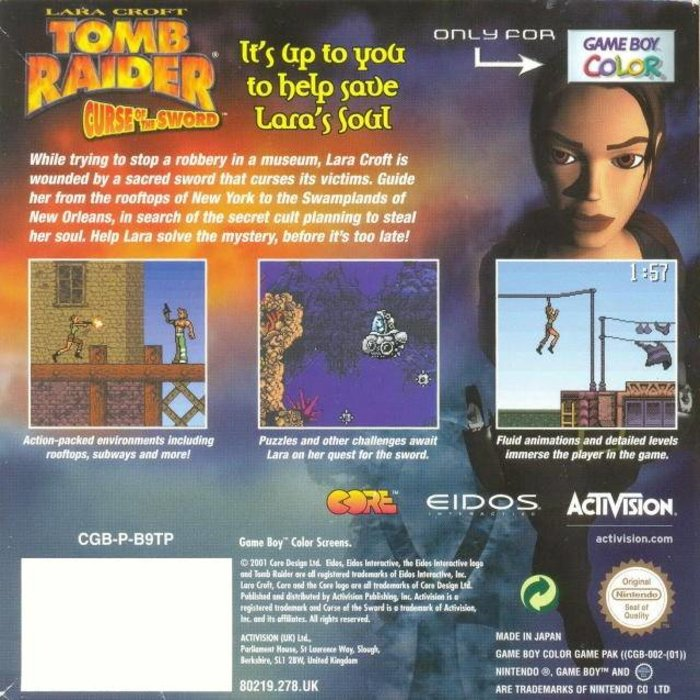
The story begins at a New York antiquities museum, where Lara and her friend Jane are examining a golden sword linked to dark magic. Thieves break in and steal it, and Lara is wounded during the chaos. Her blood makes her the intended vessel in a ritual to restore the spirit of Madame Paveau, a long-dead New Orleans magician. Lara pursues the people behind the theft before their plan can succeed, turning the cursed sword and the cult's scheme into the central threat of the adventure.
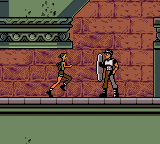
Play proceeds through connected platforming spaces in which progress depends on movement, observation and using the right object at the right time. Lara climbs ladders, hangs from overhead bars, vaults up low ledges, makes standing and running jumps, rolls through low passages, swims, and performs safer drops from ledges. The directional pad controls her movement, while the B button is central to running, jumping combinations and grabbing. Start opens the inventory, and the game signals nearby doors, switches, machinery and other usable objects with an A prompt when Lara has her weapons holstered.
Exploration supplies the rhythm of Tomb Raider: Curse of the Sword GBC. Keys, special objects and artifacts open routes or operate mechanisms, while switches can reveal ladders, open doors and change the layout of a room. Silver save crystals provide the game's fixed save points, and small or large medipaks restore Lara's health. Underwater sections add an air meter, so a route may involve balancing a jump, a climb, a hidden pickup and a timed swim instead of relying only on enemy encounters.
Lara starts this adventure without a weapon and must locate equipment during the journey. Once armed, she can draw or holster her guns, fire with the A button, change ammunition, and use a side roll to evade danger. Her standard pistols use unlimited normal ammunition, while pickups can alter their firepower; the game also includes shotgun rounds and dynamite for suitable breakable barriers. Auto-aim functions when she is standing or climbing, and the 2D perspective makes position important: Lara can sometimes fire from a ladder or exploit height differences against enemies.
The campaign carries Lara from the museum through New York locations including Soho rooftops, the subway and the Brooklyn docks, before reaching the thieves' island hideout. Its five broad areas mix guards, animals, hazards, boss encounters and set-piece activities, including demolition and a submarine sequence. Core Design's credited team included programmers Dan Scott and Ian Manders, level designers Jamie Morton and Paul Field, and music and sound contributors Manfred Linzner and Martin Wodok. Curse of the Sword remains a distinct chapter in Lara Croft's early handheld history: a direct Game Boy Color sequel with its own supernatural story, compact 2D level design and portable interpretation of familiar Tomb Raider movement.
Gallery
Details
- Developer
- Core Design
- Publisher
- Activision
- Genre
- Platformer
- Players
- 1
- Release Date
- August 17, 2001
- System
- GBC