About
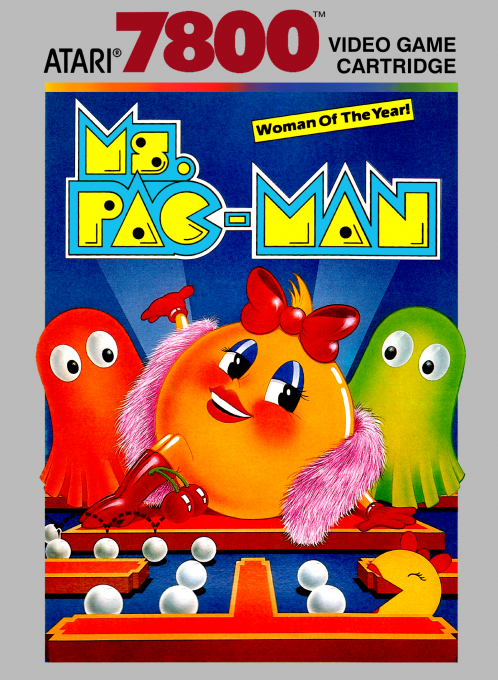
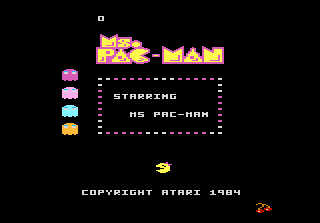
Ms. Pac-Man for Atari 7800 brings the celebrated maze-chase game to Atari's cartridge-based ProSystem. Atari released this version in North America in May 1986, several years after the 1982 arcade original created by General Computer Corporation and published by Midway. The premise is immediate: guide Ms. Pac-Man through a compact maze, consume every dot, and survive the pursuit of four ghosts. It is a score-driven action game built around quick decisions at intersections, careful route planning, and knowing when a safe path can become a trap.
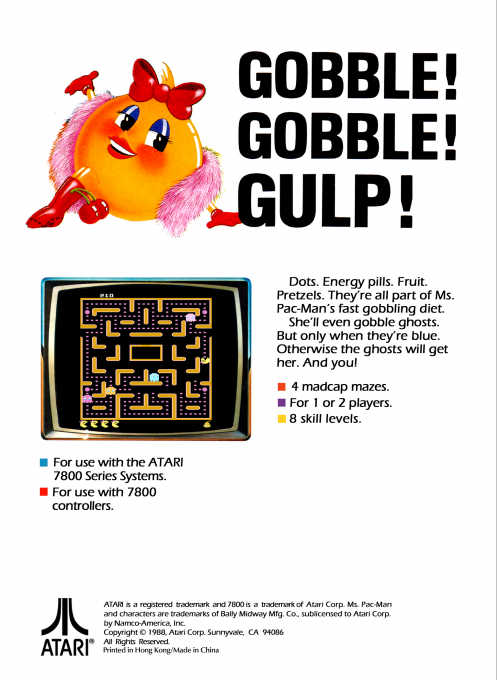
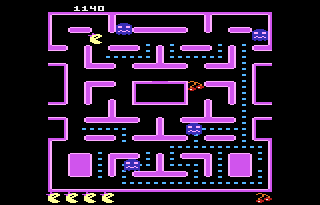
The 7800 game is played with the system's joystick. Moving the stick directs Ms. Pac-Man along the maze's corridors; once she begins a route, players must make their next turn at an opening rather than stop in place. A round ends only after every dot has been cleared, while contact with a normal ghost costs a life. The cabinet-style challenge steadily becomes more demanding as later rounds raise the pace, making split-second turns and an awareness of each escape route increasingly important. The cartridge supports one or two players taking turns, so chasing a better score can become a shared contest without changing the maze-clearing goal.
Blinky, Pinky, Inky, and Sue supply the danger. Their differing movement tendencies make it risky to treat every encounter the same way: an apparently open lane may lead directly into another ghost's approach. Four energy pills give Ms. Pac-Man a temporary reversal of fortune. Eating one changes the ghosts blue, allowing her to catch them for escalating bonuses before they recover. This creates the game's central rhythm of evasion and counterattack. Players also decide when an energy pill is worth using, since taking it too early may leave no protection when the ghosts close in later.
Bonus items add another layer to each chase. Fruit and pretzels enter the maze and can be collected for extra points, but pursuing one can pull Ms. Pac-Man toward danger. The 7800 manual identifies prizes ranging from teddy bears and cherries to strawberries, oranges, pretzels, apples, pears, and bananas, followed by random fruit rounds. The game uses four maze patterns rather than repeating a single layout, and its side tunnels offer a way to cross from one edge to the other. Those details give every board its own traffic pattern and make tunnel timing, corner choices, and pill placement part of a long-running scoring strategy.
Ms. Pac-Man also retains the character and presentation that set the game apart from Pac-Man. The title character's ribbon and the changing bonus objects give the familiar formula a distinctive identity, while the short cartoon intermissions mark progress after selected mazes. On Atari 7800, the conversion sits within a wave of home versions that carried an arcade staple into living rooms. It remains a focused example of early arcade design: one screen, a clear objective, a small set of rules, and a challenge that grows from how those rules interact rather than from complicated controls.
Gallery
Details
- Developer
- General Computer Corporation
- Publisher
- Atari
- Genre
- Maze
- Players
- 1-2
- Release Date
- May 1, 1986
- System
- Atari 7800