About
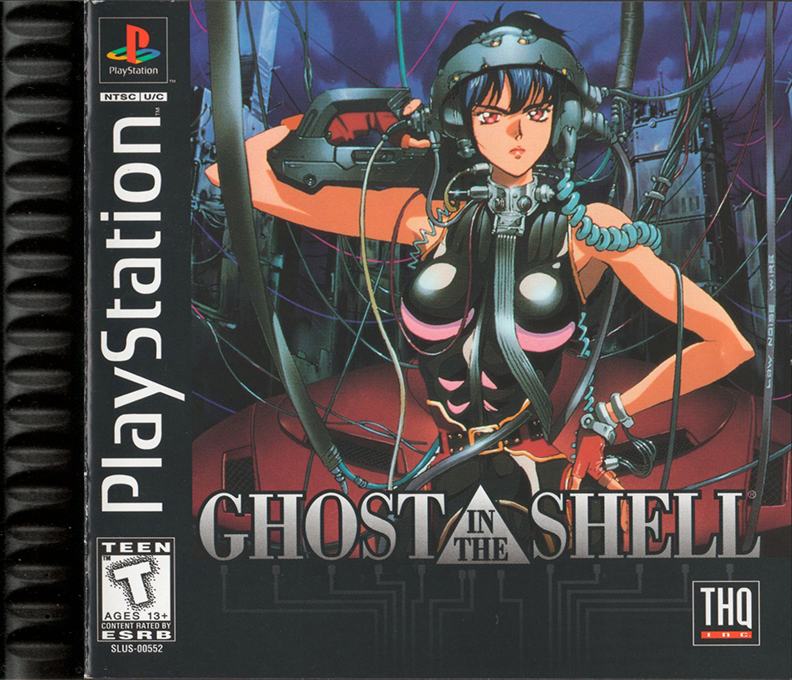
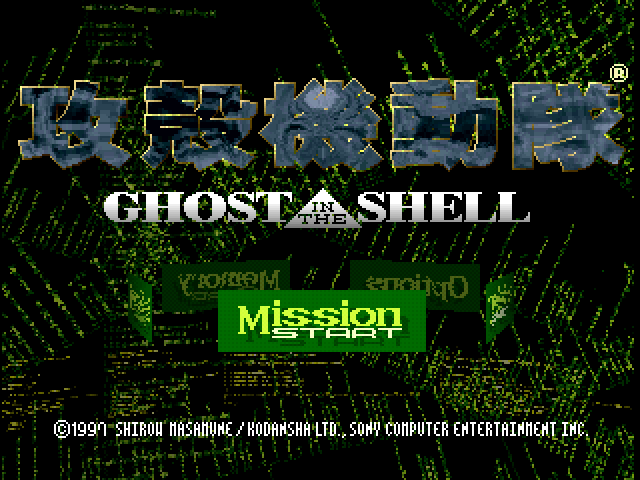
Ghost in the Shell for PlayStation is a 1997 cyberpunk action shooter developed by Exact and released in Japan by Sony Computer Entertainment. Based on Masamune Shirow’s original manga, it tells a new story in the wider Ghost in the Shell world rather than retelling the 1995 animated film. Production I.G. contributed the game’s animated sequences, giving the PlayStation release a close connection to the franchise’s screen work while its character styling follows the manga’s direction. North American copies arrived later through THQ, while Sony Computer Entertainment handled the European release.
The player joins Public Security Section 9 as an unnamed rookie assigned to pilot a Fuchikoma, a spider-like intelligent combat vehicle. Instead of playing directly as Major Motoko Kusanagi, the rookie operates this machine during Section 9’s operations in New Port City. The game opens after an attack on Megatech Body, a maker of cyborg bodies, prompts the unit to investigate a terrorist claim. Briefings and animated scenes bring Kusanagi, Batou, Togusa, Ishikawa, Saito, and Chief Aramaki into the investigation as it develops into a case involving the Human Liberation Front and the Aeropolis II tower.
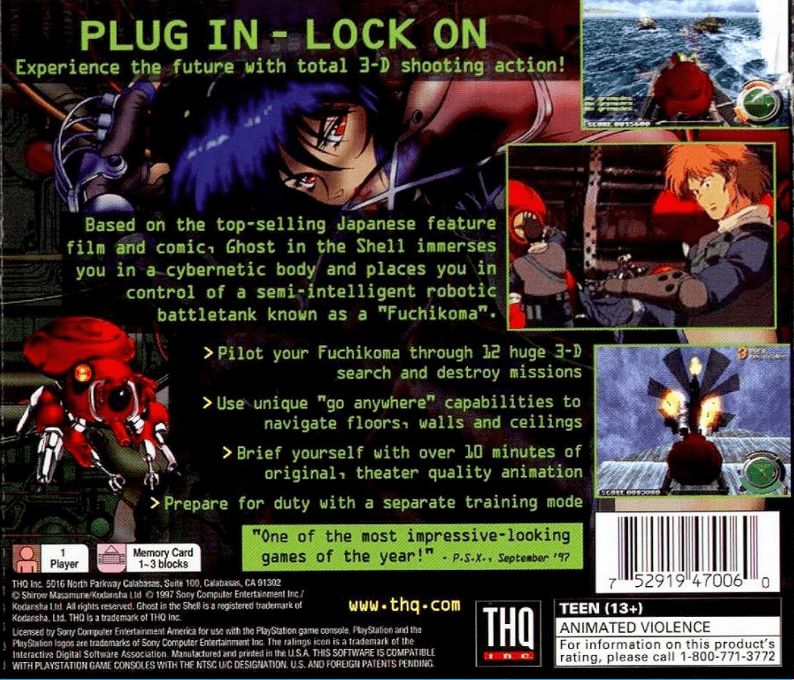
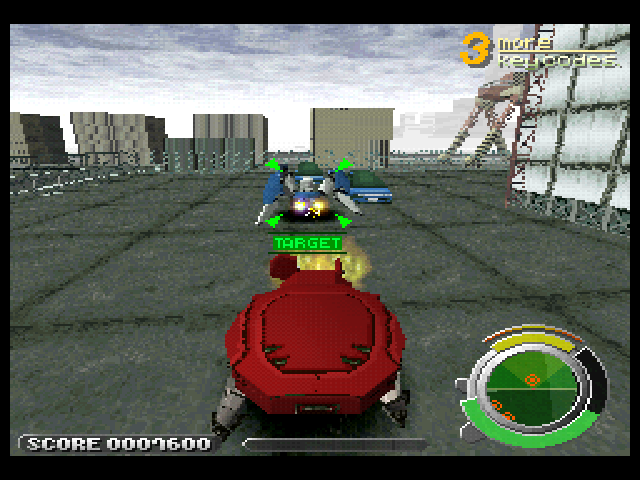
Ghost in the Shell PlayStation is built around moving the Fuchikoma through three-dimensional combat spaces. Its unusual mobility is central to the action: the vehicle can jump, dash forward, strafe, climb vertical surfaces, and travel upside down across ceilings. The view can shift between third-person and first-person perspectives, and the camera adjusts as the machine changes surfaces. That freedom turns walls and ceilings into usable routes, allowing players to approach targets from positions that a conventional ground-bound character could not reach.
The Fuchikoma carries twin machine guns and lock-on missiles, with grenades available to collect during missions. Encounters range across enclosed facilities and open urban routes, with enemies including armed machines and aircraft. Before the main campaign, a multi-stage training mode introduces movement, aiming, and weapon use, then tests those skills against another Fuchikoma. The story campaign contains twelve missions whose objectives are not limited to simply clearing opponents: assignments include raids, bomb disposal, pursuit, searching for a concealed enemy, and a climactic confrontation high above the city.
The game’s presentation is a notable part of its identity. Production I.G. created the animated material for the release, using digital coloring at a time when such techniques were still a significant production choice for animation. Hiroyuki Kitakubo directed the animation sequences, with Toshihiro Kawamoto serving as animation director and character designer. The visual approach distinguishes the game from Mamoru Oshii’s film adaptation, while retaining the series’ dense near-future cityscape, cyborg technology, and Section 9 setting.
Music also reinforces the game’s electronic atmosphere. Takkyu Ishino is credited for the music, alongside contributions from a group of techno artists, and the game’s soundtrack was issued under the Megatech Body name. Ghost in the Shell remains a PlayStation-exclusive entry from an early period of the franchise’s video-game history. Its blend of vehicle combat, surface-climbing traversal, original Section 9 story, and specially produced animation makes it distinct from later Ghost in the Shell games based on other continuities.
Gallery
Details
- Developer
- Exact
- Publisher
- Sony Computer Entertainment
- Genre
- Third-Person Shooter
- Players
- 1
- Release Date
- October 31, 1997
- System
- PS1