About
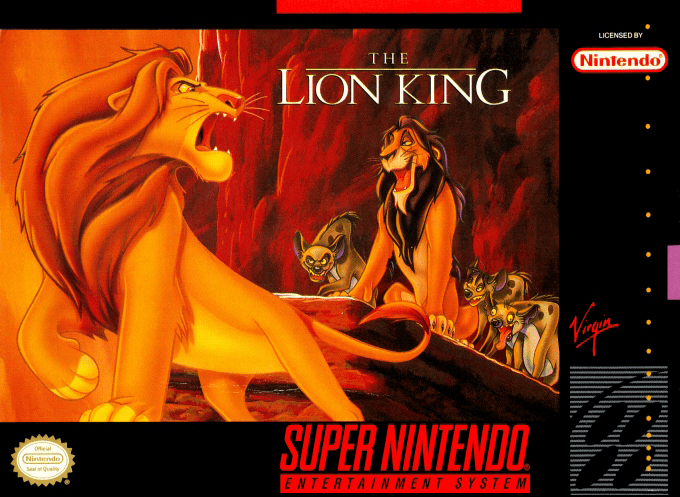
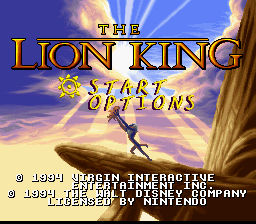
The Lion King for Super Nintendo Entertainment System is a 1994 side-scrolling platform game from Westwood Studios and Virgin Interactive, built around Disney's animated feature of the same year. It follows Simba from his earliest days in the Pride Lands to his return as an adult, translating major locations and events from the film into a cartridge adventure for the SNES. The game was released during the era when Disney films were becoming large-scale console games, but it is its own action-platformer rather than a retelling made of cutscenes alone.
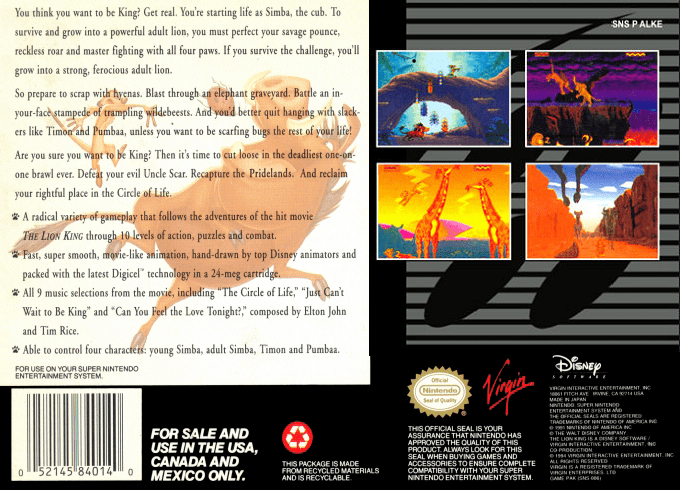
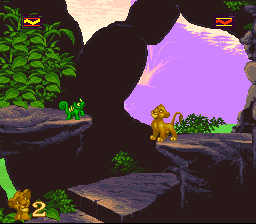
Players guide Simba through a sequence of African environments, beginning at Pride Rock and moving through settings such as the Elephant Graveyard, a wildebeest stampede, the jungle, and the Hyena Lairs. The route reflects Simba's change from a curious cub to the lion prepared to confront Scar. Each area sets its own platforming problems: moving through trees and bones, finding safe footholds, avoiding hazards, surviving animal attacks, and reaching the next checkpoint. There is no second player option; the challenge is structured around a single player learning each stage's layout and timing.
Young Simba relies on agility. He can jump, pounce on suitable enemies, roll while running, cling to ledges, climb, and swing from environmental handholds. His roar is not merely decorative: it can briefly stun certain opponents, affect obstacles or puzzles, and becomes more potent as its meter is improved. The game encourages attention to the surroundings because a roll can open routes that ordinary movement cannot, while a carefully placed jump can turn an enemy into a platform or carry Simba toward a hidden item.
After Simba grows up, The Lion King SNES changes the character's combat vocabulary without abandoning its platforming focus. Adult Simba can slash with his claws, maul foes, and perform a jumping slash in addition to jumping, roaring, hanging, and navigating the terrain. These abilities matter in more hostile later stages, where progress can depend on clearing a way through enemies or overgrowth as well as negotiating hazards. The SNES controls can be customized from the options screen, with the default layout assigning roar, jump, and adult swipe to face buttons.
Health, roar strength, chances, and continues give the journey a resource-management layer. Bugs found in stages and bonus rounds can restore health or improve Simba's maximum health and roar capacity, while other creatures are harmful. Checkpoint markers provide restart positions after a lost chance, but the game still asks players to preserve their stock of lives and continues over a long run. Difficulty options alter the number of chances and continues available, making the settings meaningful before the opening level even begins.
Hidden bugs can also lead to short bonus games featuring Simba's companions Timon and Pumbaa. Their appearances break from the usual side-scrolling route with focused bug-collecting challenges that can award useful resources. Alongside these diversions, the stages include familiar characters such as Mufasa, Scar, Rafiki, and the hyenas, while the story moves from Simba's exile toward the struggle to reclaim the Pride Lands. Music drawn from the film's musical world and sampled voices help connect the game to its cinematic source within the SNES presentation.
The SNES release was developed alongside the Sega Genesis version, while other teams handled versions for computers and several other consoles and handhelds. That distinction matters: The Lion King exists in several forms, but this entry is specifically the 16-bit Super Nintendo game programmed by Westwood for Nintendo's system. Its 2019 appearance in Disney Classic Games: Aladdin and The Lion King also preserved the SNES version as one of the playable historical releases, alongside other versions of the game.
The Lion King remains a notable Disney-licensed SNES platformer because its film setting is fused with precise movement, environmental navigation, character growth, and a demanding lives-and-continues structure. For players exploring 1994 Super Nintendo games, it offers a full Simba adventure rather than a short promotional tie-in: one that begins with pounces and puzzle-solving as a cub, broadens into claw-based action as an adult, and ends with the return to Pride Rock.
Gallery
Details
- Developer
- Westwood
- Publisher
- Virgin
- Genre
- Platformer
- Players
- 1
- Release Date
- November 1, 1994
- System
- SNES