About
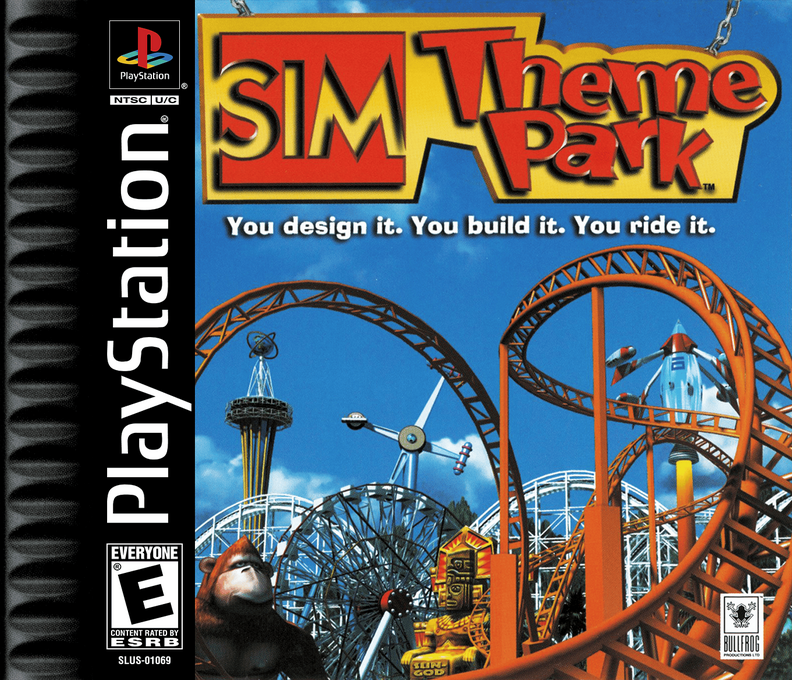
Sim Theme Park for PlayStation is a theme-park construction and management game released in North America in 2000 by Electronic Arts. Developed for the console by Climax Fareham, it is the PlayStation version of the Bullfrog follow-up to 1994's Theme Park. The same game was called Theme Park World in Europe and other territories, while the PlayStation 2 edition later appeared in North America as Theme Park Roller Coaster. Its aim is straightforward but demanding: turn a modest amusement park into a busy, profitable destination while keeping its visitors content.
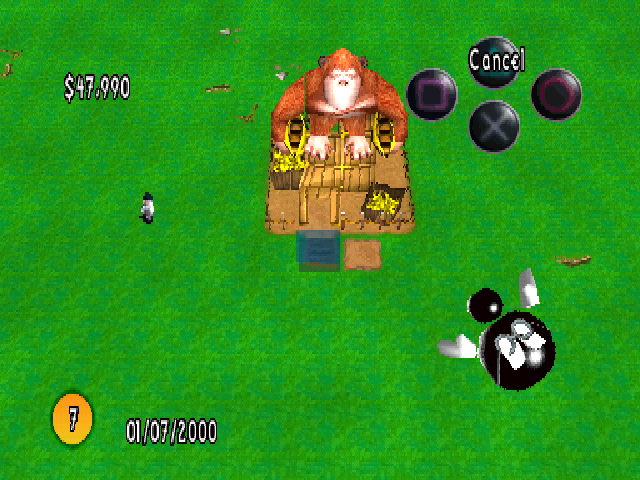
Each park begins with a limited budget, open ground, and a growing list of decisions. Players lay out paths and facilities, install rides and side shows, set admission and attraction prices, and decide when to spend on expansion. Shops, restaurants, toilets, bins, speakers, cameras, and staff facilities all support the larger operation. Mechanics keep attractions running, cleaners deal with litter, entertainers help amuse guests, guards provide security, and researchers unlock further rides, shops, and upgrades. Loans and extra land provide ways to push a developing park forward, but both make the financial balancing act more important.
Guest behaviour supplies the feedback for those decisions. Visitors communicate their needs and reactions through thought bubbles and an overall happiness measure, alerting the player to problems such as hunger, untidiness, confusion, or poor value. A park therefore has to be more than a collection of expensive rides: its pathways, food outlets, amenities, staffing, prices, and ride reliability all affect the crowd. An on-screen adviser introduces systems and reports events, while the controller-driven interface lets players move around the park and select, place, remove, or inspect its many objects.
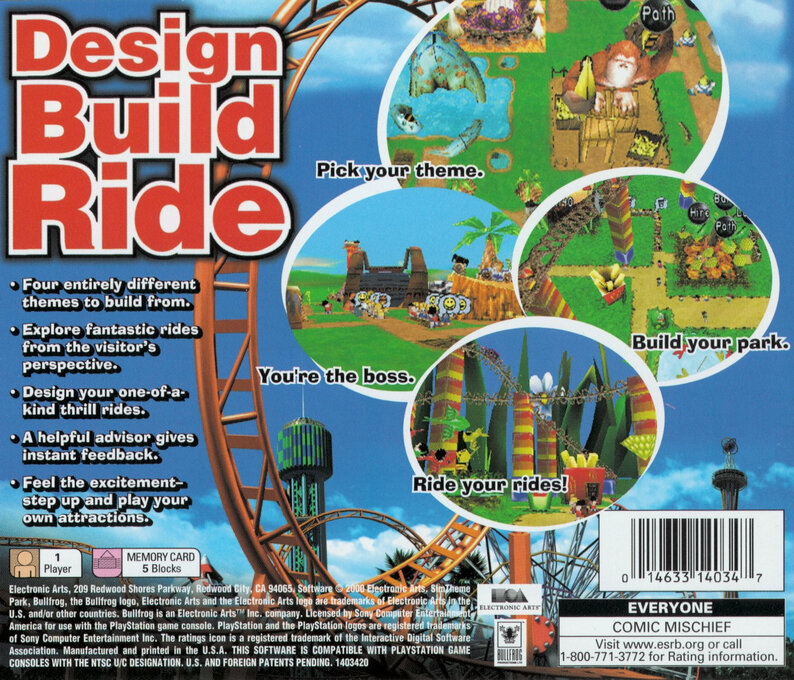
Sim Theme Park PS1 uses a progression system built around Golden Tickets and Golden Keys. Meeting management goals, including targets for attendance, satisfaction, and profit, earns tickets that can unlock special attractions; keys open further parks. The campaign is organized around four themed settings: the prehistoric and ancient-civilization-inspired Lost Kingdom, the fairy-tale Wonder Land, Halloween World, and Space Zone. The PlayStation release gives players two parks in each theme, with appropriate rides, shops, and side shows, and starts its main progression in the Lost Kingdom. An Instant Action option offers a readier-made park and altered rules for a quicker management session.
Roller coasters are among the game's central attractions, and their construction adds a hands-on design element to the business simulation. Players can create track-based rides, modify their routes with available parts, and improve attractions for qualities such as capacity, speed, or reliability. The PlayStation version also turns selected side shows and attractions into playable diversions, including racing and puzzle-style activities. After sufficient Golden Ticket progress, it lets players leave the overhead management view to tour the park and ride attractions from a first-person perspective, connecting the planning side of the game to the customer experience it is trying to create.
Although it shares its park-building premise with the Windows original, this PlayStation adaptation was shaped for a gamepad and emphasizes console-specific activities rather than the PC release's online park-sharing service. Its regional title is significant for collectors and players: Sim Theme Park is the North American PlayStation name, whereas Theme Park World identifies the equivalent release elsewhere. As the second Theme Park game, it expands the original's amusement-business formula with a fully 3D park presentation, themed campaign worlds, Golden Ticket progression, custom coaster construction, and the chance to see a successful park from inside its rides.
Gallery
Details
- Developer
- Climax Fareham
- Publisher
- Electronic Arts
- Genre
- Management Simulation, Real-Time Strategy
- Players
- 1
- Release Date
- March 21, 2000
- System
- PS1