About
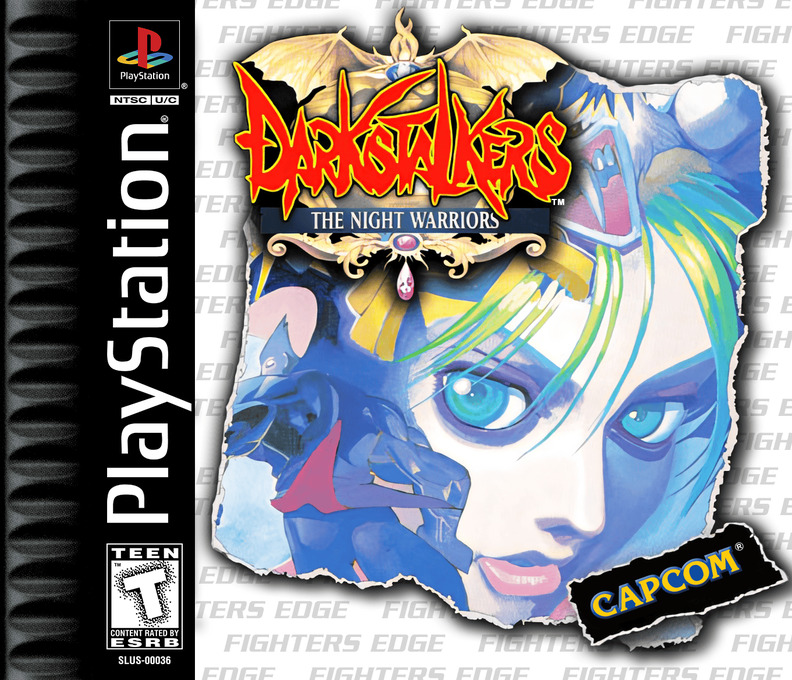
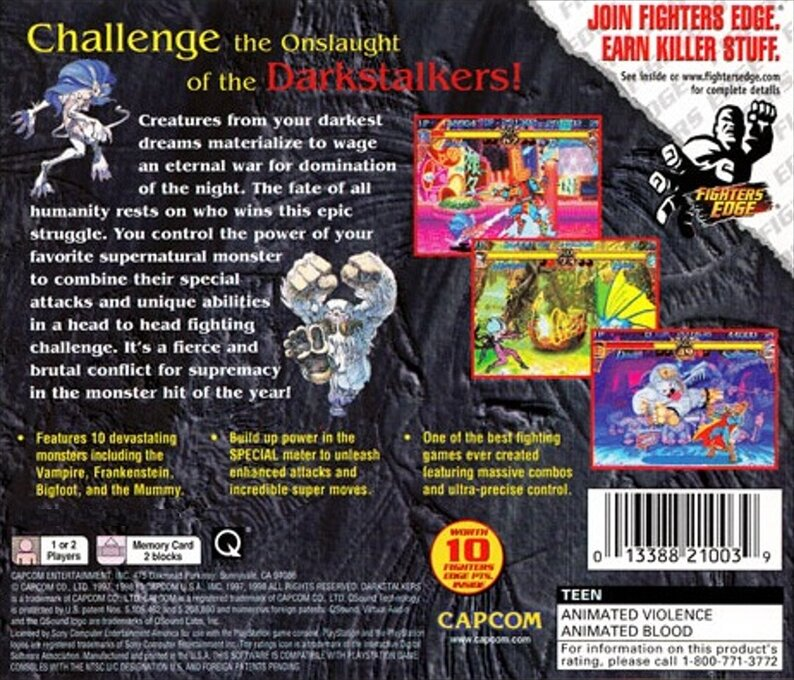
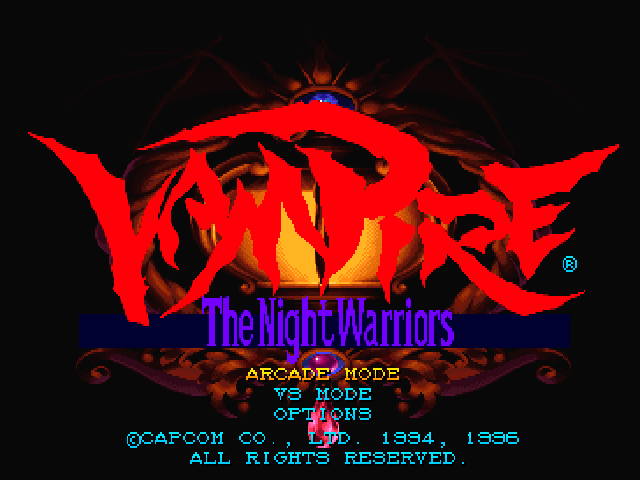
Darkstalkers: The Night Warriors for PlayStation brings Capcom’s 1994 CPS II arcade fighter to Sony’s 32-bit console. Released in North America in 1996, this 2D one-on-one fighting game was developed for PlayStation by Psygnosis and published by Capcom. Known in Japan as Vampire: The Night Warriors, it begins the Darkstalkers series with a cast drawn from classic horror and folklore, presented through unusually elaborate hand-drawn character animation and theatrical monster-movie settings.
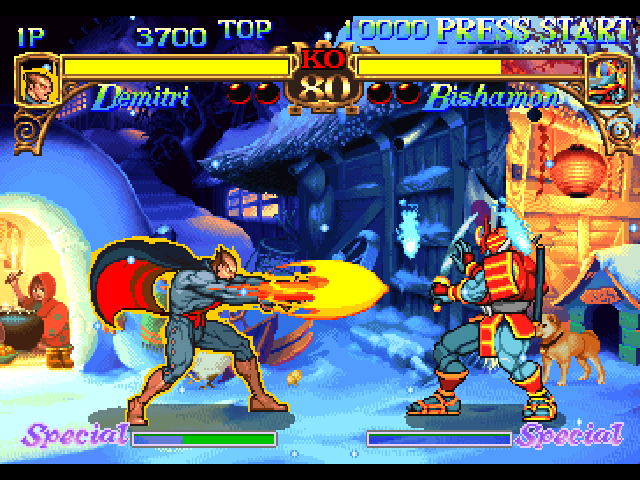
The premise places ten supernatural combatants in a struggle for the night, while the alien Pyron threatens Earth itself. Players choose a fighter and work through a sequence of best-of-three matches, defeating the other warriors before confronting Huitzil and Pyron. The roster includes vampire noble Demitri Maximoff, succubus Morrigan Aensland, werewolf Jon Talbain, catwoman Felicia, mummy Anakaris, fish-man Rikuo, Frankenstein-inspired Victor von Gerdenheim, zombie rocker Lord Raptor, samurai spirit Bishamon, and Sasquatch. Each has a distinct visual identity, stage, special moves, and ending.
Combat uses Capcom’s familiar six-button fighting-game layout: punches and kicks come in light, medium, and heavy strengths, while directional inputs and button combinations produce character-specific attacks. Success depends on spacing, timing, anti-air responses, throws, and linking attacks into combinations rather than simply trading blows. Darkstalkers also adds mobility and defensive options that set it apart from straightforward Street Fighter-style bouts, including air blocking, crouch walking, dashes, and chain combos that let normal attacks flow together in sequence.
A Special gauge fills during battle and introduces a choice between stronger versions of special attacks and a powerful super-style move. Because the meter gradually drains, it encourages players to spend it during the current fight instead of saving it indefinitely. The resulting pace suits the game’s expressive cast: Felicia can pressure opponents with fast feline movement, while larger characters such as Victor and Anakaris approach matches differently through their own reach, attacks, and command lists. Arcade Mode supplies the solo challenge, and V.S. Mode lets two local players face off, including mirror matches with the same character on both sides.
The PlayStation release arrived after the original arcade game and after its arcade sequel, Night Warriors: Darkstalkers’ Revenge, had already appeared. Psygnosis handled this conversion while Capcom published it, making the credit listed for this PS1 edition different from the arcade original’s Capcom development. The console version retains the central roster, monster-themed presentation, and competitive structure while adapting the arcade game for the PlayStation. It also uses the regional Darkstalkers name outside Japan, whereas the Japanese release is Vampire: The Night Warriors; several fighters likewise use different regional names, such as Rikuo for Aulbath and Jon Talbain for Gallon.
Darkstalkers: The Night Warriors established the series’ blend of gothic fantasy, comedy, and competitive 2D fighting. Its animated sprites and supernatural cast made it a distinctive Capcom fighter of the mid-1990s, while its mechanics helped define ideas explored further by later Darkstalkers games and other Capcom fighting series. For PlayStation players, it remains the original entry point for Demitri, Morrigan, Felicia, and the rest of the Night Warriors—a compact head-to-head fighter built around learning a favorite monster’s moves and meeting every opponent in the dark.
Gallery
Details
- Developer
- Psygnosis
- Publisher
- Capcom
- Genre
- Fighting
- Players
- 1-2
- Release Date
- June 10, 1996
- System
- PS1