About
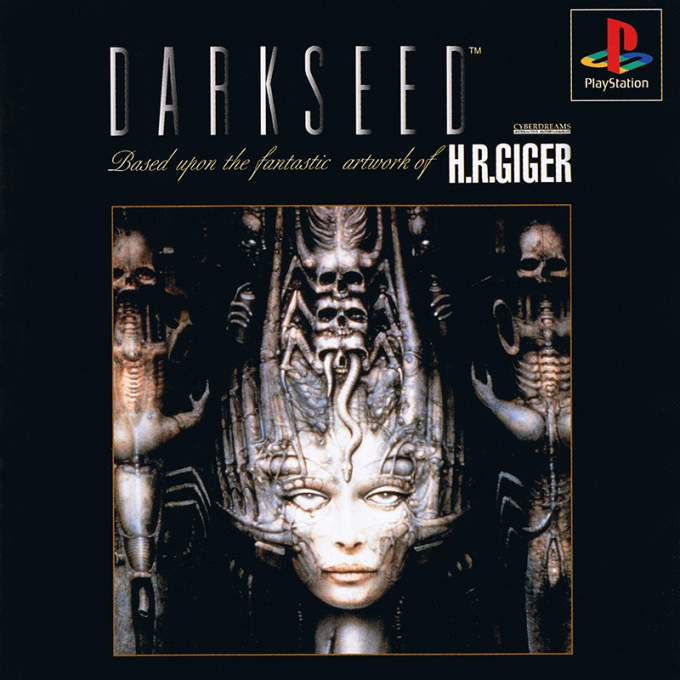
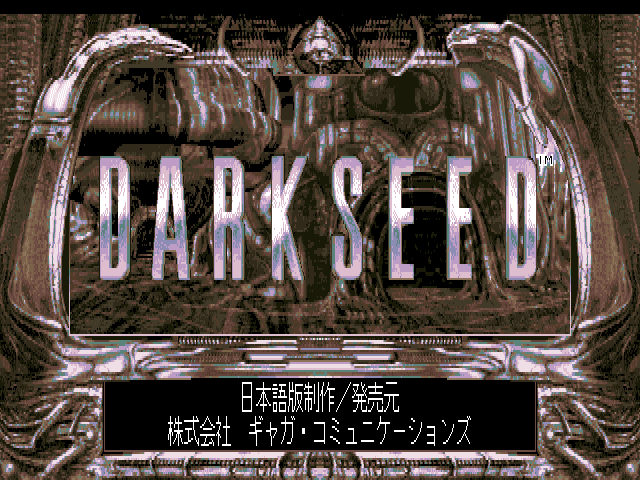
Dark Seed for PlayStation is a psychological-horror adventure released in Japan on October 27, 1995. Developed by Cyberdreams and published there by Gaga Communications, it brings the 1992 computer game to Sony's console as a single-player, cursor-driven investigation. Its most recognizable visual element comes from the art of Swiss artist H. R. Giger, whose biomechanical imagery gives the game's parallel alien realm a look sharply opposed to its seemingly ordinary suburban setting. The PlayStation release is part of the first Dark Seed story, not the later Dark Seed II.
The game follows Mike Dawson, an advertising executive who has bought a mansion in the small community of Woodland Hills in hopes of concentrating on writing. His first night in the house is interrupted by a nightmare and a severe headache. As Mike looks into the property's past and speaks with the people around town, he learns that the experience was more than a dream. An alien embryo has been placed inside his head, and the threat gives the adventure a clear deadline: Mike must uncover a way to stop it before the seed matures.
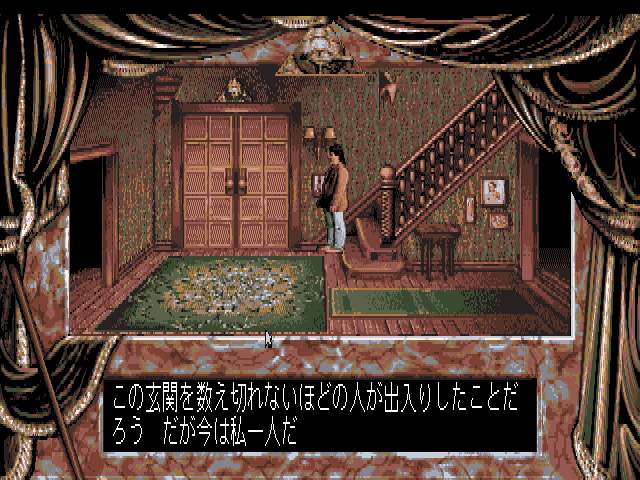
Dark Seed is built around examining locations, talking to characters, gathering items, and finding how objects can be used. Rather than presenting the action as combat, it asks the player to make careful observations and solve linked environmental puzzles. A cursor changes according to the available interaction, letting Mike inspect points of interest, manipulate an object, or move between areas. The mansion, the nearby town, and other familiar locations therefore become a network of clues whose significance may only become clear after a conversation, a discovery, or a new item has opened another possibility.
A central idea of Dark Seed is its pair of connected worlds. Woodland Hills is the normal side of the story, while the Dark World is a hostile counterpart populated by the Ancients and shaped by Giger-inspired architecture and creatures. Places, people, and objects echo each other across the divide, so progress frequently depends on noticing a relationship between the two realms. After Mike gains access to the portal, the adventure moves back and forth between domestic rooms and unsettling alien spaces, using their contrasts to frame both its puzzles and its horror premise.
Time is also an important part of Dark Seed's design. The story takes place across three in-game days, and events, characters, and puzzle opportunities are tied to that schedule. Mike can check the time and deliberately wait, but failing to reach a necessary point in the sequence can leave the player without a required opportunity. Each night advances the danger surrounding the implanted seed, while the final day brings the investigation toward the Ancients' power source and the question of how to close the connection between their world and Mike's own.
The PlayStation edition arrived in Japan during 1995, following the original computer release and alongside a Japanese Sega Saturn version issued earlier that year. Gaga Communications handled the Japanese console publication, while Cyberdreams remained the developer credited for the game. Dark Seed is consequently a useful snapshot of an era when western graphic adventures reached Japanese consoles, pairing point-and-click-style exploration with elaborate scanned and composited artwork. Its combination of a real-world mystery, an otherworldly mirror setting, and H. R. Giger's distinctive designs established the foundation later continued by Dark Seed II.
Gallery
Details
- Developer
- Cyberdreams
- Publisher
- Gaga
- Genre
- Point-and-Click Adventure
- Players
- 1
- Release Date
- October 27, 1995
- System
- PS1