About
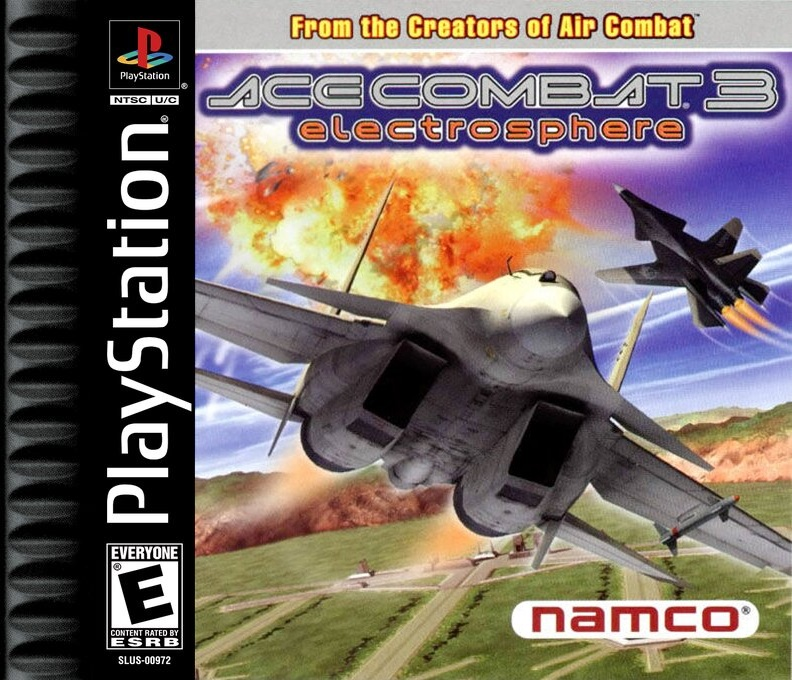
Ace Combat 3: Electrosphere for PlayStation is Namco's futuristic combat-flight game and the third Ace Combat entry. Released internationally in 2000 after its Japanese debut in 1999, it moves the series away from contemporary military imagery into a stylized near future of sleek experimental aircraft, corporate power, and a global information network called the Electrosphere. The player is a UPEO pilot assigned to help contain a conflict between rival organizations, General Resource and Neuwork. Although its aircraft and setting are fictionalized, the PlayStation game retains the series' accessible, action-led approach to aerial combat rather than attempting a strict real-world flight simulation.
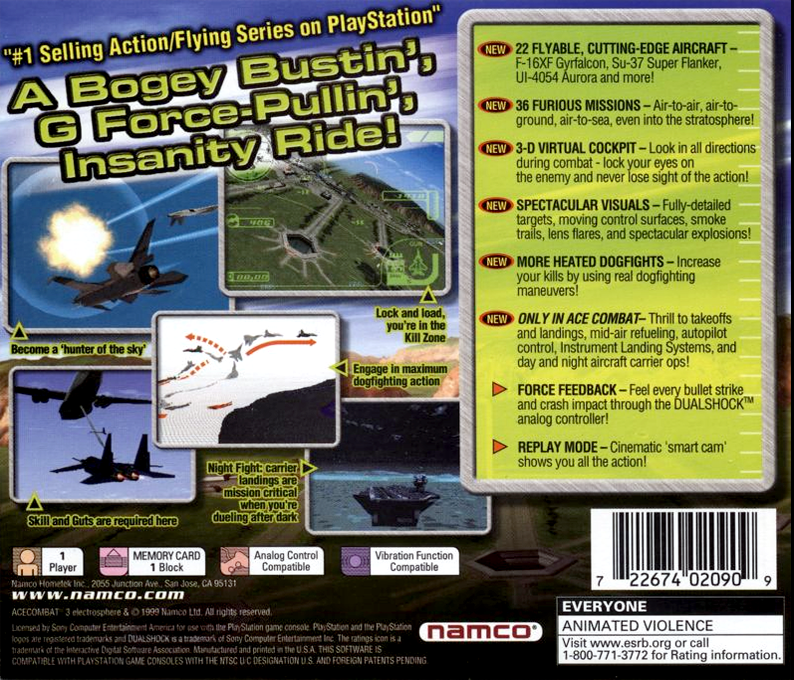
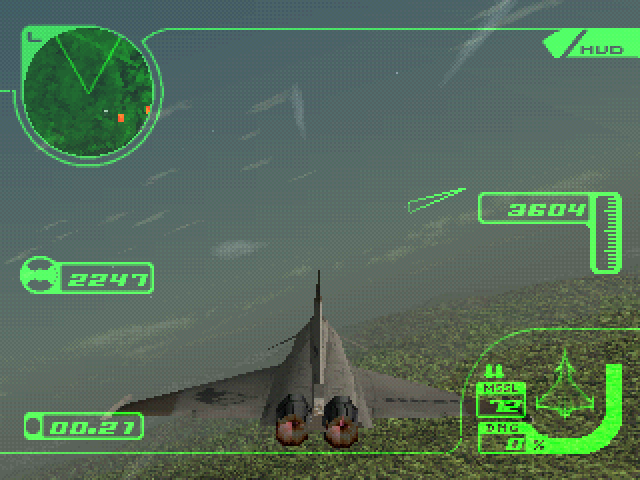
Each mission begins with a briefing and sends the pilot into a defined operation, from intercepting hostile formations to guarding important targets and striking enemy installations. The immediate goal is usually clear, but success depends on reading the radar, identifying priority targets, managing altitude and speed, and selecting moments to close for a missile lock or use the cannon. The controls are designed around fast turns, pursuit, and evasive maneuvering, with a third-person camera that can be rotated around the aircraft. Electrosphere also asks players to pay more attention to energy than its predecessors: hard turns and steep climbs can bleed speed and leave a fighter vulnerable.
Mission performance is recorded with a letter grade, and progress opens access to additional aircraft and equipment. The game includes a selection of futuristic and familiar-looking fighter designs, each suited to different situations, while weapon selection adds another tactical choice before taking off. Varied objectives help the campaign avoid becoming a simple sequence of dogfights: a sortie may demand interception, escort work, base defense, or an attack run under time pressure. Post-mission replays let players review the closing moments of a successful operation, and the setting occasionally reaches beyond ordinary airspace, emphasizing the game’s science-fiction atmosphere.
The international PlayStation release is important to identify because it is substantially different from Ace Combat 3 as first issued in Japan. North American and European copies use a single disc and present a linear, 36-mission UPEO campaign. Their story is delivered largely through text-based intermissions, with the pilot pursuing the conflict toward its final threat inside the Electrosphere. This is the edition represented by the 2000 release date, so its reduced campaign and simpler narrative are part of its specific identity rather than omissions from an otherwise identical game.
Japan received a two-disc version on May 27, 1999 with a far broader story structure. That release follows the same 2040-era corporate war but uses voiced character scenes, animated material, and player decisions that can direct the pilot toward UPEO, General Resource, Neucom, or other paths. It contains 52 missions distributed across five routes and multiple endings; completing the routes reveals more of its larger scenario. Namco’s own Ace Combat history describes the branching allegiance system, weapon selection, and mission rankings as central expansions to the third game’s strategy and replay value. Those features should not be assumed to exist in the same form in the international PlayStation release.
Ace Combat 3: Electrosphere therefore occupies a distinctive place among PS1 flight-action games and in the Ace Combat series. It was the final series entry on Sony’s original PlayStation and an early attempt to pair arcade-style aerial combat with a deliberately futuristic world, electronic interface design, and a story shaped around networked technology. Players looking at the Japanese and international editions should treat them as related but materially different releases: both share the airborne missions and futuristic visual identity, while the Japanese version offers the more elaborate branching campaign and the 2000 export version provides the streamlined linear route.
Gallery
Details
- Developer
- Namco
- Publisher
- Namco
- Genre
- Flight Simulator, Third-Person Shooter, Vehicular Combat
- Players
- 1
- Release Date
- March 2, 2000
- System
- PS1