About
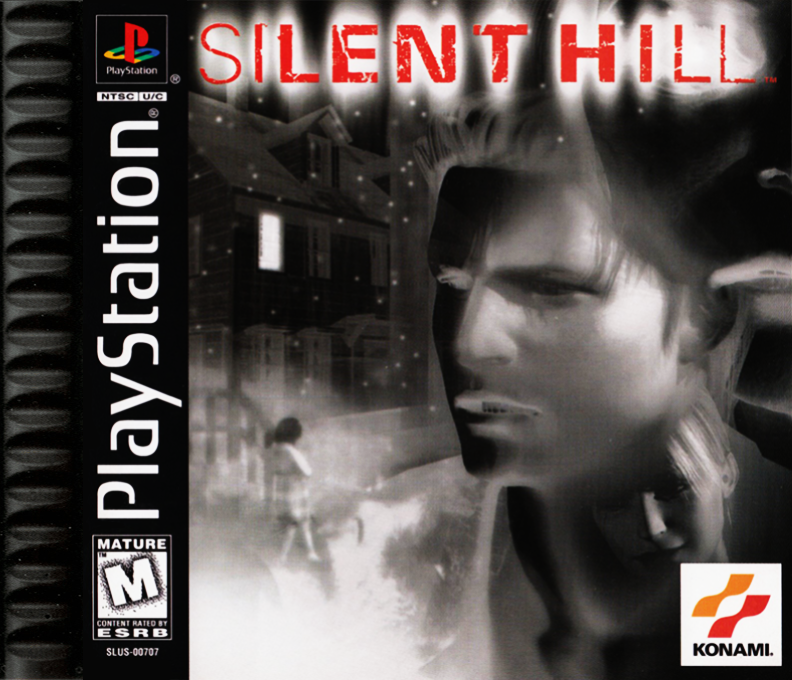
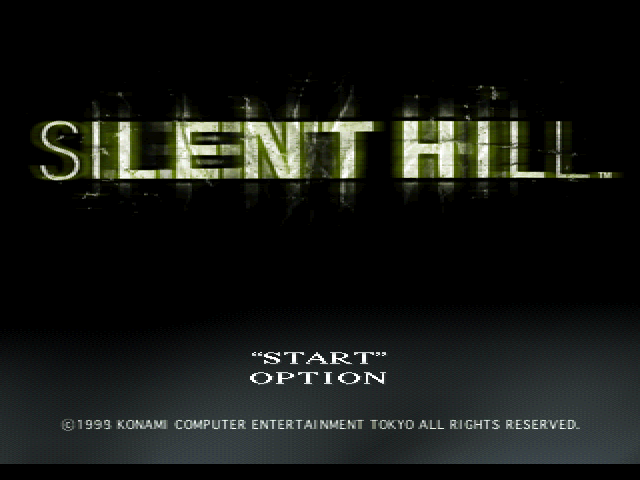
Silent Hill is the original 1999 PlayStation survival-horror game from Konami, developed at Konami Computer Entertainment Tokyo by the internal team commonly called Team Silent. It introduced the series as a self-contained nightmare centered on an American resort town whose deserted streets, blanketing fog, and out-of-season snow make even the opening walk feel unsafe. The PlayStation release arrived in North America on January 31, 1999, followed by Japan on March 4 and Europe later that year. This is the first game in the franchise, not the later 2006 film, the 2009 reimagining Silent Hill: Shattered Memories, or the later sequel Silent Hill 2.
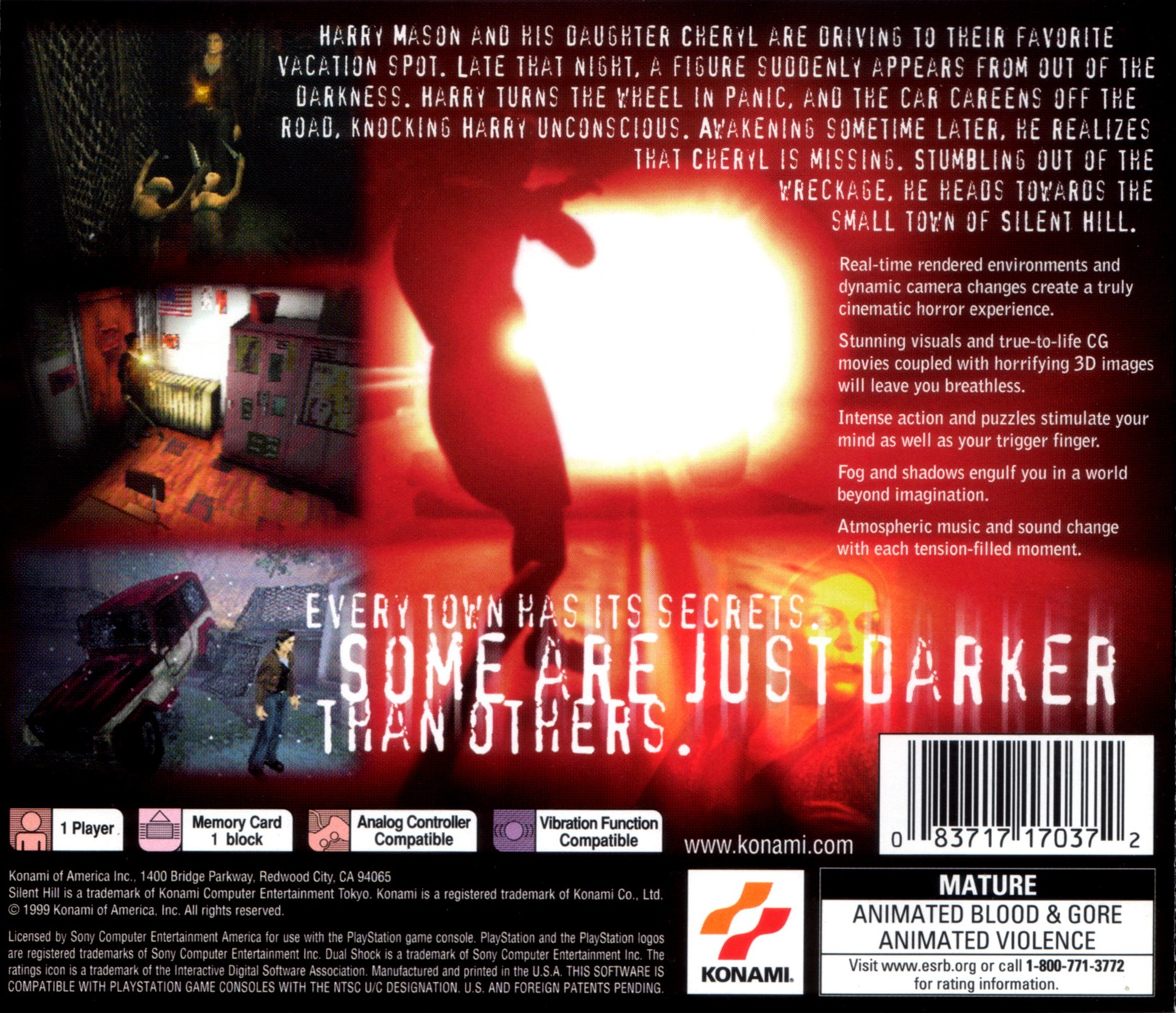
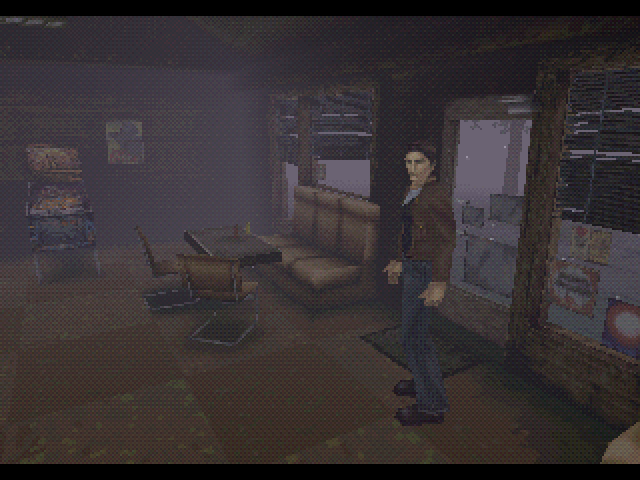
The story begins when writer Harry Mason drives toward Silent Hill with Cheryl, his seven-year-old adopted daughter. On a mountain road at night, Harry swerves to avoid a figure in the headlights and crashes. He wakes in his wrecked jeep to find Cheryl gone. A path through the fog draws him into town, where he encounters an abandoned café, a wary police officer named Cybil Bennett, and signs that the familiar streets are changing into something rusted, dark, and hostile. His immediate purpose is simple and human: find Cheryl. The investigation gradually brings him into contact with doctor Michael Kaufmann, nurse Lisa Garland, and Dahlia Gillespie, whose evasive guidance points toward the town's older secrets.
Silent Hill mixes exploration, combat, item use, and environmental puzzles from a third-person perspective. Harry searches houses, schools, a hospital, shops, sewers, and other connected locations for keys, maps, notes, healing items, ammunition, and puzzle clues. Maps mark doors, locks, and places Harry has examined, turning careful orientation into a useful survival tool. The camera can shift to more dramatic fixed angles in selected spaces, but the world itself is rendered in real time rather than laid over pre-rendered backdrops. The town's dense fog and deep shadows limit sightlines, conceal the PlayStation's draw distance, and make a short journey between landmarks feel unnervingly uncertain.
Harry is deliberately an ordinary father rather than a trained fighter. He can defend himself with improvised melee weapons and firearms, yet attacks are awkward, ammunition is finite, and running can leave him winded. The pocket radio is one of the game's defining tools: it crackles when monsters are nearby, warning the player without revealing exactly where danger is waiting. A flashlight improves visibility but also makes Harry easier to notice. These small systems encourage choices about whether to investigate, fight, conserve supplies, or retreat. The game makes tension out of incomplete information, especially when distorted shapes and sounds emerge from the fog before their source is visible.
As Harry follows clues, Silent Hill repeatedly slips from its fog-bound ordinary state into a more grotesque Otherworld. Familiar interiors become corroded, blood-stained, or enclosed by industrial-looking grates; rooms reconfigure; and the town's history surfaces through documents, symbols, and encounters. The central mystery concerns Alessa Gillespie, a girl connected to Cheryl, and a local cult's effort to bring its deity into the world. The game uses that occult plot to frame a personal story about trauma, exploitation, identity, and a parent refusing to abandon a child. It gives answers in fragments rather than explaining every image outright, allowing atmosphere, sound, and visual transitions to carry as much weight as dialogue.
Keiichiro Toyama directed and wrote the game, while Akira Yamaoka served as composer and sound director. Yamaoka's score moves between spare melodic pieces and harsh ambient noise, with sirens, metallic scraping, static, and distant cries helping define the town as much as its fog does. Team Silent's work built a particular kind of psychological horror: monsters and locations are frightening not only because they attack Harry, but because the world seems to reflect buried suffering and an unstable reality. That approach set the first Silent Hill apart from more action-led survival horror of the period, even though it shares genre foundations such as limited resources, puzzles, exploration, and boss encounters.
Player actions affect which conclusion Harry reaches. There are several standard endings, along with a comic UFO ending, and the outcome can depend on choices and discoveries during the playthrough rather than on one final dialogue selection. That structure gives a repeat visit a reason to notice optional scenes, items, and character relationships that may have seemed incidental the first time. The core journey remains Harry's search for Cheryl, but its revelations establish story threads later continued by Silent Hill 3. Silent Hill 2, by contrast, tells a different protagonist's story in the same town and should not be confused with Harry and Cheryl's original plot.
Silent Hill became the foundation of a long-running Konami series, but the 1999 PlayStation game remains distinctive for its specific cast, story, and technical character. Its polygonal streets, fog, real-time lighting, radio interference, and raw PlayStation-era presentation are part of the experience rather than details supplied by later adaptations. The film borrows elements and imagery but is not a retelling of every event in this game, while Shattered Memories reworks the missing-daughter premise with altered characters, psychological profiling, no conventional combat, and a different structure. For the original, the essential experience is guiding Harry through a town that becomes less comprehensible the closer he gets to the truth.
Gallery
Details
- Developer
- Team Silent
- Publisher
- Konami
- Genre
- Survival Horror
- Players
- 1
- Release Date
- January 31, 1999
- System
- PS1