About
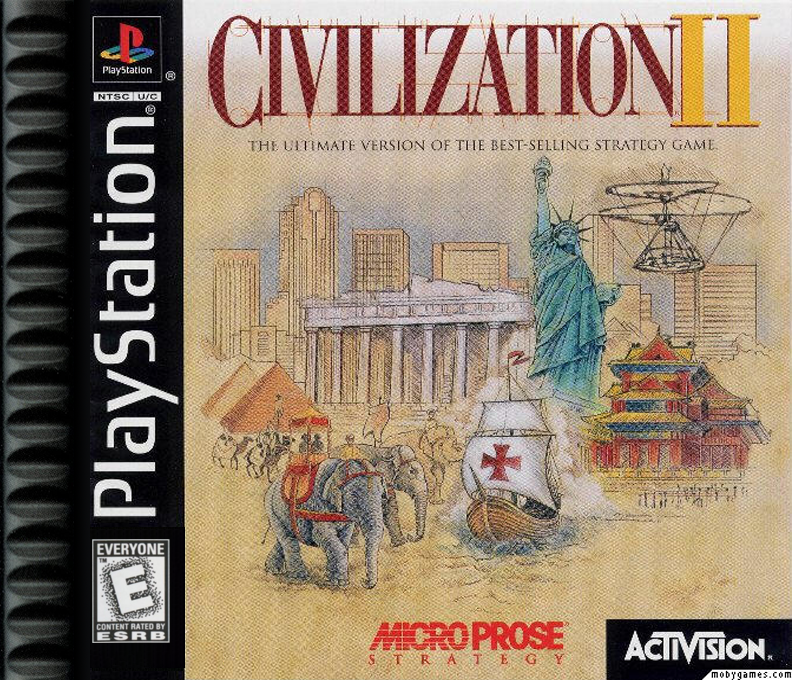
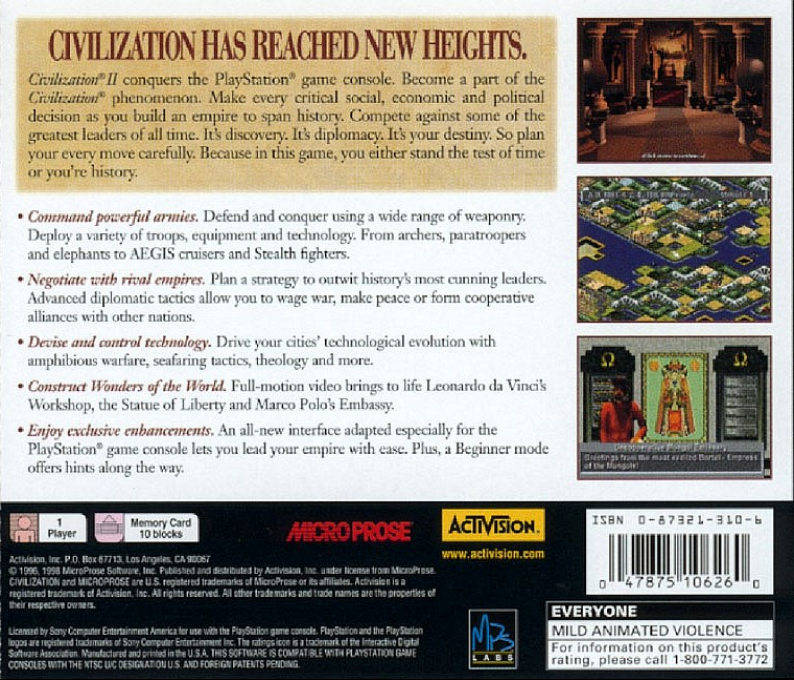
Civilization II for PlayStation brings MicroProse's landmark turn-based empire-building strategy game to Sony's console. Originally developed by MicroProse for computers and released in 1996, this version was published by Activision in North America in late 1998, with Japanese and European releases following around the same period. It asks one player to guide a chosen civilization from a small settlement in ancient times toward a position of global power, using exploration, city growth, research, diplomacy, and warfare across a long historical timeline.
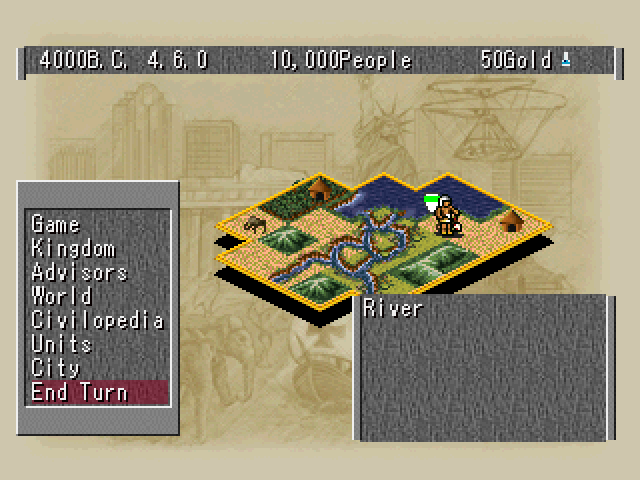
A new game begins with only a few units on a partly hidden world map. Settlers can found cities, while scouts and military units reveal terrain, locate resources, meet rival nations, and protect expanding borders. Every turn gives the player decisions to make: which nearby tiles should support each city, whether to improve land with irrigation or roads, what a settlement should produce next, and when to commit forces to offense or defense. Food helps cities grow, production builds units and improvements, and trade supports research and the wider economy.
Technology is central to Civilization II's progression. Researching advances gradually opens fresh tools, military options, civic choices, and city projects, carrying a civilization from basic agriculture and early government toward industry, modern weaponry, and space travel. Cities can create practical improvements, defensive structures, and famous world wonders with broad strategic effects. The result is a campaign in which an early choice about a city site or research priority can shape possibilities many turns later.
Other civilizations compete for the same territory and resources. Encounters can lead to treaties, exchanges, alliances, tense border disputes, or open war. Units occupy individual map squares and have distinct movement and combat roles, so terrain, positioning, and supply of replacement forces matter. Capturing an enemy city changes the balance of the map, but an empire also has to contend with the demands of its own population as it becomes larger and more advanced. Barbarian activity adds another hazard beyond the established rival powers.
Civilization II offers more than one route to a successful game. Players may attempt to eliminate competing civilizations through conquest, pursue the scientific advances needed to launch a spaceship toward Alpha Centauri, or remain standing until the game's final year and receive a score based on their civilization's achievement. This mix makes peaceful expansion, scientific planning, diplomacy, and military strength viable parts of the same match rather than separate game modes.
The PlayStation edition adapts the series' dense isometric map and menu-driven management for a controller while retaining the core single-player campaign structure. Its console release is notable as an early attempt to bring the expansive Civilization formula to PlayStation: a game built around long sessions, careful planning, and a world that develops according to the player's choices. For fans of the series, Civilization II remains a key sequel, refining the foundations of the original Civilization with a broader range of strategic systems and a distinctive presentation that helped define the era's turn-based strategy games.
Gallery
Details
- Developer
- MicroProse
- Publisher
- Activision
- Genre
- Turn-Based Strategy
- Players
- 1
- Release Date
- December 31, 1998
- System
- PS1