About
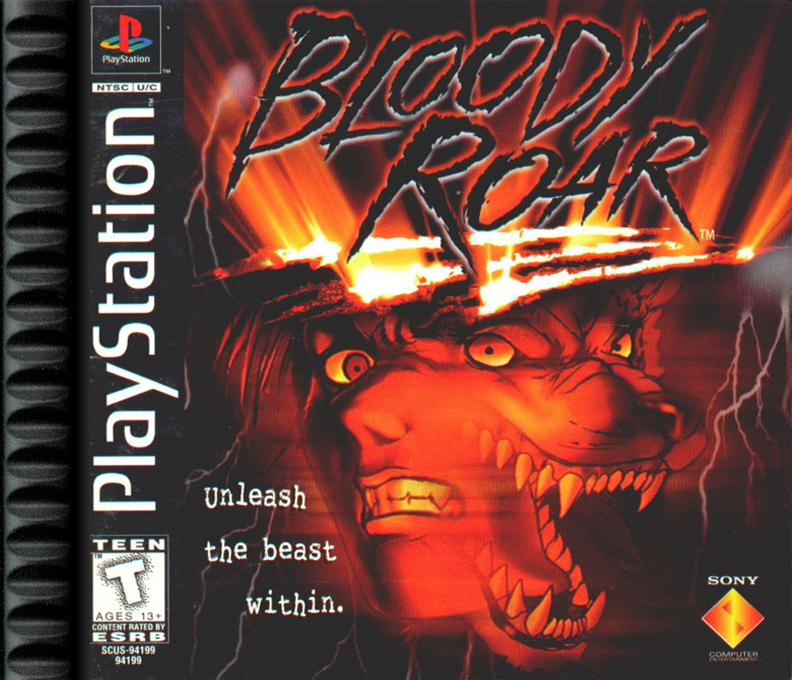
Bloody Roar for PlayStation is a 3D fighting game that brought Hudson Soft and Raizing's 1997 arcade concept to Sony's console. Released in Japan in late 1997 and in North America and Europe during 1998, it is the opening chapter of the Bloody Roar series. The arcade original was known as Beastorizer in North America, but the PlayStation release established the Bloody Roar name. Its central idea is simple and unusual for a fighter of its era: every combatant is a zoanthrope, able to take on a powerful animal form in the middle of a bout.
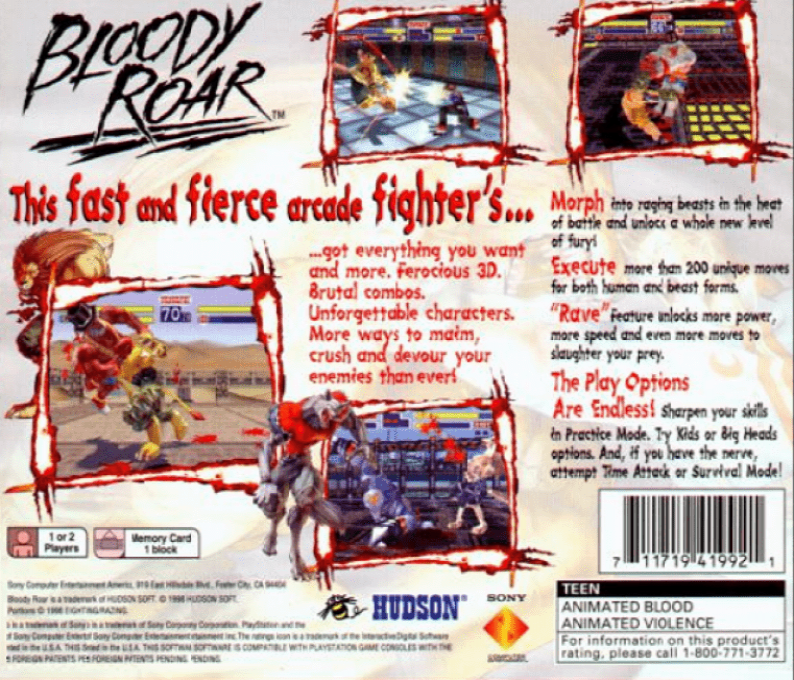
Matches are contested in enclosed 3D arenas, with a conventional round structure and a control layout based around punches, kicks, guarding, and throws. Directional inputs and button combinations produce character-specific attacks, while the game supports rapid strings, launchers, air juggles, counters, and defensive reversals. Positioning matters because walls and fences can turn pressure into extended attacks; sufficiently forceful impacts can break barriers and open the stage edge. The PlayStation version also gives players a sidestep command through the shoulder buttons, adding another option for avoiding a straight-on attack.
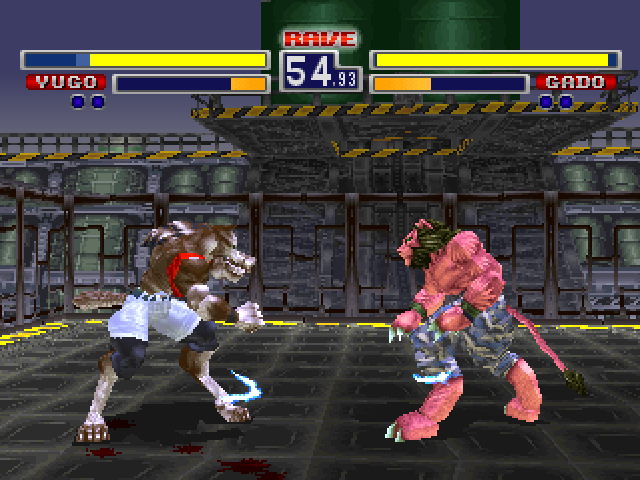
The Beast Gauge is Bloody Roar's defining system. Landing attacks builds the meter, and a filled gauge lets a fighter transform from human form into an animal-powered counterpart. These transformations are not merely visual: beast forms gain altered moves, greater offensive reach or mobility, and a measure of recovered health. Staying transformed creates a separate resource-management question, since opponents can knock a character back to normal through damage. The PlayStation edition adds Beast Rave, a faster, meter-consuming burst available while transformed that favors aggressive attack chains.
The initial roster includes eight playable fighters with different fighting styles and animal identities. Yugo becomes a wolf, Alice a rabbit, Long a tiger, Gado a lion, Fox a fox, Bakuryu a mole, Mitsuko a wild sow, and Greg a gorilla. Their individual Arcade routes frame a conflict with the Tylon Corporation, which seeks to exploit zoanthropes through experimentation and weapons research. Completing the stories leads to Uriko, an artificial chimera, while the character endings supply different perspectives on the same larger conflict.
Bloody Roar PS1 offers more than its story-focused Arcade route. Players can face another person in Vs. mode with selected stages and adjustable handicaps, or practice commands against a configurable opponent. Time Attack and Survival change the usual match priorities, while a spectator option lets computer-controlled fighters battle without player input. The options menu allows changes to round settings, CPU difficulty, blood effects, and destructible walls, and additional bonus settings become available through play. These modes make the game useful both for short competitive matches and for learning a chosen fighter's movement and combinations.
The move from arcade to PlayStation was not just a rename. Hudson Soft published the Japanese console edition, Virgin Interactive handled European distribution, and Sony Computer Entertainment America published it in North America. Raizing, later associated with the Eighting name, remained the developer behind the game. The PlayStation release also received new music and console-specific features, while preserving the rapid pace and transformation-based identity that separated it from other late-1990s polygonal fighters.
As the first Bloody Roar game, this PlayStation entry introduced the series' lasting blend of human martial artists and animal transformations. Its follow-up, Bloody Roar 2, arrived on PlayStation in 1998, but the original remains the foundation for the setting, zoanthrope terminology, Tylon conflict, and Beast Gauge-driven combat. For players exploring PS1 fighting games, Bloody Roar stands out for making transformation a tactical part of every match rather than a one-time cinematic flourish.
Gallery
Details
- Developer
- Hudson
- Publisher
- Hudson
- Genre
- Fighting
- Players
- 1-2
- Release Date
- October 31, 1997
- System
- PS1