About
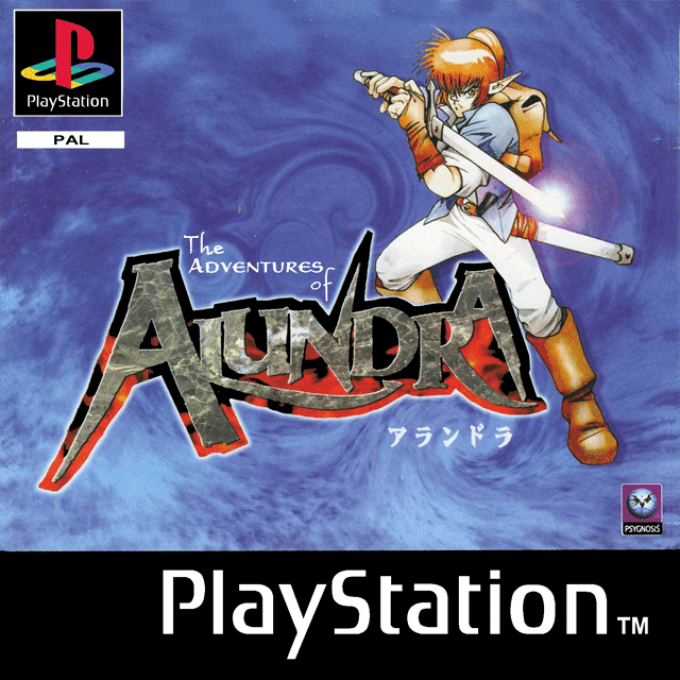
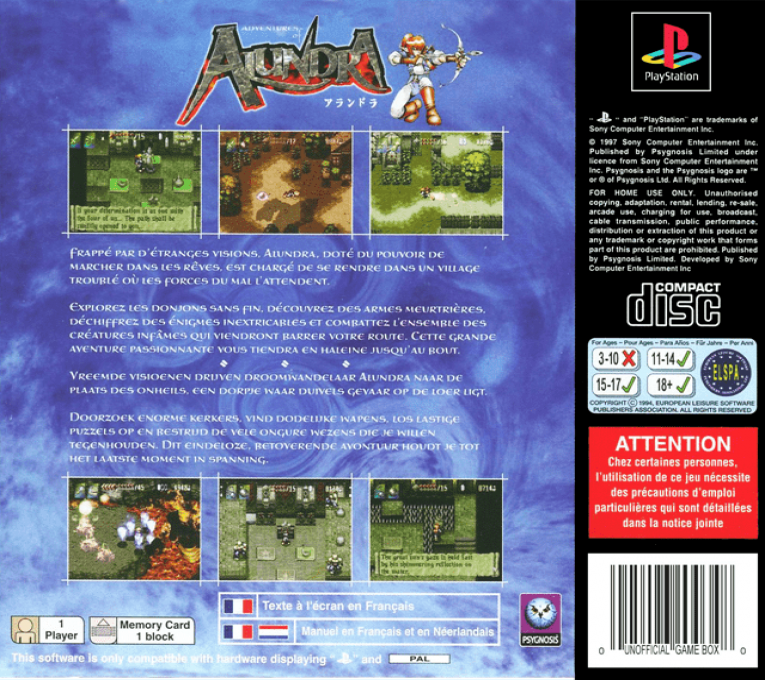
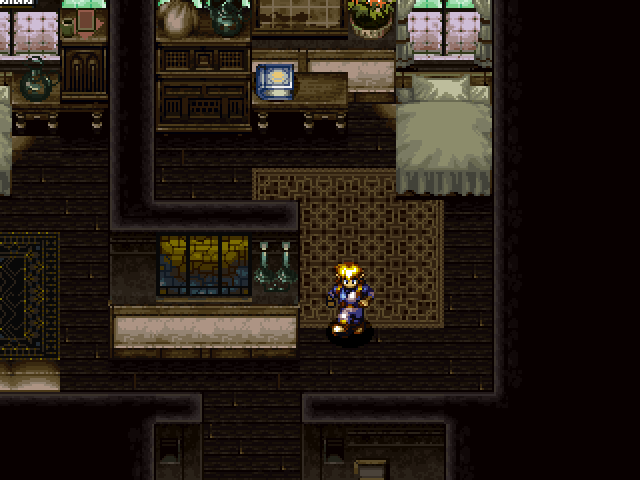
Alundra is a PlayStation action-adventure game from Matrix Software, released in Japan in 1997 and brought to North America by Working Designs in 1998. Psygnosis published the PAL release as The Adventures of Alundra. Built around an isometric, sprite-based world rather than the polygon-heavy direction many contemporaries took, it blends close-quarters action, exploration, platforming and demanding environmental puzzles into a long island adventure.
The story follows Alundra, a young Dreamwalker from the Elna clan. Drawn toward the island village of Inoa by a recurring vision, he is shipwrecked before he can reach it. Blacksmith Jess rescues him, but safety proves temporary: Inoa's residents suffer nightmares with consequences that reach into waking life. Alundra's ability to enter their dreams makes him uniquely able to confront the force behind the crisis, while fear and grief begin to turn some villagers against him.
Exploration is the foundation of the adventure. Players travel between Inoa, the surrounding wilderness, caves, ruins and dream worlds, gradually opening new paths with key items and tools. The game rewards careful observation as switches, movable blocks, breakable obstacles and clues from residents can change how an area is read. Its world is designed as a connected place, so revisiting earlier locations with new abilities is an important part of uncovering secrets and progressing.
Combat occurs in real time. Alundra can attack with swords and other weapons, use magic and items, and improve his survivability through discoveries made during the journey. Movement is as important as fighting: jumps, ledges, hazards and varying terrain all affect traversal. The perspective makes timing and spatial judgment part of the challenge, particularly in dungeons that combine enemies, traps and platforming with puzzles.
The dream-walking premise gives the game its distinctive structure. Rather than treating dreams as a decorative story device, Alundra enters spaces shaped by individual characters and their fears, turning personal danger into playable dungeons. The narrative grows increasingly somber as it deals with loss, faith, fate and the strain placed on a community under threat. Meia, another Dreamwalker, eventually joins the larger conflict against Melzas, the power exploiting the villagers' belief and nightmares.
Alundra is often compared with Landstalker and The Legend of Zelda because of its angled view, dungeon exploration and action-puzzle focus, but its platforming and severe puzzle design give it a different rhythm. Several Matrix staff members had worked on Landstalker, and producer Yasuhiro Ohori described a design philosophy that favored player skill over a conventional experience-point system. The game also features music by Kohei Tanaka, supporting its shifts between adventurous exploration and a more unsettling story.
Contemporary reviews praised Alundra's large world, mature localization, fluid controls and especially its inventive puzzles, while also noting that its 2D presentation looked deliberately old-fashioned beside newer 3D PlayStation games. Its difficulty remains a defining feature: progress can demand close attention to dialogue, experimentation and persistence. For players looking for a PlayStation-era action RPG centered on hands-on problem solving rather than stat grinding, Alundra remains a substantial and distinctive journey through a troubled island and the dreams of the people who live there.
Gallery
Details
- Developer
- Matrix Software
- Publisher
- Psygnosis
- Genre
- JRPG
- Players
- 1
- Release Date
- June 5, 1998
- System
- PS1