About
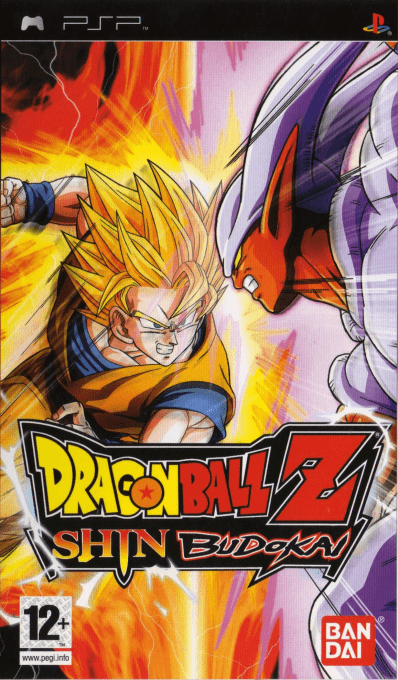
Dragon Ball Z: Shin Budokai for PSP is a 2006 Dragon Ball Z fighting game developed by Dimps. It brought the Budokai-style formula to Sony’s handheld, launching in North America on March 7 before arriving in Japan and Europe later that spring. Bandai handled the Japanese release, while Atari published it in North America and Australia and Namco Bandai Games handled Europe. Built around familiar Dragon Ball Z fighters and the series’ high-speed energy battles, Shin Budokai is a portable one-on-one combat game with a substantial solo campaign as well as local system-link competition.
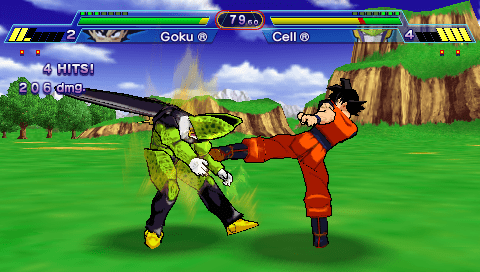
Fights take place in 3D arenas while the action follows the close-range exchanges, evasions, beam attacks and transformations associated with the anime. Players use the PSP’s face buttons for rush attacks, heavier smash attacks, guarding and ki blasts, then combine directions and buttons to launch character-specific special techniques. Holding the L button builds ki, an important resource for stronger attacks and movement options. Aura Burst can turn an opening into a more forceful offensive sequence, while well-timed defensive actions and teleports help fighters escape pressure. The result is a match system that asks players to balance direct attacks, ki management, positioning and the opportunity to transform when a selected character is able to do so.
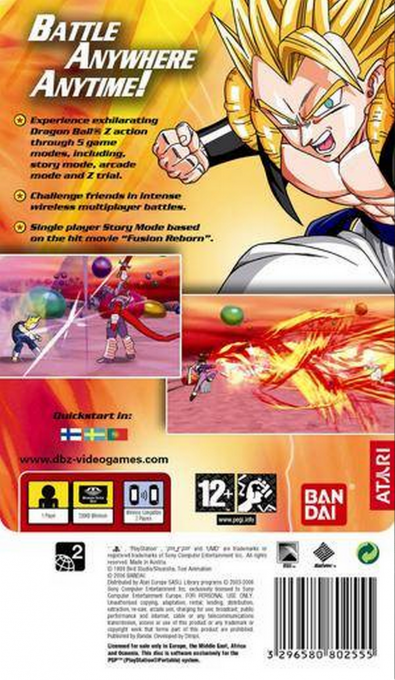
The main single-player mode, Dragon Road, takes its starting point from the Dragon Ball Z film Fusion Reborn. A portal from the afterlife opens on Earth and the dead begin returning, sending Goku and his allies into a chain of battles across locations including Earth and Hell. The campaign is divided into chapters, and its route uses player choices to determine how events unfold. Rather than simply replaying one fixed ladder, Dragon Road connects story scenes and battles in a branching presentation that gives the film-inspired premise its own game structure. It also supplies a way to encounter a broad selection of Dragon Ball Z characters outside of straightforward versus matches.
Several additional modes support different kinds of solo play. Arcade Mode presents a run of CPU opponents, with Dragon Balls awarded as the player advances through its ladder. Z Trial splits its challenges between Survival, where the goal is to keep winning for as long as possible, and Time Attack, which emphasizes clearing preset courses quickly. Training Mode lets players practise against a computer-controlled opponent while adjusting battle conditions such as health and starting ki. These options make it possible to learn a fighter’s moves, work on defensive timing, or approach the game as a sequence of short score- and endurance-oriented challenges instead of only following the campaign.
Shin Budokai also uses the PSP’s wireless capabilities for head-to-head Network Battle matches between players. The Profile Card feature gives that multiplayer side a personalized record: it stores battle data such as wins, losses, power level and other performance information, and players can decorate the card with items bought through the in-game shop. That card can display friends as well, making it more than a menu cosmetic; it acts as the game’s portable identity system for wireless competition. Together with the combat’s fast inputs and character transformations, this made the PSP version a distinct entry rather than a direct conversion of an earlier home-console Budokai game.
As the first Dragon Ball Z game released for PSP, Dragon Ball Z: Shin Budokai established a handheld branch of Dimps’ work on the franchise. Its combination of film-based story material, arcade challenges and wireless fights was followed by the PSP sequel Dragon Ball Z: Shin Budokai: Another Road in 2007. For players looking for a Dragon Ball Z fighting game designed around the PSP’s controls and short play sessions, the original Shin Budokai centers on quick battles while still providing a campaign and multiple challenge modes to return to.
Gallery
Details
- Developer
- Dimps
- Publisher
- Bandai Namco
- Genre
- Fighting
- Players
- 2
- Release Date
- March 7, 2006
- System
- PSP