About
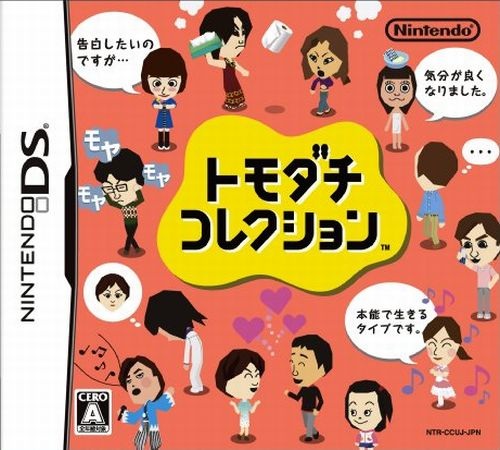
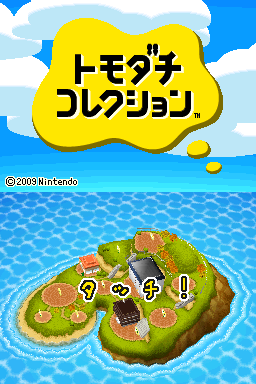
Tomodachi Collection for Nintendo DS is Nintendo’s Japan-only 2009 social simulation built around Miis: player-made lookalikes of yourself, relatives, friends, celebrities, or wholly invented residents. Released in Japan on June 18, 2009, the single-player game turns a small island into a miniature community where its inhabitants live according to the Nintendo DS clock. Nintendo presents the experience as “lookalike friend communication,” and that description captures its unusual appeal: there is no campaign to clear or final boss to defeat. Instead, the player creates a population and watches an unpredictable little society take shape.
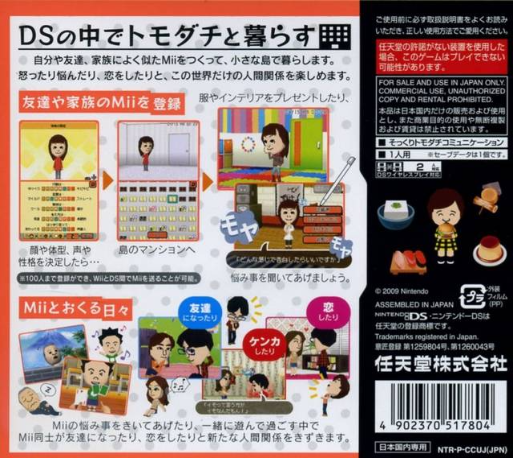
Every island begins with its residents. Miis can be made in the game by adjusting facial features, names, birthdays, personalities, and the style of their synthesized voices. Players with a Wii can bring over Miis created in the Wii Mii Channel, while local Nintendo DS wireless communication lets owners exchange Miis with other copies of Tomodachi Collection. The game can register up to 100 residents, so an island can begin as a small circle of familiar faces or grow into a deliberately strange mixture of real people and fictional characters. Those choices give each save file its own cast before the day-to-day simulation even starts.
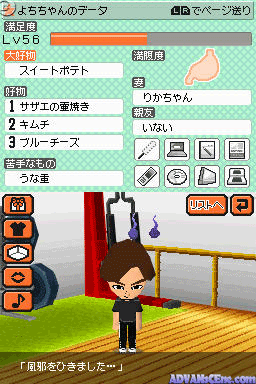
Life on the island unfolds in real time. Residents live in an apartment building and develop relationships independently, becoming friends, arguing, falling in love, and occasionally forming couples. When a Mii has a concern, a thought bubble signals that it wants the player’s attention. Requests can involve food, clothing, advice, or a short activity, and helping out improves that resident’s satisfaction. As Miis gain experience, the player can give them presents, including clothing, room interiors, catchphrases, and songs for performances. The player has influence over the community but never complete control, which makes checking in on new conversations and surprises central to the game’s rhythm.
Tomodachi Collection also layers shops, facilities, and collectibles onto its social observation. Meeting residents’ needs and taking part in activities opens up more of the island, while short minigames can award items that may be traded for money. Players can collect possessions, furnish apartments, and listen in on the dreams of sleeping Miis. The island’s news broadcasts and fountain events add to the sense that its residents have a schedule of their own. A compatibility feature and other venues turn the setting into more than one apartment block, but its heart remains the changing relationships among the characters the player chose to create.
The Nintendo DS entry is notably different from a conventional life simulator because it leaves the goal open-ended. A player can pursue higher satisfaction, hunt for valuables, build a busy town, or simply observe the personalities and relationships that emerge. Its simple touch-screen presentation keeps the focus on visiting residents and responding to their requests, while the deliberately artificial voices and Mii expressions give everyday situations an offbeat tone. That flexibility made it well suited to short daily check-ins as well as longer sessions spent expanding an island’s population and options.
Tomodachi Collection became a major Japanese success for Nintendo, which reported 3.2 million copies sold by the end of its fiscal year in March 2010. It remained exclusive to Japan, so it should not be confused with the later international Nintendo 3DS game Tomodachi Life. That 2013 Japanese sequel was called Tomodachi Collection: New Life and brought the series’ Mii-centered social-simulation idea to a new handheld generation. For Nintendo DS players, the original Tomodachi Collection stands as the first full version of the concept: a personal island where familiar faces can become the cast of an ongoing, unscripted comedy.
Gallery
Details
- Developer
- Nintendo
- Publisher
- Nintendo
- Genre
- Life Simulation
- Players
- 1
- Release Date
- June 18, 2009
- System
- NDS