About
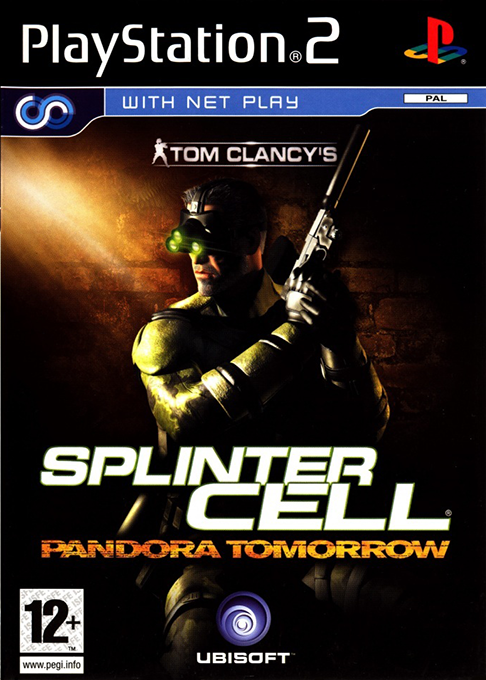
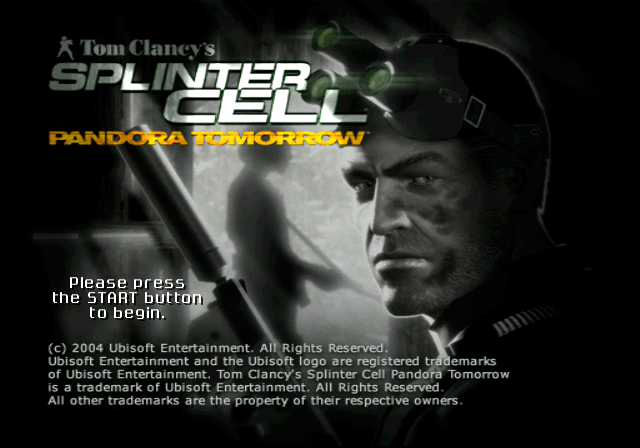
Tom Clancy’s Splinter Cell: Pandora Tomorrow for PlayStation 2 is Ubisoft’s 2004 stealth-action sequel to the original Splinter Cell. It returns players to the role of Sam Fisher, the field operative of the National Security Agency’s secretive Third Echelon unit, for an international covert-operation story set in 2006. Released on PS2 after the initial Xbox and Windows editions, this version adapts the series’ light-and-shadow espionage gameplay to Sony’s console while retaining the tense mission-based structure that defines Pandora Tomorrow.
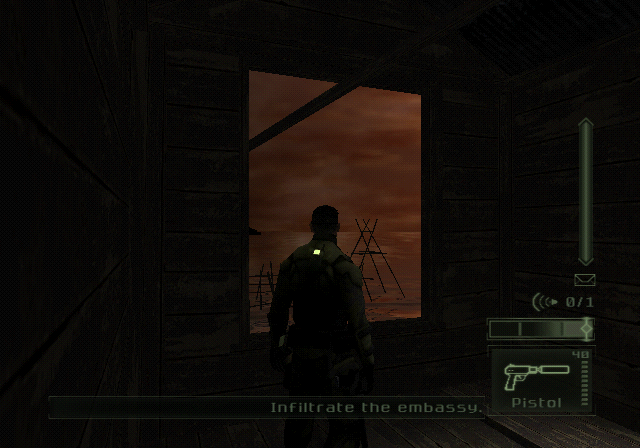
The campaign begins with a crisis surrounding East Timor and Indonesian anti-separatist forces. Fisher is dispatched to investigate attacks, recover intelligence, and prevent a growing threat from becoming an international disaster. His assignments lead through locations including a besieged embassy, Paris, Jerusalem, Jakarta, and Los Angeles, with orders delivered by Third Echelon director Irving Lambert. The plot connects the military conflict to a wider operation involving guerrilla leader Suhadi Sadono, rogue former operative Norman Soth, and the dangerous contingency known as Pandora Tomorrow.
Stealth is the central discipline. Sam works through guarded interiors and outdoor areas by staying in darkness, observing patrols, and choosing quiet routes around cameras, alarms, and armed opponents. A light meter helps indicate how exposed he is, while night-vision and thermal-vision goggles aid navigation and surveillance in difficult conditions. The pistol’s laser sight gives a clear aiming reference, but direct confrontation is generally risky; careful movement, timing, cover, and non-lethal takedowns are often the safer path to an objective.
Pandora Tomorrow expands Fisher’s repertoire with practical moves built for infiltration. He can whistle to draw a guard’s attention, carry a body while opening doors, fire while hanging upside down, and use a SWAT turn to slip past a doorway from cover. Split-jump positions between close walls, ledge movement, lockpicking, computer access, and gadget use turn many areas into compact environmental problems. Missions grade the player’s work through objectives and operational statistics, reinforcing the need to balance speed, information gathering, discretion, and survival rather than treating every encounter as a firefight.
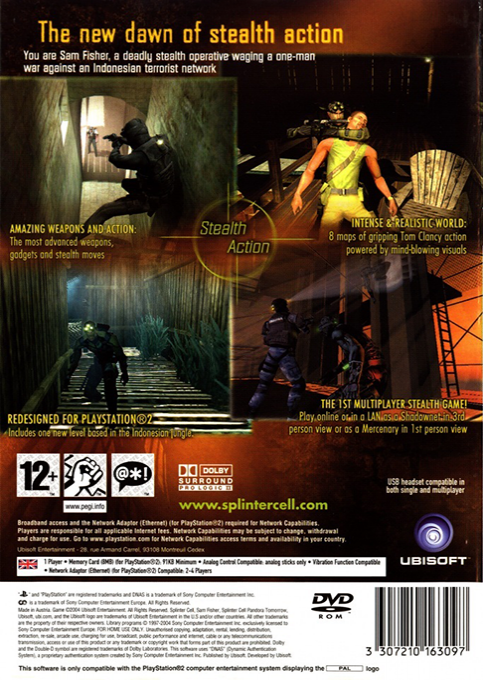
The PlayStation 2 edition is not simply identical to the Xbox and PC versions. Its single-player design was reconfigured for the hardware, and it includes additional single-player material created for the PS2 and GameCube releases to offset those changes. That makes the PS2 campaign a distinct console variant, even though it tells the same core story and uses the same recognizable Fisher tools and stealth principles. The original release also supported competitive online multiplayer, where two-player spy teams and mercenary teams used different viewpoints, abilities, gadgets, and goals in asymmetrical matches.
As the second entry in the Splinter Cell series, Pandora Tomorrow builds directly on the first game’s covert-agent fantasy while establishing ideas that continued through later installments. Michael Ironside again voices Sam Fisher, and the game’s mix of shadows, surveillance equipment, close-quarters maneuvers, and globe-spanning missions gives the PlayStation 2 release a clear identity within the early-2000s stealth genre. For players exploring the PS2 library, it offers a platform-specific take on a pivotal chapter between the original Splinter Cell and 2005’s Chaos Theory.
Gallery
Details
- Developer
- Ubisoft
- Publisher
- Ubisoft
- Genre
- Action-Adventure
- Players
- 1-4
- Release Date
- June 16, 2004
- System
- PS2