About
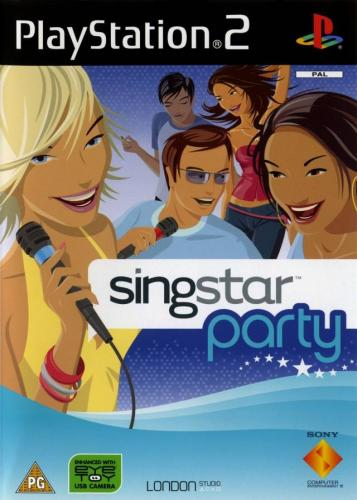
SingStar Party for PlayStation 2 is a karaoke and rhythm game from London Studio, published by Sony Computer Entertainment Europe in late 2004. It is the second entry in the PS2 SingStar series, following the first SingStar earlier that year, and it was released for European territories rather than as a North American retail title. The disc’s central purpose is straightforward: choose a licensed song, sing into the supplied USB microphones while its video plays, and try to match the onscreen vocal guide closely enough to build a score.
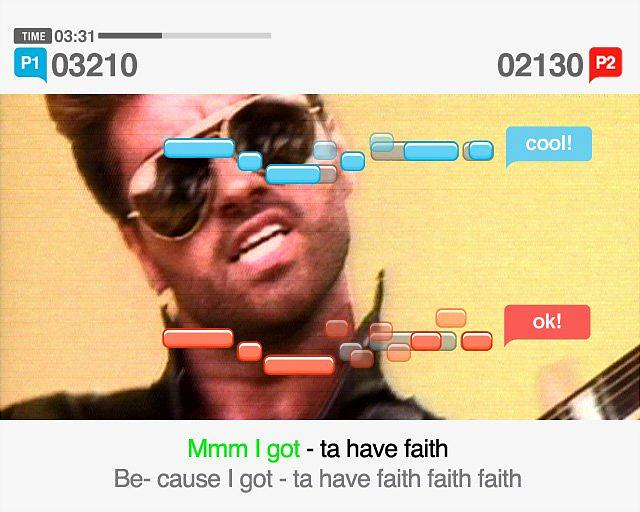
Each performance places lyrics and a rolling sequence of note bars on screen. The game compares the player’s vocal pitch and timing with the tune’s target line, turning familiar pop songs into a score challenge as well as a sing-along. A solo player can tackle a track alone, while two singers can use the red and blue microphones together. Some songs divide their vocal parts between the two microphones, allowing partners to share a duet instead of merely competing on the same material.
SingStar Party expands the social side of the original game with Battle and collaborative Duet options, plus a Pass the Mic party format for groups. In the party game, participants take turns and can be arranged in teams for a sequence of rounds rather than needing a microphone for every person. That design makes the PS2 game work as a living-room activity: one performer sings while the next player waits for a turn, and the score display gives a clear reason to cheer, challenge a rival, or try the same song again for a better result.
The standard English-language release contains 30 music-video tracks spanning several decades and styles. Its lineup includes Alicia Keys’ “Fallin’,” Busted’s “Year 3000,” Franz Ferdinand’s “Take Me Out,” Kylie Minogue’s “I Should Be So Lucky,” Maroon 5’s “This Love,” and Elton John and Kiki Dee’s “Don’t Go Breaking My Heart.” Those selections make the game a snapshot of an early-2000s party playlist while mixing contemporary hits with older pop, soul, rock, and novelty favourites. Track selections were localised for different European markets, so German, French, Italian, and Spanish editions do not simply duplicate every song on the UK disc.
Like later PS2 entries in the series, SingStar Party supports changing from its master disc to another compatible SingStar disc, letting owners return to songs from the earlier game without restarting the console. It also works with the EyeToy USB Camera, adding a visual element for players who want to see themselves alongside the music-video presentation and use the camera-related features. The game could be sold on its own for owners of existing microphones or bundled with the pair, making the required hardware part of its intended party setup.
The important addition here is not a new instrument or an elaborate story campaign, but a stronger set of ways to use the same pitch-scoring foundation with other people. By adding dedicated duets, team rounds, a region-shaped soundtrack, and compatibility with the first SingStar’s song disc, SingStar Party helped establish the format that many subsequent PlayStation 2 releases would follow: a focused collection of licensed tracks built for quick, repeatable group performances.
Gallery

Details
- Genre
- Rhythm Game
- System
- PS2