About
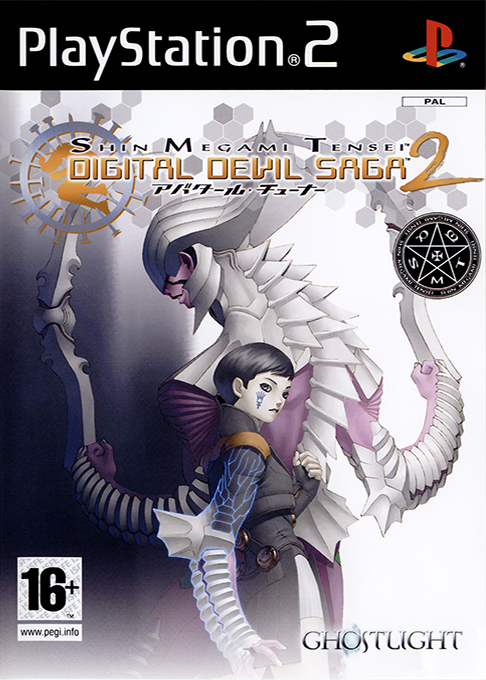
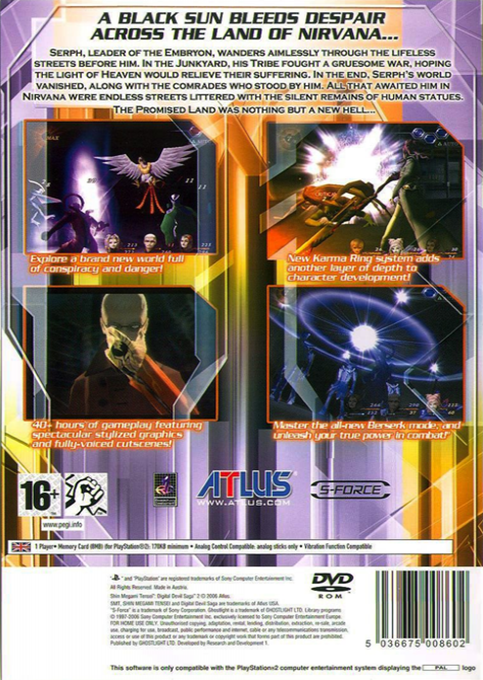
Shin Megami Tensei: Digital Devil Saga 2 is a PlayStation 2 role-playing game developed by Atlus and released in Japan and North America in 2005. Known in Japan as Digital Devil Saga: Avatar Tuner 2, it is the direct continuation and conclusion of the first Digital Devil Saga. The European release followed in 2007 through Ghostlight. Rather than begin a separate adventure, the game resumes with Serph and the Embryon after their escape from the rain-soaked Junkyard, making familiarity with the first chapter especially valuable.
The promised Nirvana proves to be a devastated real world. A blackened sun threatens those exposed to it, the survivors live under the control of the Karma Society, and the Embryon’s demonic condition remains central to their struggle. Serph, Argilla, Gale, Cielo, and their allies search for Sera while confronting the secrets behind the Junkyard and the disaster outside it. The story moves from the artificial battlefield of the previous game into ruined urban locations, resistance territory, and the institutions tied to the world’s collapse.
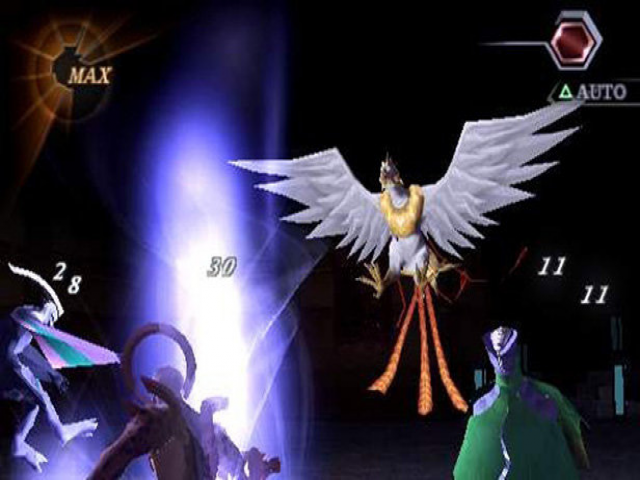
Exploration is presented from a third-person view, with towns, dungeons, shops, story scenes, and random encounters connecting the journey. Battles are turn-based and put up to three active party members on the field at once, while additional allies can be swapped in during combat. Characters can fight in human form or transform into their powerful Atma demons, whose skills and elemental affinities shape each encounter. The game is a single-player PS2 RPG built around party management, dungeon progress, and demanding boss battles rather than demon negotiation or collection.
Its combat uses the Press Turn system associated with Atlus role-playing games. Striking an enemy weakness or landing a critical hit can earn the team an extra action, while attacking an enemy that resists or nullifies an element can cost valuable turns. Enemies operate under the same rules, so scouting affinities, covering a party member’s vulnerabilities, and changing tactics quickly are essential. Physical attacks, elemental magic, healing, status effects, shields, and the ability to devour foes all feed into a battle system where a poor choice can swing the initiative to the opposition.
Character growth centers on Mantras, purchasable ability paths that party members master through battle. The sequel expands the customization structure into a broader grid, letting players decide which characters learn offensive magic, recovery skills, protection, automatic abilities, or specialized physical techniques. Atma gained by defeating and devouring enemies supports this progression, while money pays for new Mantras and supplies. The Karma Ring equipment system adds another layer: rings and their inserted gems can improve statistics or grant useful effects. This flexibility lets the familiar cast be developed in different ways from one playthrough to the next.
Digital Devil Saga 2 also introduces conditions and systems that distinguish it from its predecessor. Solar noise can force characters into a half-transformed berserk state, increasing their physical strength while restricting magic and leaving them more vulnerable. Roland, leader of the Lokapala resistance, joins the playable cast, broadening the party beyond the returning Embryon. Players with a completed save from the first game can import data for bonuses tied to prior character development, and some earlier choices affect smaller interactions. New Game Plus and a harder difficulty provide further challenges after the main story.
As a Shin Megami Tensei spin-off, Digital Devil Saga 2 keeps the series’ focus on difficult turn-based battles and supernatural imagery while telling a fixed, character-driven story. Its demon designs were created by series artist Kazuma Kaneko, and its soundtrack was composed by Shoji Meguro. The game’s themes of identity, survival, technology, and spiritual transformation give the final chapter a different atmosphere from the Junkyard conflict that precedes it. For players approaching the two PS2 games as one continuous narrative, this sequel delivers the revelations, expanded systems, and ending that the first game deliberately leaves unresolved.
Gallery
Details
- Developer
- Atlus
- Publisher
- Ghostlight
- Genre
- JRPG
- Players
- 1
- Release Date
- October 11, 2005
- System
- PS2