About
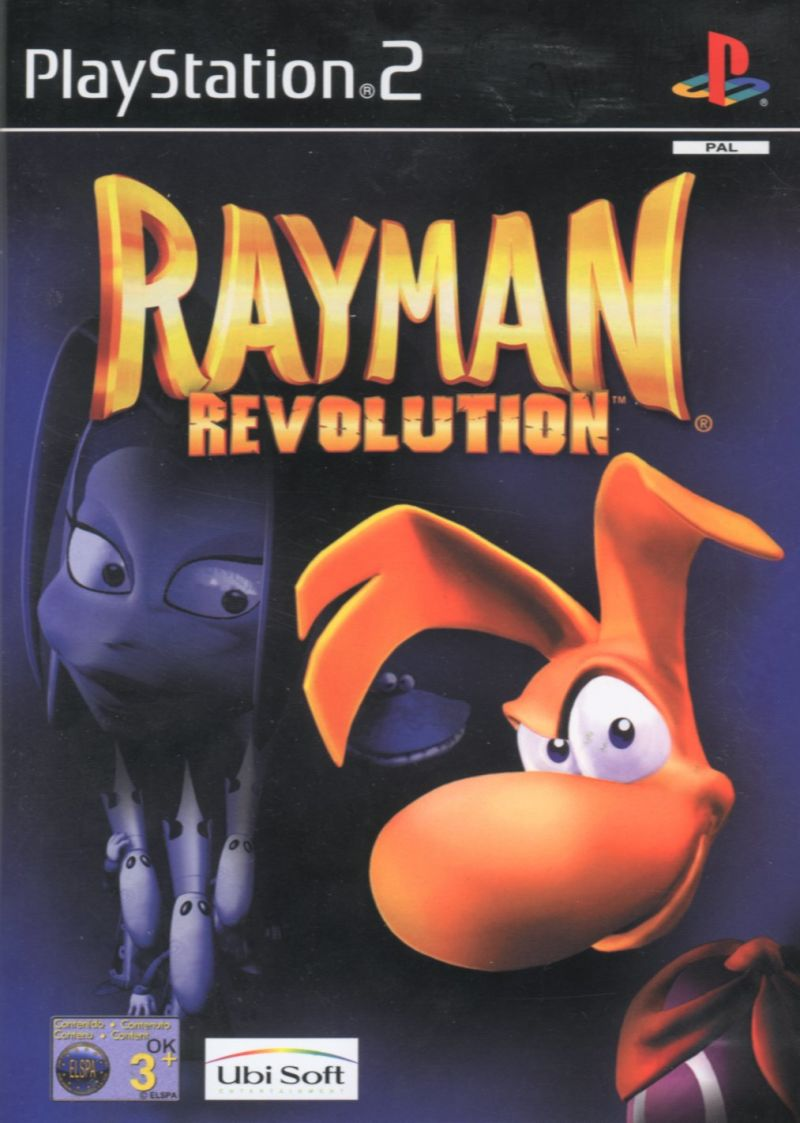
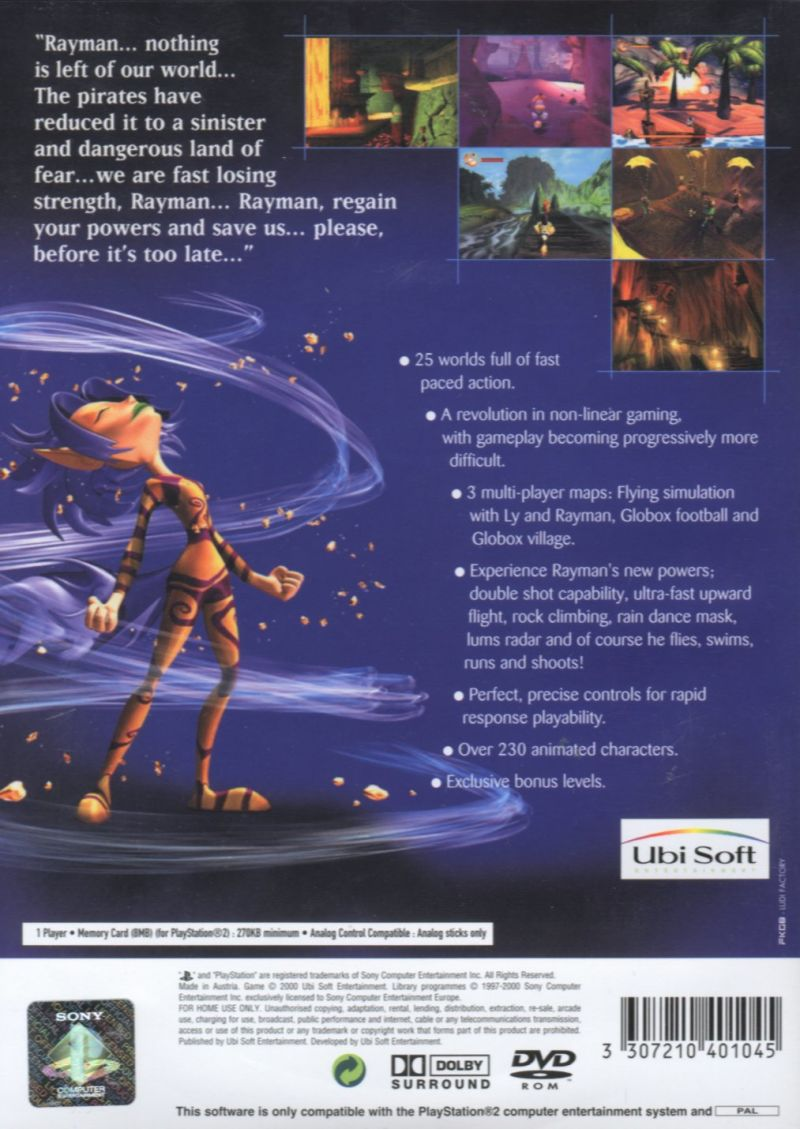
Rayman Revolution is the PlayStation 2 reworking of Rayman 2: The Great Escape, released in North America as Rayman 2 Revolution on January 30, 2001. Developed by Ubisoft Annecy and published by Ubisoft, it retells the same rescue quest: Admiral Razorbeard's Robo-Pirates have shattered the Primordial Core, imprisoned the inhabitants of the Glade of Dreams, and stripped Rayman of his abilities. A Silver Lum smuggled to him by Globox restores his first attack and sends him from the Prison Ship into a campaign to free friends, recover the four masks, awaken Polokus, and stop Razorbeard.
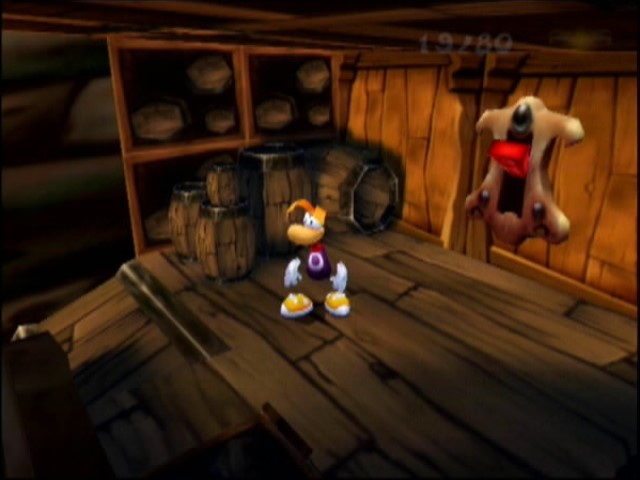
It remains a third-person 3D platformer built around movement, collection, light combat, and environmental problem-solving. Rayman jumps between precarious platforms, uses his helicopter hair to soften falls, swings from Purple Lums, and later rides or uses hazards and vehicles such as explosive barrels, plums, rockets, whirlwinds, and lava flows. His basic offense is the energy sphere fired from his detached fist. New powers make it possible to charge stronger shots and to strafe while aiming, so encounters with the differently armed Robo-Pirates ask the player to keep moving as well as shoot.
The structure is where Revolution most clearly departs from the original releases. The Nintendo 64 game used the Hall of Doors, a mostly linear level-selection route, while the PlayStation 2 version replaces it with three explorable hub areas collectively called the Front: Minisaurus Plain, Globox's House, and Rainbow Creek. Signposts point to available destinations, and Teensie Circles provide quick access to worlds already completed. The hubs make the stages feel like places within a connected world rather than entries on a menu, while still allowing return visits for missed collectibles.
Progression is tied both to story milestones and to collecting Yellow Lums. Rayman advances through the campaign to find the masks and gain the abilities required by later obstacles, but optional exploration feeds a separate reward loop. At each hub's Magic Well, Yellow Lums can be exchanged for upgrades, items, and minigames. Caged Familiar Spirits replace the original version's familiar cage rewards in this system; freeing enough of them opens activities at Ly's House, and completing those challenges can permanently extend Rayman's health. The result gives revisiting levels a practical purpose beyond simply pursuing a completion total.
Revolution preserves much of Rayman 2's varied journey, from the Woods of Light and Fairy Glade to the sanctuaries, caves, Iron Mountains, Prison Ship, and final confrontation in the Crow's Nest, but it is not a straight port. Existing levels were enlarged or rearranged, their order was adjusted, and new material was added. The Fairy Glade and Echoing Caves are among the areas notably expanded, while sections of the original Top of the World were repurposed: its chair sequence becomes a minigame and another section is folded into the revised cave material. New dialogue, cutscenes, music for the added areas, and additional boss content reinforce the remake-like approach.
Its presentation also takes advantage of the PS2 with sharper environments and more three-dimensional detail in assets that had previously been flatter. Players can choose conventional spoken dialogue or the series' stylized Raymanian voices, and Revolution supports saving partway through a level. These additions sit alongside the familiar tonal contrast of the adventure: bright, cartoon-like scenery and strange friendly characters frame a world occupied by industrial pirate machinery, cages, and hostile robots.
Compared with the Dreamcast version, Revolution is the more radically altered edition. Dreamcast retained the core level set, upgraded the Windows-quality textures, renamed the central selection space the Isle of Doors, and added Globox Village with its own crystal-based minigames. Revolution instead changes how the whole adventure is navigated and expands several stages around its hubs and reward economy. It is therefore best understood as an enhanced reinterpretation of Rayman 2 rather than merely the same game running on newer hardware.
Rayman DS, by contrast, follows the Nintendo 64 version's foundation rather than Revolution's PlayStation 2 redesign. The N64 original and its DS derivative use the established linear route and the N64's sequenced soundtrack, not the Front's three hubs, Familiar Spirit progression, or Yellow Lum purchases. For players who know Rayman 2 through N64, Dreamcast, or DS, Revolution offers the same central story and core movement vocabulary in a substantially different campaign flow - one that rewards exploration between levels as well as within them.
Gallery
Details
- Developer
- Ubisoft
- Publisher
- Ubisoft
- Genre
- Platformer
- Players
- 1
- Release Date
- January 30, 2001
- System
- PS2