About
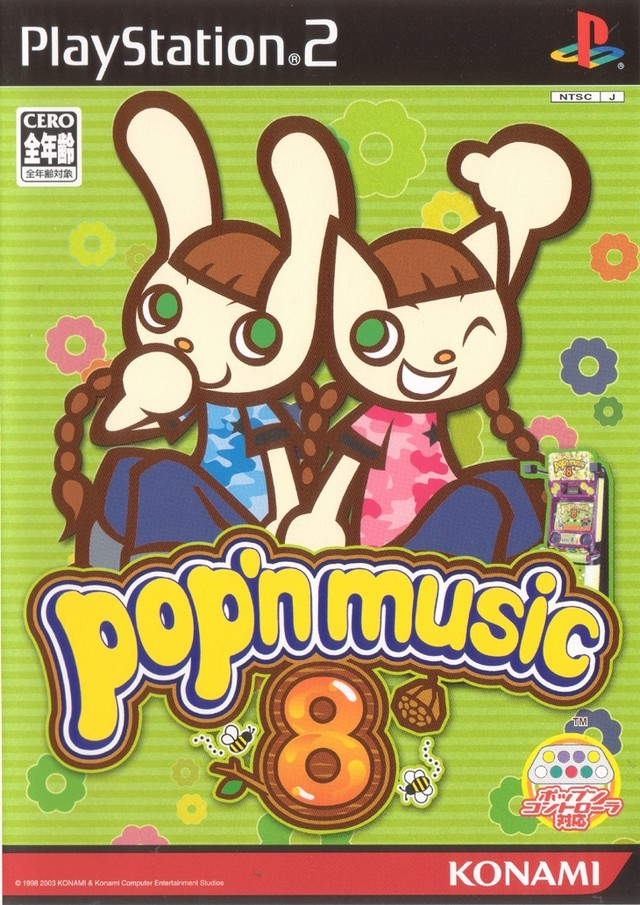
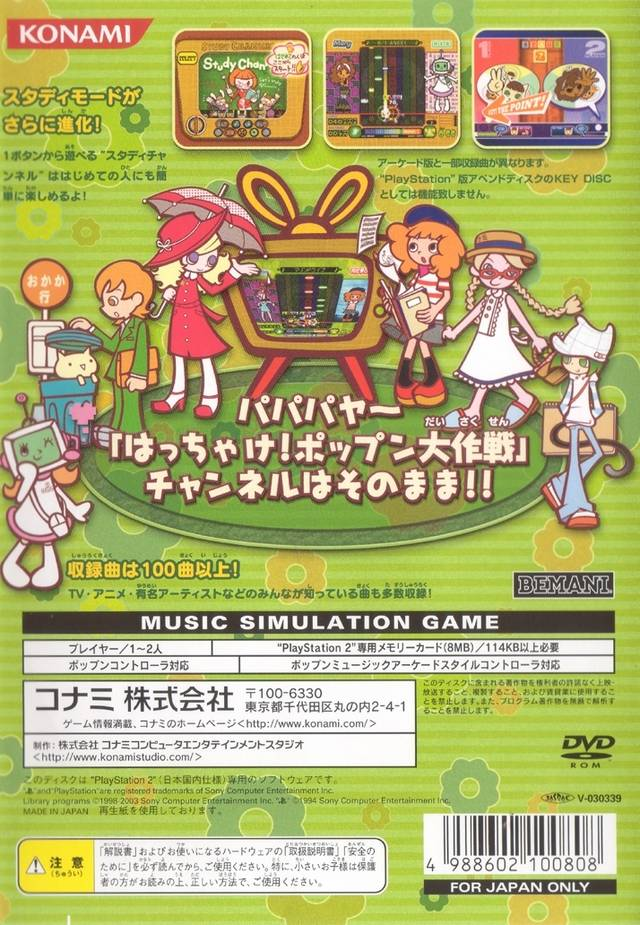
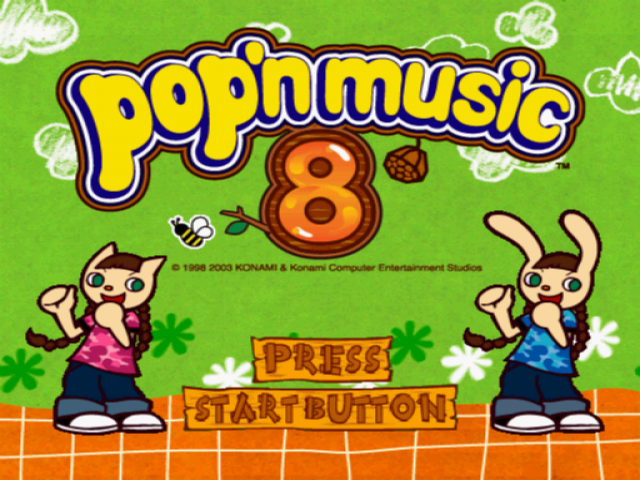
Pop'n Music 8 for PlayStation 2 is a Japanese rhythm game from Konami, released in 2003 as the home version of the eighth main entry in the long-running Bemani series. It follows the arcade release that arrived in 2002 and brings the series' colorful, character-led musical style to Sony's console. Like the other Pop'n Music games of its period, it is built around a deliberately simple idea that develops considerable depth: follow the rhythm, read the incoming notes, and press the matching controls at the right moment.
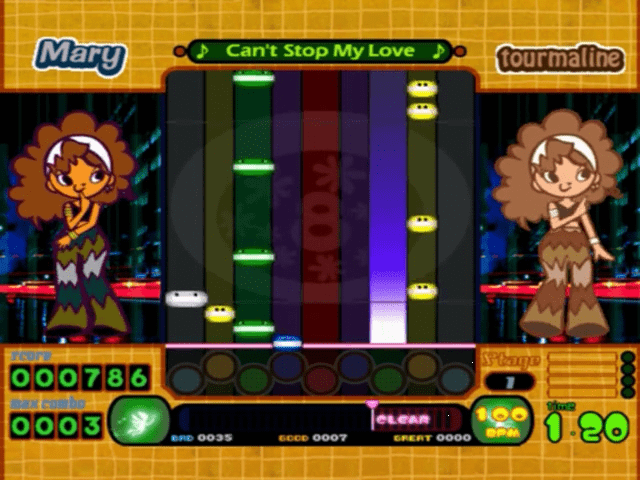
Play takes place across nine vertical lanes. Pop-kun markers travel toward the judgment line, and each one corresponds to one of the nine large colored buttons associated with the arcade format. Accurate timing adds to the score and helps fill the Groove Gauge; enough gauge at a song's end clears the stage, while repeated misses threaten a failure. The format makes every song a compact performance challenge, with dense patterns demanding faster hand movement and a firmer grasp of timing than the introductory charts.
The PlayStation 2 release supports the progression from accessible play to more demanding nine-button charts through multiple difficulty arrangements. Players can use a regular DualShock controller, though the game was also designed to work especially naturally with Konami's dedicated Pop'n Music controller. Its bright interface, falling-note display, and animated character presentation keep the information readable while matching the series' playful visual identity. A selected character serves as the player's on-screen representative, while songs are paired with their own themed characters and imagery.
Pop'n Music 8's music library draws on the franchise's broad genre approach rather than committing to one club-music style. Konami's series was conceived as a more wide-ranging companion to Beatmania, and this installment reflects that outlook with original Bemani material, licensed selections, returning series music, and console additions. The PS2 version has a different overall song lineup from the arcade original, including home-exclusive tracks, so it is more than a straight cabinet conversion. Its catalog moves among pop, rock, electronic music, novelty material, and genre labels specific to Pop'n Music's own playful vocabulary.
Several familiar modes give the game different ways to approach that collection. Arcade-style play centers on choosing songs and working through stages, while Challenge play introduces conditions and scoring goals that make individual performances less predictable. Battle mode turns the format into a two-player contest, with each participant handling a reduced set of buttons and using the available blue button to trigger disruptions against the opponent. Expert courses instead link songs into longer tests in which the remaining Groove Gauge carries greater importance. These alternatives make the same note-reading system useful for practice, competition, and endurance play.
A particularly distinctive console feature is Sugoroku de 8, a board-game-style unlock mode. Successful arcade play provides opportunities to advance across the board through randomized movement and challenges, gradually opening extra songs and other content. This gives Pop'n Music 8 a layer of collection and discovery alongside its immediate rhythm action. As a PS2 chapter in a series that had grown from Konami's late-1990s arcade music-game boom, it captures the era's emphasis on dedicated controllers, varied song catalogs, and increasingly elaborate modes while retaining the approachable nine-button premise at the heart of Pop'n Music.
Gallery
Details
- Developer
- Konami
- Publisher
- Konami
- Genre
- Rhythm Game
- System
- PS2