About
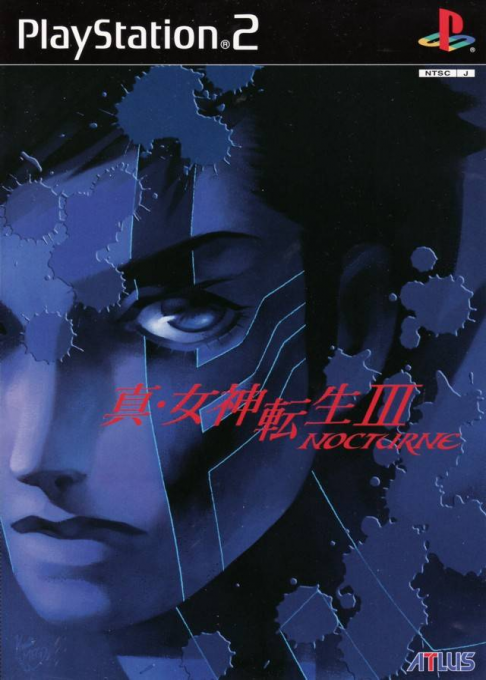
Shin Megami Tensei III: Nocturne is Atlus’s dark, post-apocalyptic role-playing game for PlayStation 2 and the third mainline Shin Megami Tensei entry. Atlus developed the game and published it in Japan; Atlus USA released the North American PS2 localization as Shin Megami Tensei: Nocturne on October 12, 2004. That western release brought a mainline Shin Megami Tensei game to overseas players for the first time, although its box title omitted the Roman numeral used in Japan.
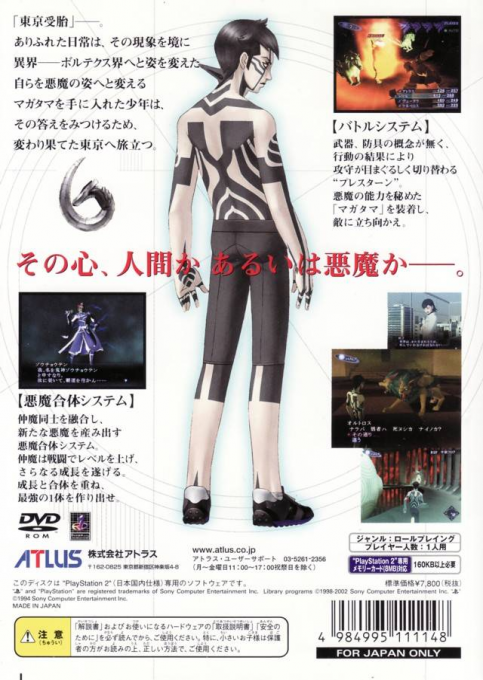
The story begins in contemporary Tokyo, where a high-school student arrives at a hospital just before the Conception erases the ordinary world. A Magatama transforms the survivor into the tattooed, half-demonic Demi-fiend, who awakens inside the Vortex World: the hollow, ruined remnant of Tokyo. Demons, cults, and the few humans left alive compete for Magatsuhi and the chance to decide what kind of world will be born next.
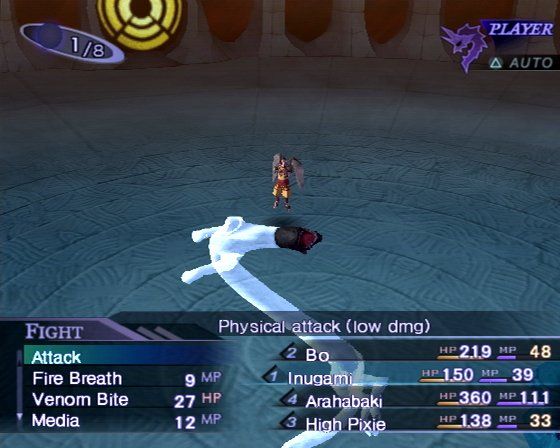
Nocturne’s turn-based Press Turn battle system makes affinities central to every encounter. A party normally has one action per active combatant, but landing a critical hit or striking an enemy weakness preserves momentum and creates an extra opportunity to act. Misses and attacks that are blocked, reflected, or absorbed can waste valuable turns, and the same rules empower enemies. Party composition, elemental coverage, buffs, and careful scouting therefore matter as much as raw levels.
Combat also feeds the series’ demon-collecting systems. The Demi-fiend can open negotiations with many enemy demons, responding to their questions, demands, and moods in hopes of gaining an ally rather than simply defeating it. At the Cathedral of Shadows, recruited demons can be fused into new forms with inherited skills, then registered and summoned through the Compendium. This constant cycle of talking, recruiting, fusing, and revising a three-demon party gives Nocturne much of its strategic depth.
The Demi-fiend’s own growth is built around Magatama. Equipping one changes his strengths, weaknesses, and resistances while offering a set of spells or physical techniques to learn as he gains levels. Because he can retain mastered skills after switching to another Magatama, players can shape a build that supports a particular demon team or addresses a difficult boss. The system makes the protagonist a flexible combatant without relying on conventional weapons or armor.
The Vortex World is not headed toward one predetermined conclusion. Surviving characters champion competing Reasons—visions for the next world such as Hikawa’s stillness, Isamu’s isolation, and Chiaki’s rule of strength—and decisions determine whether the Demi-fiend supports one of them or rejects them. The expanded route through the Amala Labyrinth develops Lucifer’s challenge to the Great Will and opens an additional ending, rewarding players who explore beyond the main path.
The North American PS2 release is based on Shin Megami Tensei III: Nocturne Maniax, the expanded Japanese edition rather than the original 2003 Japanese release. Its added Amala material includes Dante, the Devil May Cry demon hunter, as a recurring and formidable guest opponent. Europe received the same PS2-era game under the different title Shin Megami Tensei: Lucifer’s Call. The 2021 Shin Megami Tensei III: Nocturne HD Remaster returns the numeral, adds presentation and accessibility features, and uses the later Chronicle version’s Raidou Kuzunoha content by default; its optional Maniax Pack restores Dante.
Gallery
Details
- Developer
- Atlus
- Publisher
- Atlus
- Genre
- JRPG
- Players
- 1
- Release Date
- February 20, 2003
- System
- PS2