About
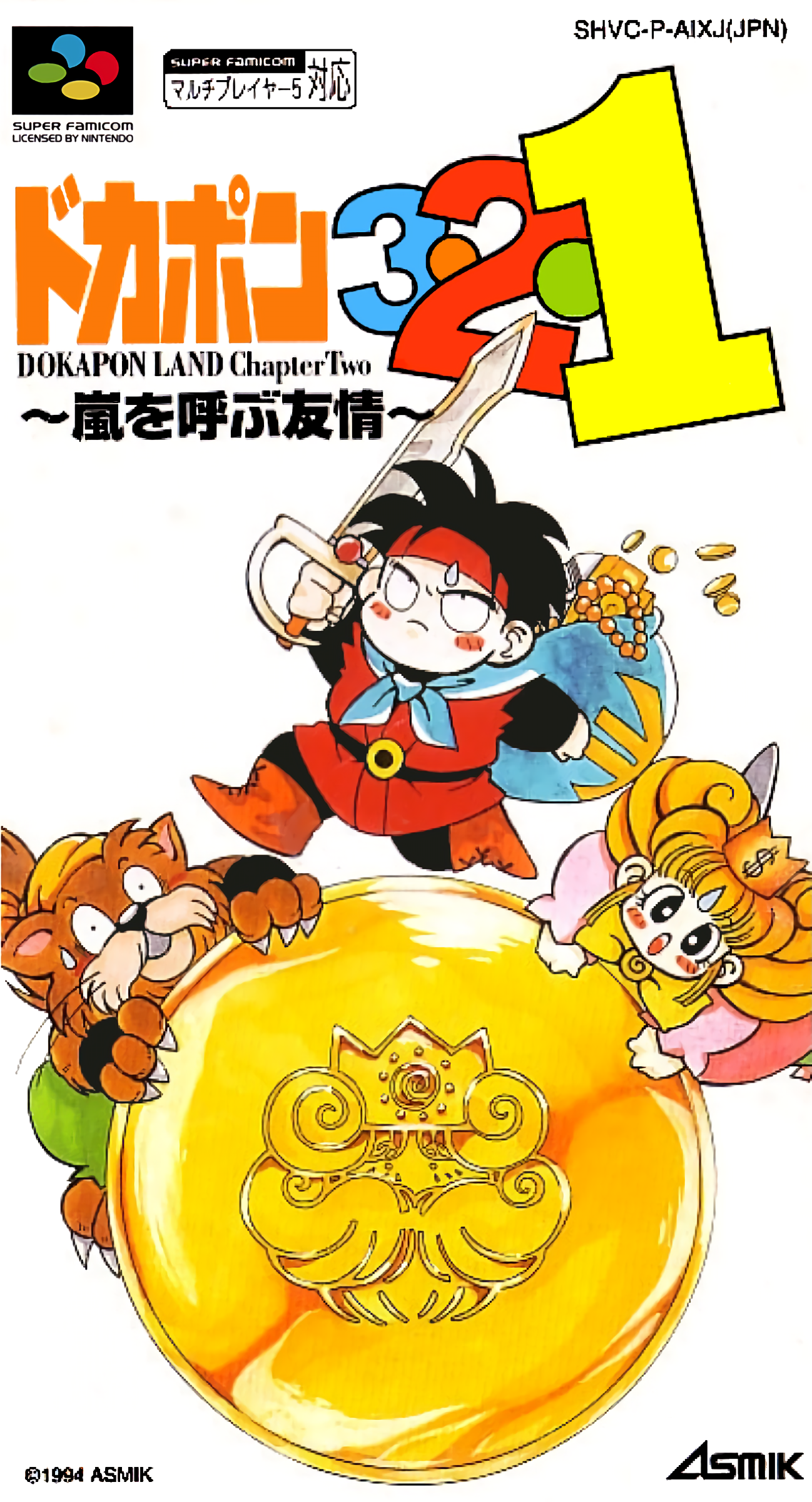
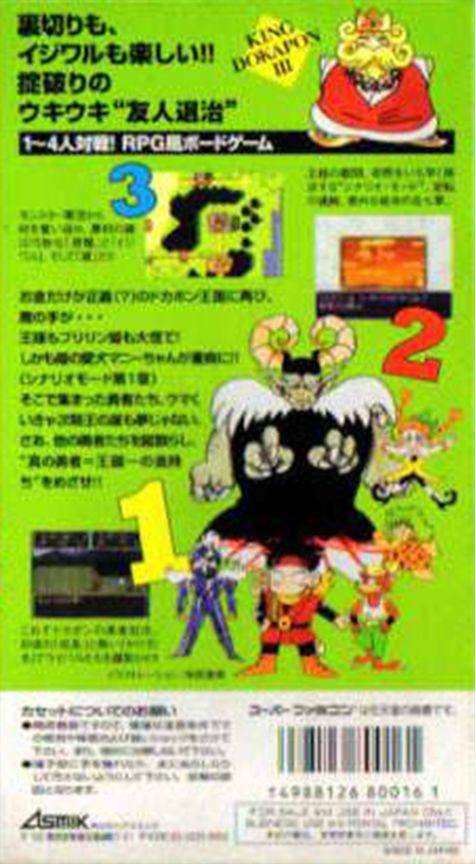
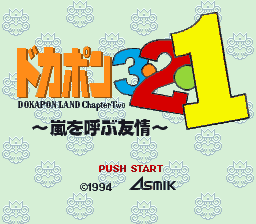
Dokapon 3-2-1: Arashi o Yobu Yuujou is a Super Famicom board-game RPG released in Japan on December 2, 1994. Developed and published by Asmik, it follows 1993's Dokapon Kingdom IV as part of the early Dokapon trilogy. Its Japanese title is written ドカポン3・2・1 ~嵐を呼ぶ友情~. The game turns a fantasy adventure into a competitive sugoroku-style journey: players travel around a map, confront monsters, improve their characters, and try to finish wealthier than their rivals.
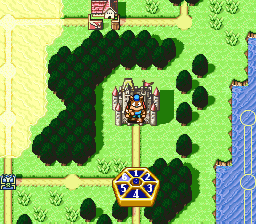
A turn begins with a roulette-style movement result, then the player chooses a reachable route across the board. Spaces can lead to encounters, shops, events, or fights, so picking a direction matters as much as the movement count. Battles are an essential part of the loop, supplying the experience and rewards needed to grow stronger. The Super Famicom controller supports the board-game rhythm directly: the D-pad moves the cursor and character, A confirms choices and stops the roulette, and Select opens the overall map.
Combat uses a menu of offensive and defensive choices rather than a purely automatic exchange. Alongside ordinary attacks and defensive actions, players can select magic, special moves, counters, and other commands; anticipating an opponent's choice can therefore be as important as a character's current strength. Equipment, items, money, and changing statistics give the light RPG framework consequences beyond a single encounter. Losing is costly too, which helps keep the contest moving as players jockey for position on the map.
Dokapon 3-2-1: Arashi o Yobu Yuujou can be played alone or with up to four participants. Its Scenario Mode gives the board-RPG competition a structured progression, while Battle Royale offers a more direct competitive format. The central tension comes from sharing the same routes and objectives: a player may build their own character, hunt monsters, and pursue map goals, but can also interfere with another adventurer's plans. This combination of party-game competition and role-playing advancement is the defining idea behind the Dokapon series.
The Super Famicom release is also notable for character designs by manga artist Ami Shibata. Asmik presented it as a follow-up that made the previous game's play more approachable while adding more playful mischief. Its concise maps keep individual contests moving, whether the game is being approached as a solo strategy challenge or a local multiplayer rivalry. The cartoonish presentation and board-game structure place it firmly among the Japanese Super Famicom's distinctive hybrid games.
Later history has kept this particular entry visible beyond its original Japanese cartridge release. Dokapon Kingdom, released for PlayStation 2 in 2007 and later Wii, remade Dokapon 3-2-1, while the 2026 Dokapon 3-2-1 Super Collection brought the original Super Famicom trilogy together for modern Switch and PC audiences. Those later releases underline the importance of this 1994 game as a formative version of Dokapon's mix of movement, monster battles, character growth, and competitive wealth-building.
Gallery
Details
- Developer
- Asmik
- Publisher
- Asmik
- Genre
- JRPG
- Players
- 1-5
- Release Date
- December 2, 1994
- System
- SNES