About
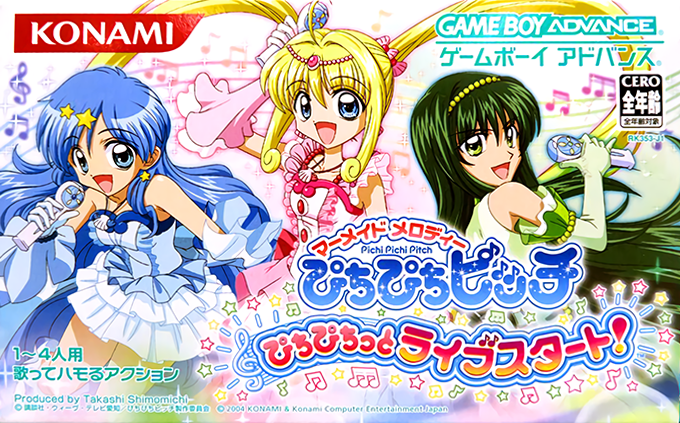
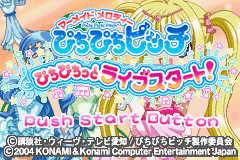
Mermaid Melody: Pichi Pichi Pitch, Pichi Pichitto Live Start! for Game Boy Advance is a Japanese rhythm-action game released by Konami on March 18, 2004. Developed by Konami Computer Entertainment Japan, it adapts the television anime’s musical battles rather than retelling the property as a conventional adventure. The game puts the singing mermaid princesses at the center of short, score-driven performances, making its songs, character presentation, and colorful anime material the foundation of the experience. It was the third Game Boy Advance game based on Mermaid Melody: Pichi Pichi Pitch, following the series’ earlier rhythm game and the board-game-style Pichi Pichi Party.
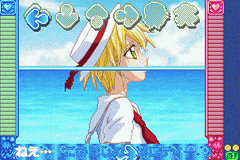
The basic play is built around incoming notes and timed button presses. Directional inputs handle the vocal part while the A and B buttons cover rhythm inputs, so a song asks the player to follow separate streams of cues as it progresses. Three difficulty settings accommodate different levels of familiarity with timing games, and additional note-layout options can alter how patterns are presented. A performance always plays through to the end rather than stopping at a failure state, keeping the focus on finishing a live number and building a score.
Pichi Pichitto Live Start! makes the connection between play and singing unusually direct. The recorded accompaniment and vocals are handled separately, allowing missed inputs to disrupt the vocal performance: notes can slip out of tune, arrive late, or leave gaps in the lyrics. That design turns accuracy into an audible part of the game’s premise. The soundtrack draws from the anime’s music, including solo and group material associated with Lucia, Hanon, Rina, and other performers, while the program also includes songs connected with Hippo, the Black Beauty Sisters, and Karen.
Several modes extend the rhythm-game core. Solo options include a free-play-style mode, a longer challenge built around meeting score goals, and an anime-oriented mode that presents condensed story material before its musical confrontations. Saved performances can be viewed again with live-style visuals. Coins earned through play feed a collection area with small games and unlockables, including character-related items to display. Another extra lets players enter lyrics for Hippo to sing over one of several nursery-song melodies, and a personalisation section changes elements such as the interface background and profile character.
Multiplayer support lets up to four players use the Game Boy Advance link feature. Cooperative modes ask the group to play together, while a competitive option lets successful inputs build resources for sending hindrances to opponents. In its original Japanese release, Mermaid Melody: Pichi Pichi Pitch, Pichi Pichitto Live Start! combined licensed anime storytelling with a full-featured portable music game: story recaps, transformations, song performances, collectibles, custom extras, and both solo and linked play all revolve around the franchise’s singing heroines.
Gallery

Details
- Publisher
- Konami
- Genre
- Rhythm Game
- Players
- 1-4
- Release Date
- March 18, 2004
- System
- GBA