About
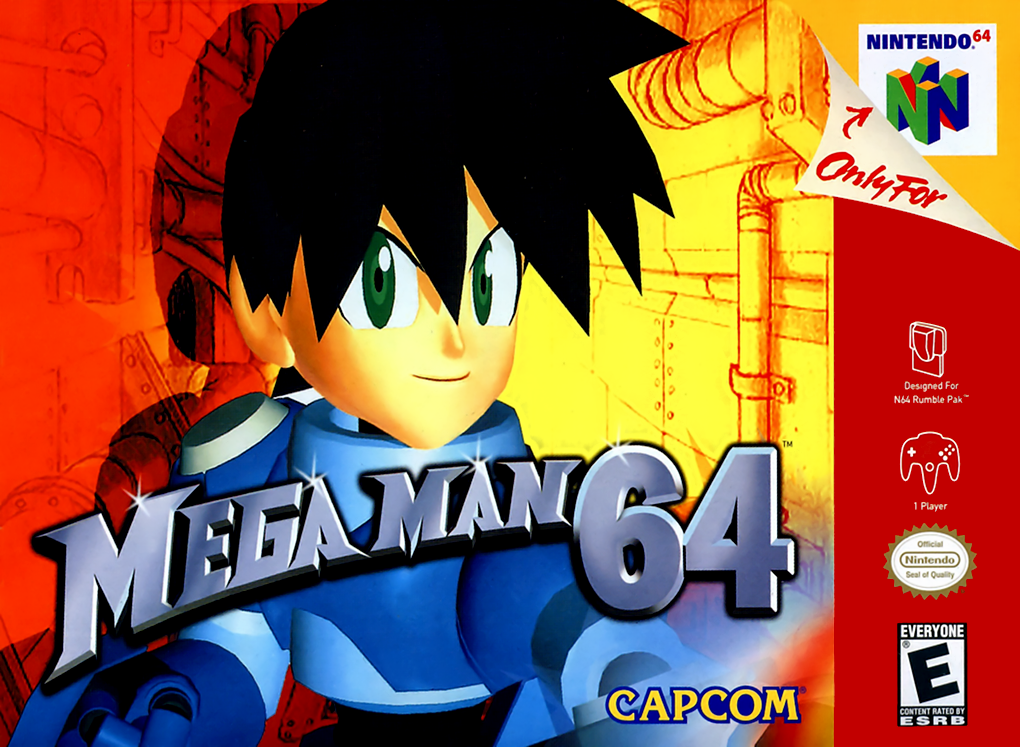
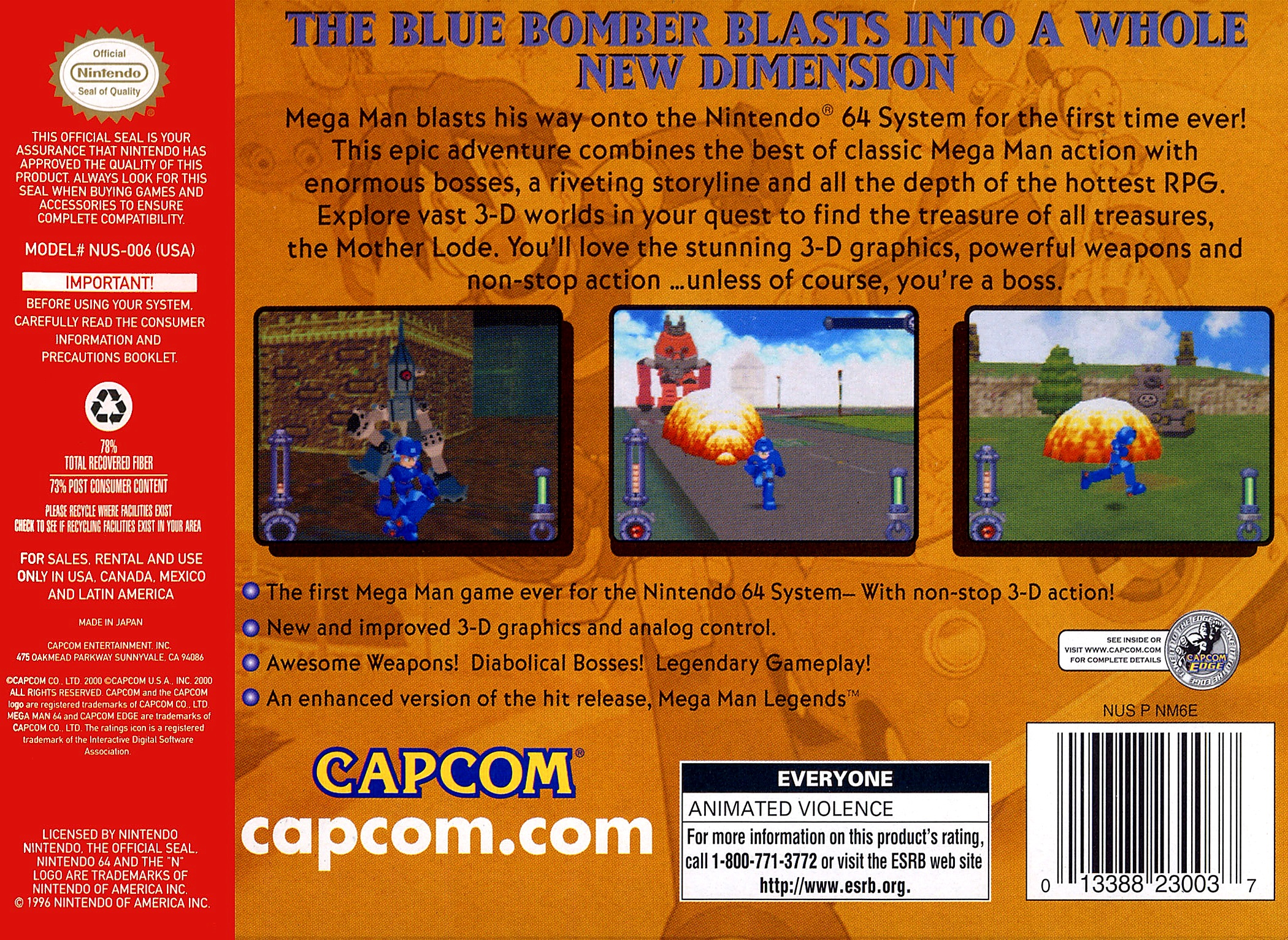
Mega Man 64 is Capcom’s Nintendo 64 action-adventure game, released in North America in January 2001. It is the N64 version of Mega Man Legends, the first entry in the Mega Man Legends sub-series, rather than a traditional side-scrolling Mega Man installment. The game follows Mega Man Volnutt, a young Digger who searches ancient ruins for valuable energy sources, and places that familiar hero name in a distinct 3D world of towns, ruins, mechanical enemies, and story-driven exploration.
The adventure begins when Mega Man and his companions are stranded on Kattelox Island after their airship, the Flutter, crashes. Roll Caskett, the group’s Spotter and mechanic, works with her grandfather Barrel and the mysterious Data while Mega Man investigates the island. Their immediate need for parts soon becomes a larger mission involving the Mother Lode, a legendary treasure, and the Bonne family of pirates, whose repeated attacks bring giant machines and boss battles to Kattelox City.
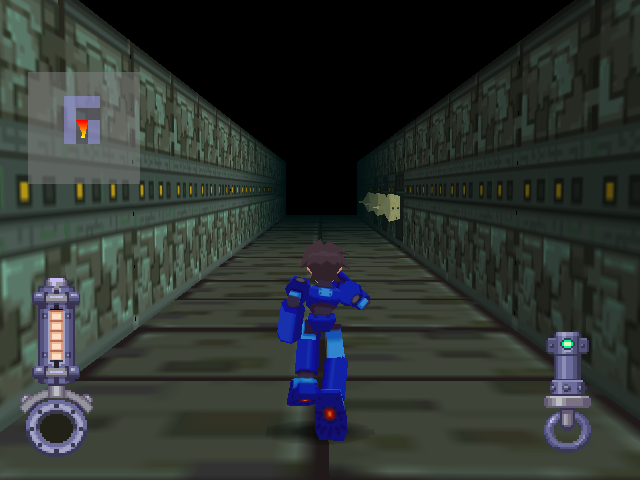
Mega Man 64 is played from a third-person perspective. Players guide Mega Man through streets, caverns, ruins, and dungeons, using the Nintendo 64 Control Stick to move and turn, jumping with the A Button, and firing the Buster Gun with B. The game includes manual free-look controls, strafing, a lock-on option for weapons, and short tutorials that introduce its basics. The result is a style built around moving carefully through three-dimensional spaces while keeping enemy robots in sight.
Ruins are central to the game’s progression. Their passages are defended by Reaverbots and conceal refractors, artifacts that power the world’s machinery. Smaller Refractor Shards collected from defeated enemies become Zenny, the currency used for supplies and improvements. Shops, healing items, armor, helmets, and the Life Shield help Mega Man endure longer expeditions, while maps and conversation with the people of Kattelox make the island feel like more than a sequence of combat arenas.
The Buster Gun supplies Mega Man 64 with a connection to the series’ action roots, but its customization changes how it performs. Buster Parts can alter attack power, firing speed, range, and energy capacity. Some parts are found or bought, while others can be made by Roll from objects recovered in ruins. Mega Man can also use special weapons, which are developed and upgraded through Roll’s work and Zenny investment. Choosing equipment is therefore part of preparing for a dungeon or an encounter with one of the Bonnes’ larger machines.
Kattelox Island provides the game with a hub-like structure. As the Flutter is repaired and new areas become available, Mega Man revisits locations, explores deeper ruins, and follows leads tied to the island’s secret. The supporting cast is important to the journey: Roll offers technical support, Data can restore Mega Man’s health, and the colorful Bonne family—Teisel, Tron, Bon Bonne, and their Servbots—supply much of the conflict. Their battles mix the game’s on-foot shooting with memorable oversized robot confrontations.
Although its protagonist carries the Mega Man name, Mega Man 64 is deliberately a different branch of the franchise. Capcom’s Legends setting is a water-covered world where isolated islands and buried technology shape everyday life, and it tells a self-contained adventure about digging, discovery, and protecting Kattelox. The Nintendo 64 release brought that story to cartridge under a distinct North American title, giving N64 players an action-focused RPG adventure with exploration, character scenes, equipment growth, and 3D combat rather than a stage-select platformer.
For players exploring the Nintendo 64 library, Mega Man 64 stands as a late-system example of Capcom adapting a PlayStation-era 3D adventure for Nintendo’s console. Its importance lies in how it reinterprets the Mega Man formula: Mega Man Volnutt still shoots, upgrades weapons, and faces formidable machines, but the larger goal is to uncover the mystery beneath an island through travel, dungeons, and the people encountered along the way. It also establishes the world and characters continued by The Misadventures of Tron Bonne and Mega Man Legends 2.
Gallery
Details
- Developer
- Capcom
- Publisher
- Capcom
- Genre
- Action-Adventure
- Players
- 1
- Release Date
- January 10, 2001
- System
- N64