About
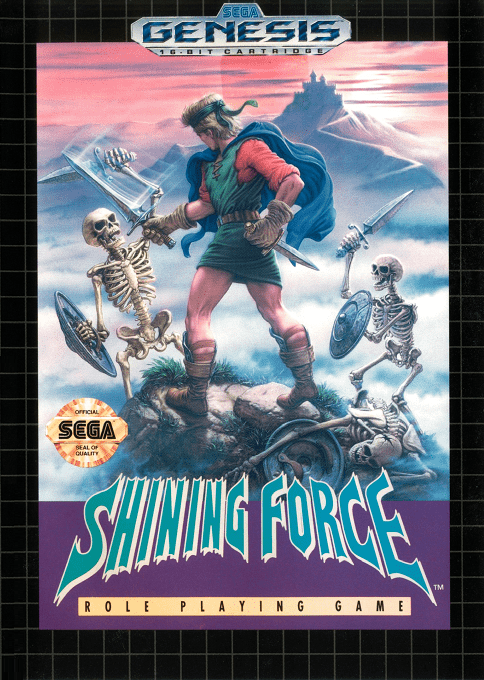
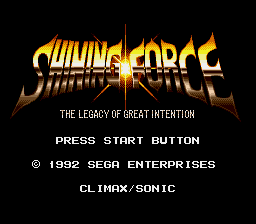
Shining Force for the Sega Genesis/Mega Drive is a turn-based tactical role-playing game published by Sega. Known in Japan as Shining Force: Kamigami no Isan and often subtitled The Legacy of Great Intention, it arrived in Japan in 1992 and reached North America in 1993. Climax Entertainment and Sonic! Software Planning created this fantasy adventure as a follow-up to Shining in the Darkness, exchanging that game’s first-person dungeon exploration for a journey built around commanding a growing party on battlefield maps.
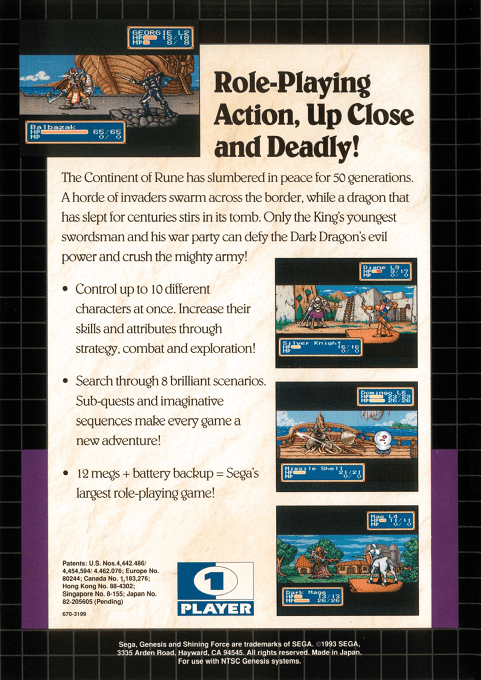
The story takes place in Rune, a land that enjoyed a millennium of peace after warriors sealed the fearsome Dark Dragon away. That peace is threatened when the kingdom of Runefaust attacks its neighbors in pursuit of the ancient evil’s return. Players lead Max, a young hero from Guardiana, as he gathers companions and confronts Runefaust’s commanders. The campaign moves through towns, castles, caves, and other locations while gradually revealing the conflict surrounding Dark Dragon and the forces behind it.
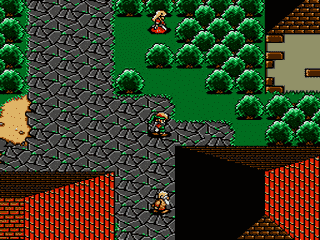
Outside combat, Max walks through settlements and other areas in a traditional role-playing style. Talking to residents can advance the story or uncover useful information, while shops provide weapons, armor, healing items, and other supplies. Treasure and recruitable allies are found along the way, and headquarters lets the player organize the active party. This quieter exploration phase gives the adventure room for preparation and character encounters between its tactical set pieces.
Battles unfold on square-grid maps and alternate turns between allied and enemy units. Each character has a movement allowance and can normally use one action after moving, such as attacking, casting magic, using an item, or searching. Positioning matters because terrain and enemy range affect how safely the Force can advance. Combat goals vary from defeating every foe or a leader to reaching a particular destination, while losing Max ends the current attempt. Experience earned during a battle is retained even if the party must withdraw and try again, making repeated encounters part of the game’s progression rather than a conventional permanent failure state.
The army is made up of individual characters rather than interchangeable troops, with different classes, equipment options, statistics, and magical abilities. Fighters, spellcasters, healers, archers, and unusual non-human allies make party selection a practical concern, since only a limited group can enter each battle. Characters gain experience for actions such as striking enemies and healing allies, then level up and improve. Once a character has reached the appropriate point in development, promotion opens a more advanced class, changing the tools available for later battles.
A distinctive presentation choice is the shift from the overhead tactical map to animated close-up scenes for attacks and spells. The developers used those sequences to give each encounter greater character while retaining the measured, turn-based structure of the map. Shining Force combines an accessible fantasy quest with a party-command format, and its events take place earlier in the Shining world than Shining in the Darkness. The original game later appeared in several compilations and digital releases, while the 2004 Game Boy Advance remake, Shining Force: Resurrection of the Dark Dragon, expanded and altered the original rather than replacing the Genesis/Mega Drive version described here.
Gallery
Details
- Developer
- Climax
- Publisher
- SEGA
- Genre
- Tactical RPG
- Players
- 1
- Release Date
- January 1, 1993
- System
- Genesis/Megadrive