About
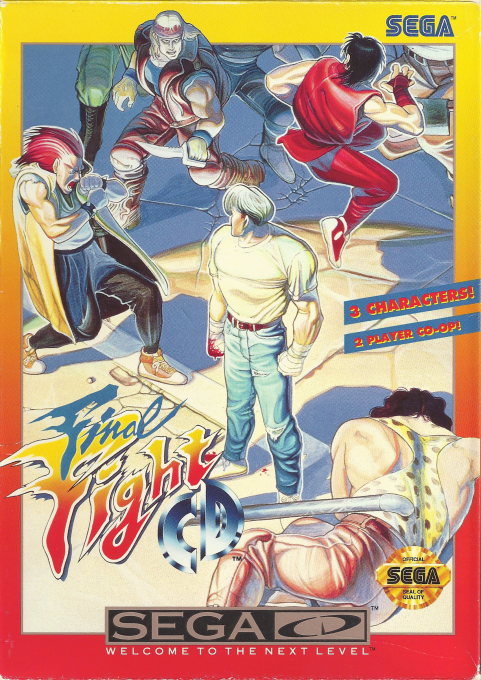
Final Fight CD is Sega’s 1993 Sega CD/Mega-CD conversion of Capcom’s 1989 arcade beat ’em up, developed by Capcom and ported by A Wave under licence for Sega. The action returns to Metro City, where newly elected mayor and former wrestler Mike Haggar refuses a criminal gang’s demand that he leave it alone. When Mad Gear abducts his daughter Jessica, Haggar joins Jessica’s boyfriend Cody Travers and the ninja Guy on a street-by-street rescue mission. Built around the arcade game’s compact, forceful brawling, this Sega CD edition brings the three-hero campaign to Sega’s add-on with a presentation tailored to the CD format.
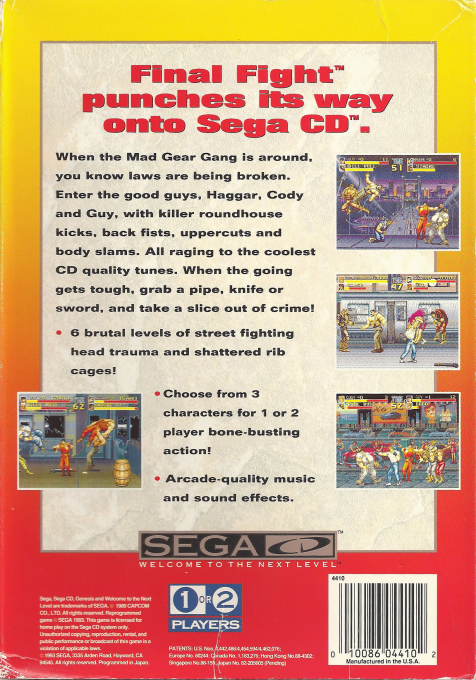
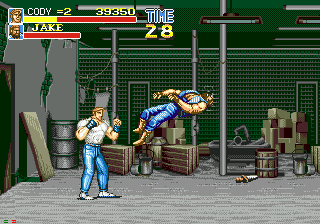
Final Fight CD plays as a side-scrolling beat ’em up in which one or two players select Haggar, Cody, or Guy and push through hostile sections of Metro City. Each fighter has a different style and feel: Haggar relies on wrestling power, Cody is a direct street brawler, and Guy is the more agile martial artist. Movement and combat use the directional controls with attack and jump buttons. Basic strikes can develop into combinations, while jumping attacks, grapples, throws, and a crowd-clearing special move give players ways to manage groups closing in from either side.
The campaign runs through the gang-controlled city toward a confrontation with Mad Gear leader Belger. Encounters mix ordinary thugs with larger or more specialized enemies, and breakable scenery can reveal food, score items, and temporary weapons such as pipes, knives, and swords. Weapons add useful reach or damage but do not last indefinitely, so positioning and quick decisions remain important. Health is limited, stages are timed, and bosses punctuate the route, making cooperative play especially useful when the screen becomes crowded.
As a Sega CD version, Final Fight CD restores major parts of the arcade design that were absent from the earlier Super NES conversion. It includes all three original playable characters, the Industrial Area stage, and simultaneous two-player play. The port still reduces the number of enemies that can appear at once compared with Capcom’s CPS arcade hardware, but it preserves the six-stage structure, the bonus rounds, and the principal roster of heroes and opponents. The result is not a new Final Fight sequel, remake, or compilation; it is a home conversion of the original Metro City adventure.
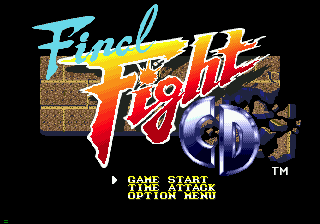
The disc release also has features distinctive to this edition. Its opening and ending sequences include voice acting, and its soundtrack uses arranged music rather than simply reproducing the arcade audio. A separate Time Attack mode offers a focused challenge outside the main rescue story. These additions made use of the Sega CD’s storage capacity while the underlying play remains rooted in the fast, close-range arcade brawler design that defined Final Fight.
Final Fight CD also reflects the regional changes common to home releases of the era. The Japanese release arrived in April 1993, with North American and other regional releases following that year. Western versions altered some names, visuals, and content from the Japanese and arcade presentations, so details such as certain enemy depictions and incidental references can vary by region. For players exploring the Final Fight series on Sega hardware, this edition is notable for combining the full three-character lineup and two-player action with its own voiced scenes, arranged soundtrack, and Time Attack mode.
Gallery
Details
- Developer
- Capcom
- Publisher
- SEGA
- Genre
- Beat 'em Up
- Players
- 1-2
- Release Date
- January 1, 1992
- System
- Sega CD