About
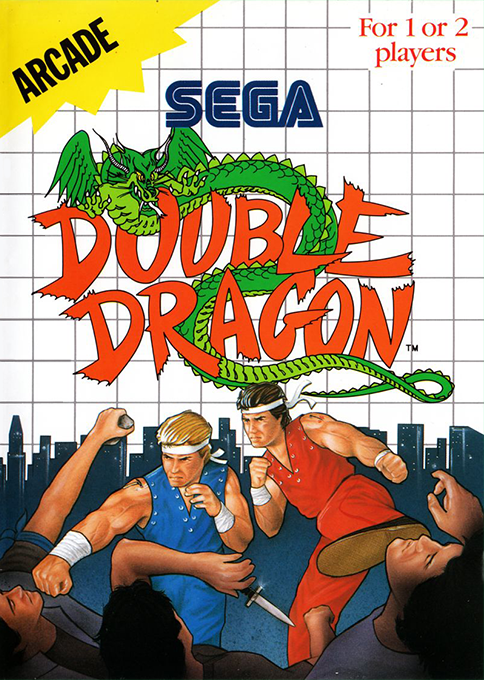
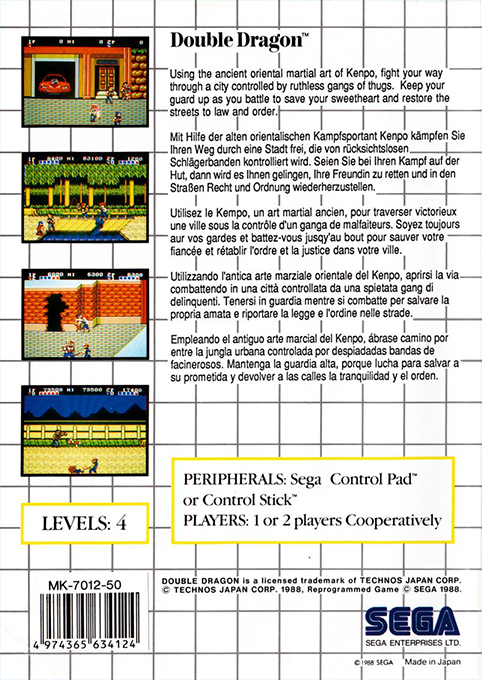
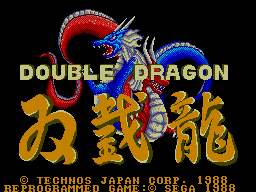
Double Dragon for the Sega Master System is Sega’s 1988 home conversion of the landmark 1987 arcade beat ’em up. Based on Technōs Japan’s street-fighting game and co-developed for Sega’s 8-bit system with Arc System Works, it puts the Lee brothers into a side-scrolling rescue mission against the Black Warriors. This Master System release is a distinct console version of the original rather than the NES interpretation, and it keeps the arcade game’s two-player cooperative focus.
Players guide martial artists Billy and Jimmy Lee through hostile city locations in pursuit of the gang that has abducted Marian. The action moves from the opening slum through an industrial area and wooded territory before the brothers confront the Black Warriors in their stronghold. A single player can take on the campaign alone, while two local players can fight alongside each other as the two brothers. Reaching the end together leads to the game’s unusual final contest, in which the partners must face one another after the gang’s leader has been defeated.
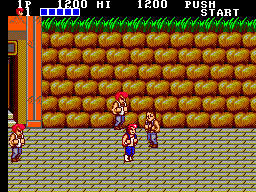
Combat is built around positioning on a scrolling playfield and a growing set of close-range martial-arts attacks. Punches, kicks, jumps, throws, and the powerful elbow strike give each encounter a different rhythm, since enemies can approach from either side and often press the player with numbers. Familiar Black Warriors such as Williams, Roper, Linda, Abobo, and the martial artist Jeff stand between the heroes and the final boss, Willy. Health, lives, and stage time limits make careful movement and recovery as important as landing attacks.
Disarming opponents adds another layer to the brawling. Enemies may carry items including bats, whips, knives, or dynamite, and a dropped weapon can be picked up and turned back on the gang. The surroundings also contain hazards and obstacles, so advancing is not simply a matter of emptying one static screen. The Master System version limits weapons to one displayed item at a time, but its stages follow the arcade game’s broad route more closely than some other 8-bit adaptations. It can also show up to three different enemies at once, helping preserve the pressure of the source game on Sega’s hardware.
The Master System port stands apart in several ways. Its brighter presentation, co-op play, and final brother-versus-brother showdown preserve key elements of the arcade design that were changed in the contemporary NES release. Some details were nevertheless adapted for the platform: certain ladders are absent, and the mohawked Abobo variant does not appear, with palette variations taking its place in the relevant boss encounters. Japanese hardware with integrated FM audio, as well as the optional FM Sound Unit for the Sega Mark III, can use the version’s enhanced sound support.
Double Dragon arrived during the period when the original arcade hit helped establish the modern side-scrolling beat ’em up. The Master System edition gave Sega owners a two-player home version of that formula in 1988, shortly after the game’s major arcade success. Its combination of cooperative street fighting, enemy weapons, long connected stages, and a competitive final twist makes Double Dragon on Master System a notable early console entry in a series that continued with sequels, spin-offs, and later revivals.
Gallery
Details
- Developer
- SEGA
- Publisher
- SEGA
- Genre
- Beat 'em Up
- Players
- 1-2
- Release Date
- January 1, 1988
- System
- Master System