About
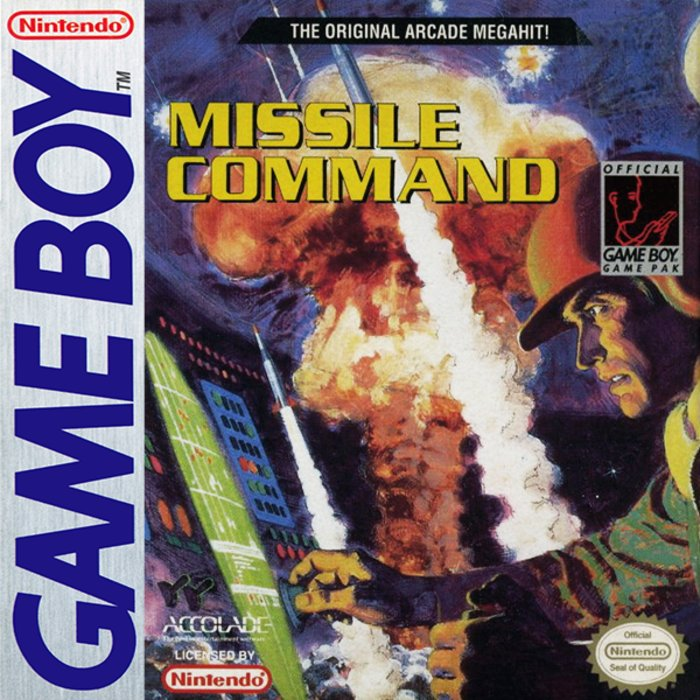
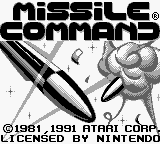
Missile Command for Game Boy Color is a 1999 handheld action game published by Hasbro Interactive, adapting Atari’s Cold War-era arcade classic for Nintendo’s color portable. Rather than carrying over the arcade game’s unnamed missile attack literally, this version frames its crisis as an alien invasion: scouts from the Orion Star System prepare an assault on Earth, and hostile warheads descend on major cities. The mission is immediate and score-driven—keep each city standing for as long as possible while an increasingly demanding series of attacks fills the sky.
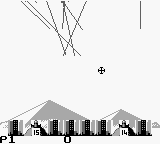
Each battle is viewed from above the threatened city. Players move a targeting cursor over incoming projectiles and launch defensive missiles to meet them. A shot does not need to hit an enemy directly: its blast expands into a temporary cloud, so careful placement can catch several threats as they pass through. This makes timing, lead aiming, and ammunition management central to play. Defensive shots are limited, while a missed enemy missile can strike the city below, so a hurried response may protect one target at the cost of the next.
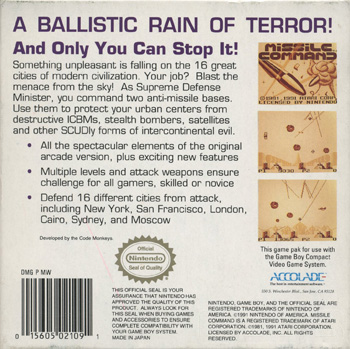
The Game Boy Color version turns the familiar premise into a tour of sixteen population centers. Its manual specifically places Cairo, New York, and Paris among the cities under attack, with location-themed scenes rewarding a successful defense. Surviving a city’s waves is therefore about more than keeping a score alive; it advances the player to another setting and another barrage. As in the original concept, the pressure comes from monitoring several descending paths at once and choosing which dangers can be eliminated efficiently before they reach the ground.
Missile Command supports a solo game and an alternating two-player mode, allowing players to take turns defending the same global targets. It was also released in a Game Boy Color Rumble Pak cartridge. With a AAA battery installed in the pack, impacts and explosions trigger vibration feedback; the game itself remains playable on a Game Boy Color without the battery, but the rumble effect is unavailable. The option can be switched on or off from the pause screen, making the cartridge’s physical feedback a notable feature of this particular release.
This handheld edition should not be confused with the separate 1999 Windows and PlayStation Missile Command revival, a 3D remake developed by Meyer/Glass Interactive. The Game Boy Color game keeps its own compact, fixed-screen interpretation of the series, concentrating on cursor-based defense and city-by-city survival rather than that version’s polygonal presentation. Its official instruction book credits Morning Star Multimedia with the adaptation, while Atari Interactive is identified as the owner of the Missile Command property.
The game belongs to a long-running line of Missile Command conversions that began after Atari’s 1980 arcade release. On Game Boy Color, its color display makes the paths of enemy fire, the defensive cursor, and expanding explosions easier to distinguish within the portable screen. By retaining the original’s concise defensive loop while adding a worldwide alien-attack scenario, alternating play, city scenes, and optional Rumble Pak feedback, Missile Command offers a late-1990s Game Boy Color take on one of Atari’s best-known arcade designs.
Gallery
Details
- Developer
- Meyer Glass Interactive
- Publisher
- Hasbro Interactive
- Genre
- Shoot 'em Up
- Players
- 1-2
- Release Date
- January 1, 1999
- System
- GB