About
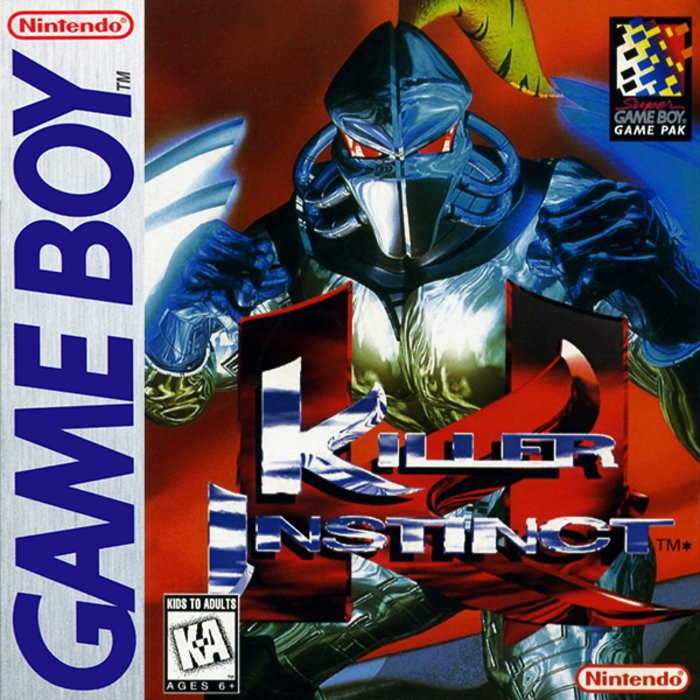
Killer Instinct for Game Boy brings Rare’s tournament fighter to Nintendo’s original handheld in 1995, published by Nintendo. It is a portable version of the 1994 arcade game rather than a separate entry, translating its science-fiction fighting tournament, distinctive fighters and combo-driven approach to the Game Boy’s monochrome screen and two-button controls. The setting is a near-future world ruled in part by Ultratech, the powerful corporation behind the Killer Instinct tournament. Competitors arrive for sharply different reasons, from personal ambitions to conflicts tied to the company and its experiments.
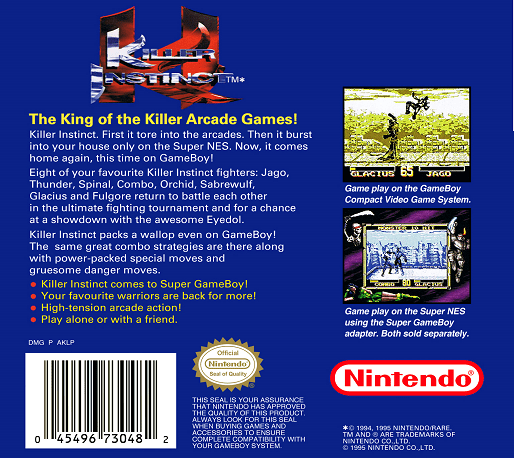
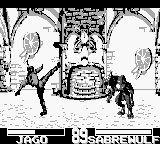
The action is built around head-to-head bouts between large, exaggerated combatants. Players select from fighters including the martial artist Jago, agent Black Orchid, alien Glacius, cybernetic Fulgore, boxer T.J. Combo, Chief Thunder, Sabrewulf and the undead Spinal. Each has an individual selection of punches, kicks, throws and special attacks, so learning a character means recognizing both their movement options and the sequences that lead into bigger attacks. The Game Boy version also retains Eyedol as the formidable opponent at the end of the single-player challenge.
Matches depart from the best-of-three-round structure common to many fighting games of the era. Instead, each side begins with two connected health bars, and victory comes from emptying the opponent’s full supply. That rule makes momentum important: a fighter who gains an opening can use it to start a chain, while the defender looks for a chance to regain space and retaliate. The game’s identity rests on its combinations, with attacks linked into longer strings and with the possibility of interrupting an opponent’s assault through a correctly timed combo breaker.
Killer Instinct Game Boy adapts that system to the hardware’s directional pad and A and B buttons. Its moves and inputs are necessarily streamlined, but bouts still reward a mix of basic strikes, special techniques and follow-up hits rather than random button presses alone. The series’ dramatic finishing style also remains part of the presentation, giving a decisive end to a hard-fought match. For solo play, the game’s tournament progression sends the chosen fighter through the roster toward Ultratech’s final threat, offering a reason to revisit it with different characters.
Rare’s original game had been designed for arcades with elaborate pre-rendered imagery and a much larger audiovisual presentation. The Game Boy conversion therefore makes clear platform-specific compromises: its visuals are reshaped for the handheld display, and Cinder and Riptor do not appear in its playable lineup. Those omissions make this release a compact interpretation of Killer Instinct rather than a one-to-one arcade conversion, but its remaining cast preserves the unusual mix of human champions, monsters, machines and otherworldly challengers that defined the first game.
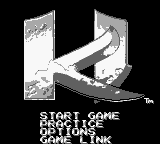
The cartridge also supports competitive play beyond the computer-controlled tournament. Two players can connect compatible Game Boys with a Game Link cable for direct matches, turning its roster knowledge and combo timing into a portable contest. Used with the Super Game Boy accessory, it can also display added color treatment on a television. As the handheld branch of the original Killer Instinct’s 1995 console releases, it captures the central appeal of Rare’s fighter: a fast duel system in which character choice, attack chains and defensive interruption matter as much as raw reflexes.
Gallery
Details
- Developer
- Rareware
- Publisher
- Nintendo
- Genre
- Fighting
- Players
- 1-2
- Release Date
- November 2, 1995
- System
- GB