About
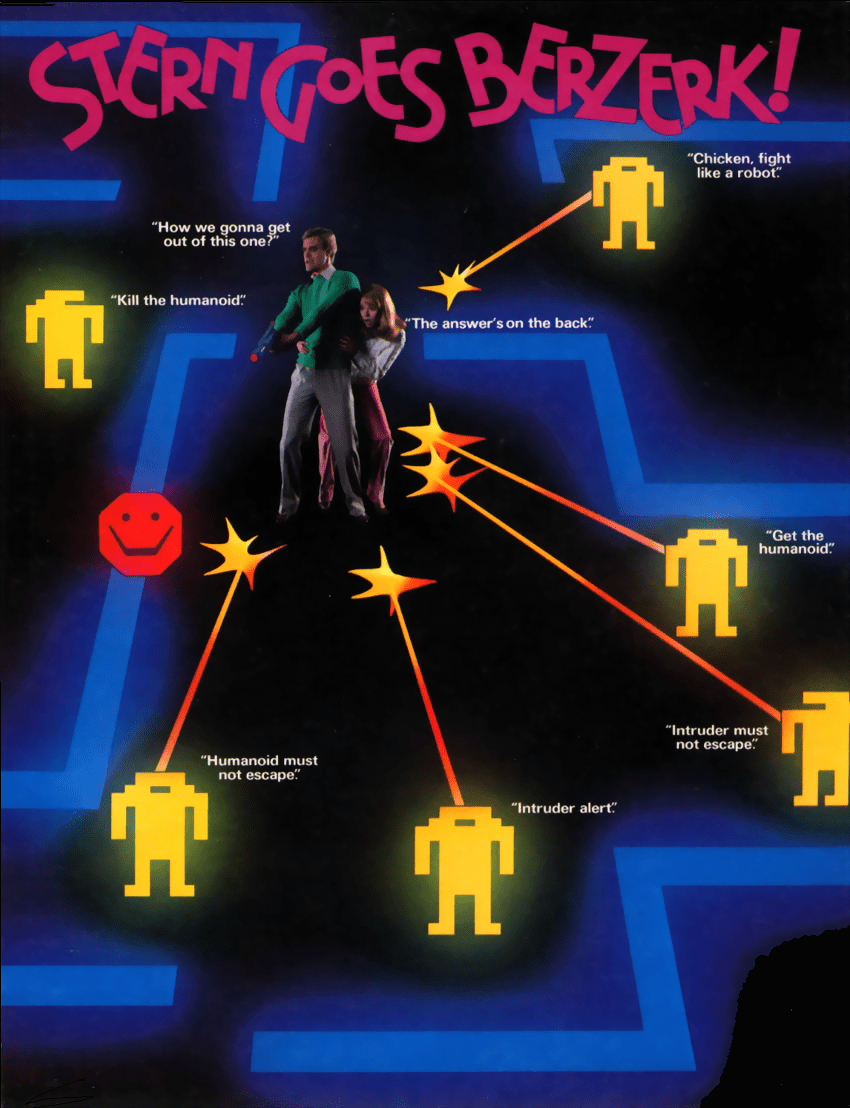
Berzerk (set 2) is an arcade maze shooter from Stern Electronics, released in 1980 during the rapid rise of coin-operated video games. Designed by Alan McNeil, it places a lone humanoid intruder inside a hostile electronic complex where armed robots occupy every room. This set is a revision of the original Berzerk arcade game, preserving the tense room-to-room escape format, its distinctive robotic speech, and the relentless pursuit that made the cabinet a memorable fixture of the era.
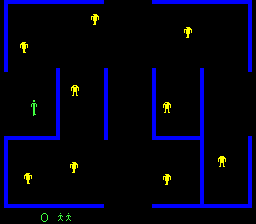
Each screen is a single enclosed maze drawn with luminous walls and openings around its edges. The player guides the humanoid with an eight-way joystick and uses a separate fire button to shoot in the direction of movement. Robots patrol the passages, advance on the player, and fire lasers of their own. Contact with a robot, its shot, or an electrified maze wall costs a life, so every room becomes a quick exercise in reading corridors, keeping space between threats, and choosing an exit before the situation collapses.
The immediate objective is simple: survive the maze and leave through an opening on another side. Destroying robots earns points, while clearing every robot from a room grants a bonus. That bonus creates a useful risk-and-reward decision. A player can flee an increasingly dangerous room to stay alive, or remain to remove the last robots and improve the score. Robots can also eliminate one another by colliding, striking walls, or being caught in stray laser fire, so disciplined movement can sometimes turn the maze's crowding to the player's advantage.
Berzerk's defining complication is Evil Otto, a smiling face that eventually enters from the direction the intruder came. Otto cannot be shot and moves through maze walls, making him a pressure mechanic rather than another enemy to defeat. He stops players from waiting safely or methodically farming a room, and his arrival changes the priority from scoring to escape. The contrast between the cheerful-looking pursuer and the game's lethal maze gives Berzerk an unusual, darkly comic personality.
The arcade cabinet also stands out for its synthesized voice effects. Robotic warnings, taunts, and alerts accompany play and attract attention from the surrounding arcade, reinforcing the fiction of a machine-run facility hunting a human target. Its speech was an especially conspicuous feature for a 1980 arcade release. The game supports one player at a time, with two-player play alternating between turns, and operators could configure certain settings such as extra-life thresholds.
The rooms are generated from a large selection of maze patterns, while escalating robot behavior keeps later play from feeling like a fixed sequence of stages. Early encounters teach the basic danger of walls and robot shots; higher-pressure rooms require faster choices about when to fire, when to retreat, and when to abandon a bonus opportunity. The game’s control arrangement matters as well: because firing and movement share the joystick direction, an attempted shot can demand a brief pause in travel, leaving the player exposed if it is timed carelessly.
Berzerk became one of Stern Electronics' notable arcade releases and was followed by the more elaborate sequel Frenzy in 1982. It later reached home systems including the Atari 2600, Vectrex, and Atari 5200, although those versions varied in their presentation and features. The original arcade game remains closely associated with the early-1980s maze-and-shooter style, its threatening robots, and Evil Otto’s unmistakable chase. For players exploring classic arcade action, Berzerk offers a compact scoring game built around quick decisions, spatial awareness, and the constant knowledge that the exit is never entirely safe.
Gallery

Details
- Developer
- Stern
- Publisher
- Stern
- Genre
- Maze
- Players
- 1-2
- Release Date
- January 1, 1980
- System
- Arcade