About
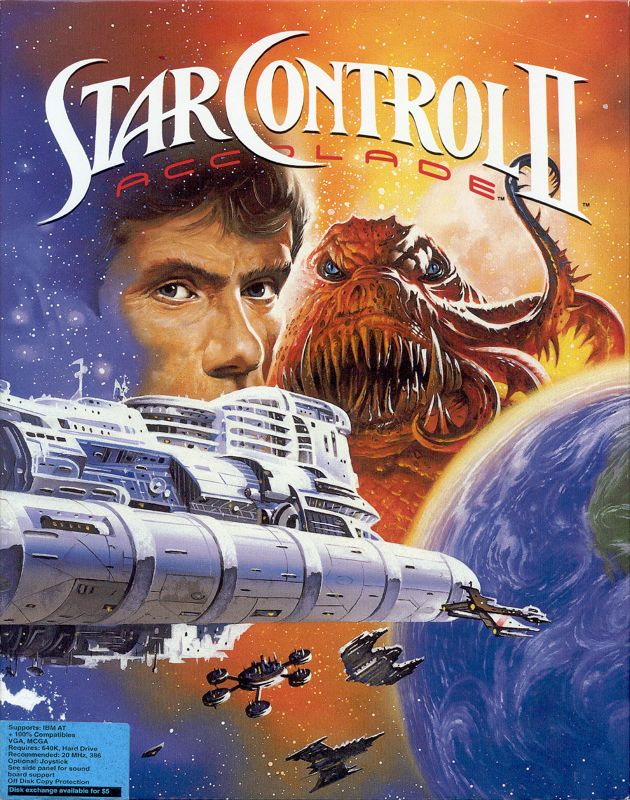
Star Control II for DOS is a 1992 science-fiction adventure from Toys for Bob, designed by Paul Reiche III and programmed by Fred Ford, and published by Accolade. A direct sequel to 1990's Star Control, it shifts the series from a largely competitive starship game into a single-player, galaxy-spanning mission of exploration, negotiation, resource gathering, and tactical combat. The DOS release is also known by the subtitle The Ur-Quan Masters, a reference to the antagonists at the center of its conflict.
The story begins after the Alliance of Free Stars has been defeated. The player commands a powerful but unfinished Precursor vessel discovered by a stranded human expedition, then returns toward Sol to find Earth sealed beneath an Ur-Quan slave shield. From the human Starbase orbiting the planet, the Captain must learn what has happened to the old allies, uncover the history of the vanished Precursors, and assemble enough support to challenge the Hierarchy. The wider crisis is complicated by the conflict between the enslaving Kzer-Za Ur-Quan and the Kohr-Ah, their ruthless relatives who seek to eliminate other life rather than subjugate it.
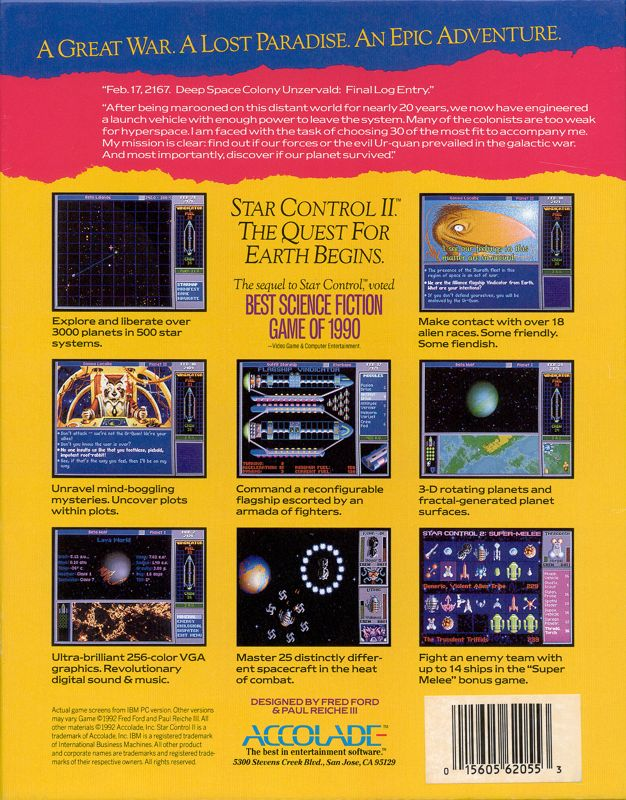
Most of Star Control II takes place across a large navigable star map. The player pilots the flagship between systems, spending fuel while moving through hyperspace and normal space, then explores individual systems from a top-down view. Planets and moons can be visited with a lander, which collects minerals, biological specimens, artifacts, and plot-critical discoveries. Surface expeditions are not purely a scavenging exercise: hazardous worlds can contain earthquakes, lightning, weather, lava, or hostile creatures, so choosing which locations are worth the risk becomes part of managing the voyage.
The Starbase provides the practical backbone for that journey. Mined resources are converted into currency for fuel, crew, landers, and modules that improve the flagship's weapons, defenses, engines, turning, storage, and utility. Crew members effectively sustain a ship in battle, while allied species can contribute their own vessels to the fleet. This creates a flexible loop in which expeditions fund upgrades, upgrades make dangerous space safer to investigate, and new discoveries open routes to allies, technologies, and story developments.
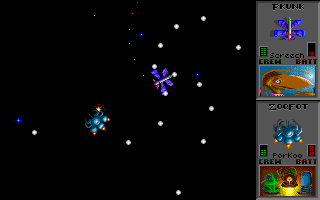
Conversations are as important as firepower. The galaxy's alien civilizations have distinct goals, territories, speech styles, and information to reveal, and dialogue choices can establish cooperation, provoke a fight, or expose a clue needed elsewhere. Many encounters are tied to specific places or events, rewarding careful listening and revisiting leads rather than a simple linear route. The game preserves the first Star Control's real-time, one-on-one battles: ships maneuver in an arena affected by a nearby planet's gravity, and every design has its own primary weapon and special ability. The separate Super Melee mode lets one or two players stage these ship matchups outside the campaign.
Its DOS presentation relies on keyboard control, VGA graphics, text dialogue, and tracker-style music rather than the voiced sequences later added to the 1994 3DO port by Crystal Dynamics. That distinction matters: the 3DO version supplied a CD-based audiovisual overhaul, and its code later formed the basis for the community-developed open-source project The Ur-Quan Masters, but neither replaces the original DOS edition represented here. Star Control II was followed by Star Control 3 in 1996, while its blend of open-ended travel, unusual alien societies, puzzle-like diplomacy, ship customization, and arcade space combat remains the defining shape of this installment.
Gallery
Details
- Developer
- Toys For Bob
- Publisher
- Accolade
- Genre
- Turn-Based Strategy
- Release Date
- November 30, 1992
- System
- DOS