About
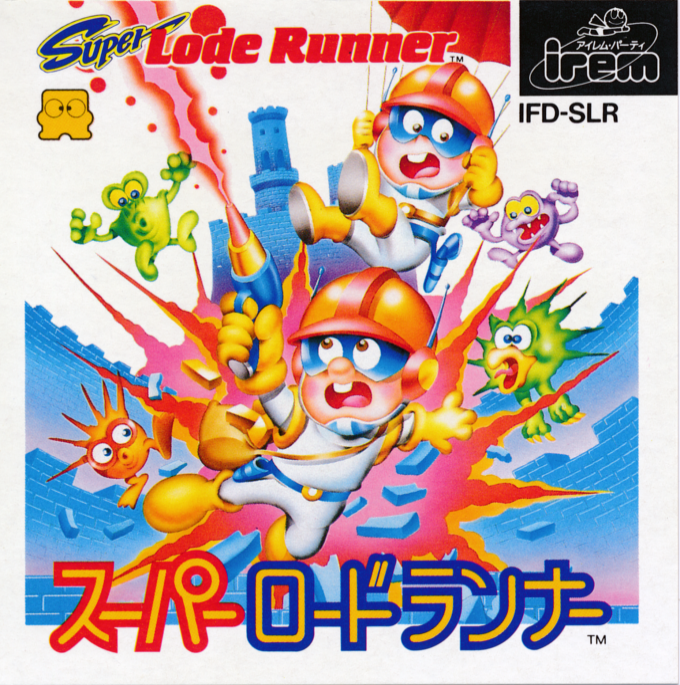
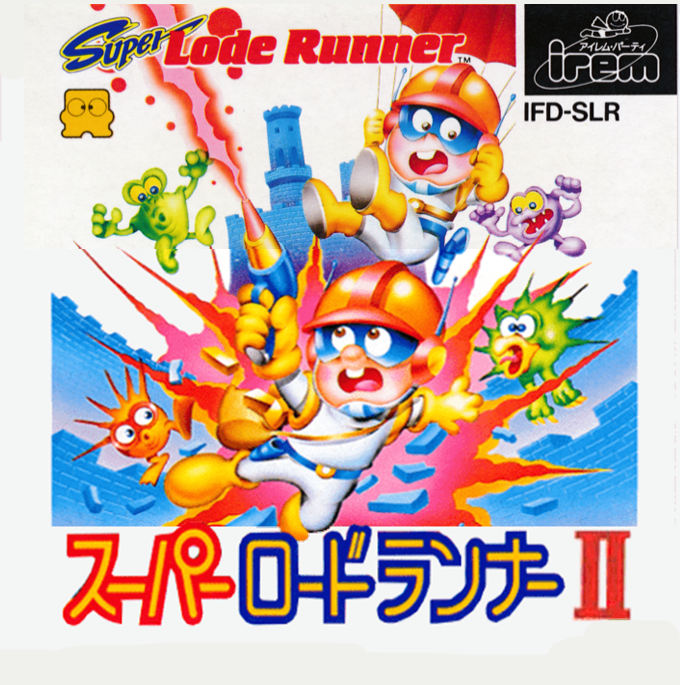
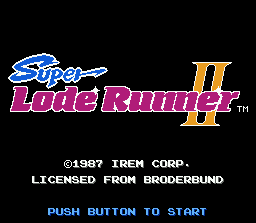
Super Lode Runner II is Irem's 1987 action-puzzle game for Nintendo's Japan-only Famicom Disk System. Released on August 25, 1987 as a Disk Writer title, it follows Super Lode Runner from earlier that year and continues Irem's adaptation of the Lode Runner formula for the home system. The game belongs to the long-running series begun by Doug Smith and Broderbund, but its stages and presentation come from Irem's Japanese arcade branch of the series. It was published in Japan by Irem and did not receive an overseas Famicom or NES release.
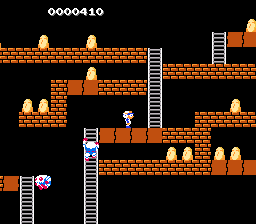
At its heart, Super Lode Runner II is a single-screen maze challenge built around collecting every gold bar while staying ahead of pursuing guards. A stage is assembled from brick floors, ladders, hanging bars and empty gaps. The runner can travel horizontally, climb or descend ladders, and cross the overhead bars, but cannot jump. Reaching all of the treasure makes an exit route available, so each screen becomes a compact route-planning problem as well as a race against the enemy patrols.
The defining tool is the ability to dig into breakable brick immediately to either side. A temporary hole can trap a guard, open a path to buried gold, or create a way down through the layout. It also creates danger for the player: the bricks restore themselves after a delay, and a poorly timed dig can leave the runner stranded or cut off from a necessary route. Guards can pick up gold while chasing the player and later drop it, turning their movement into another part of the puzzle. Success depends on reading the screen, choosing an order for the gold, and knowing when a quick escape matters more than a direct route.
Super Lode Runner II contains 30 stages designed for one player and 30 made for cooperative play. In the two-player mode, the runners share the same screen and must coordinate their movement and digging instead of merely competing for points. One player can create an opening or divert a guard while the other collects a difficult bar, though careless digging can disrupt a partner's path just as easily. The balance of solo and cooperative material distinguishes this follow-up from the first Super Lode Runner, which gave more of its stage selection to single-player play.
The game was built for the Famicom Disk System rather than as a cartridge release. That format supported its rewrite-only Japanese distribution and also fit the series' creative side: Super Lode Runner II includes a level editor, allowing players to make and save their own courses. This continues a tradition that has been closely associated with Lode Runner since the original computer game, where constructing a solvable layout is part of the appeal. The editor complements the carefully authored stages by letting players experiment with guard paths, gold placement, ladders and breakable terrain.
Irem's Super Lode Runner releases arrived after the company had produced several Japanese arcade Lode Runner games. The Famicom Disk System titles brought the arcade-influenced mechanics and cooperative option into a domestic format while reshaping the stage sets for home play. Super Lode Runner II therefore stands as a Japan-exclusive chapter in the series: a demanding late-1980s puzzle-platformer that preserves the simple visual language of ladders, gold and brick while asking players to solve every screen through timing, planning and precise digging.
Gallery

Details
- Developer
- Irem
- Publisher
- Irem
- Genre
- Platformer
- Players
- 1-2
- Release Date
- August 25, 1987
- System
- FDS
/Yume_Koujou_Doki_Doki_Panic.png)
/Metroid.png)