About
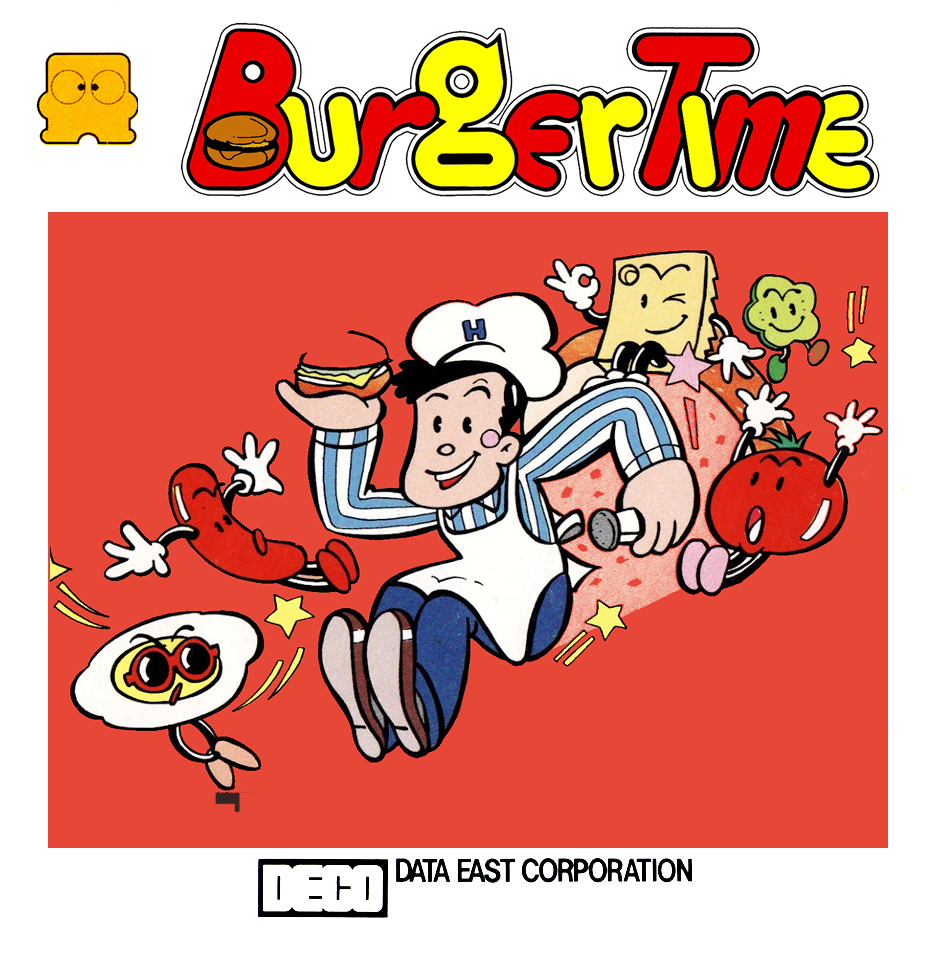
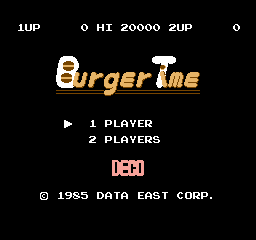
BurgerTime for the Famicom Disk System is Data East's Japanese 1988 Disk Writer release of its food-themed maze action game. It follows the home conversion lineage of the 1982 arcade hit, in which chef Peter Pepper must turn a towering network of platforms and ladders into a finished meal. Rather than fighting with conventional weapons, Peter builds hamburgers while dodging animated ingredients that have become his pursuers. The Disk System edition is a Japanese release of the established Famicom/NES-style conversion, published by Data East on September 23, 1988 after the title had already appeared on Famicom cartridge.
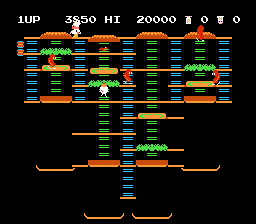
Each round places burger components such as buns, patties, lettuce, tomato, and cheese across several ledges above waiting plates. Peter moves along the platforms and climbs ladders, and walking over the full width of a component sends it down to the level below. The aim is to keep dropping every layer until the ingredients have been stacked into complete burgers on their plates. A falling piece can also knock lower components onward, so a carefully timed drop can advance several layers of a meal at once. Clearing the board means completing every burger, then moving on to another increasingly demanding kitchen layout.
The pressure comes from three roaming food foes: Mr. Hot Dog, Mr. Pickle, and Mr. Egg. Contact with a dangerous enemy costs Peter a life, making route planning as important as finishing ingredients. Falling food is both construction material and a trap; landing an ingredient on an opponent can stop the chase and score points, while enemies caught on top can be carried downward with it. That risk-and-reward choice gives BurgerTime its character: taking a longer ladder route may be safer, but a bold drop can remove a threat and open the board more quickly.
Peter also begins with a limited pepper supply. Using pepper sends a short cloud in the direction he faces, temporarily stunning an enemy directly ahead and allowing him to pass through a cramped corridor. Extra food items can appear during play, providing bonus points and replenishing pepper. Because pepper is finite and the pursuers become more troublesome as the layouts grow busier, it is best saved for escapes rather than used simply to clear a path. The simple directional controls and dedicated pepper action make the rules easy to grasp, yet spacing, timing, and awareness of every ladder determine how long a run lasts.
BurgerTime's appeal lies in the way its comic premise supports a precise arcade loop. Ingredients become moving terrain, opponents can be transformed into opportunities, and every partial burger changes the safest path across the screen. Later boards add denser arrangements, more pressure from the enemy foods, and situations where Peter can be boxed in unless he anticipates where an ingredient will fall. The result is a compact single-player challenge that rewards learning the layouts without losing the playful sight of a chef sprinting through a giant hamburger.
This Famicom Disk System release represents a later Japanese distribution of a game that had already traveled from Data East's DECO Cassette System arcade hardware to numerous home machines. The original Japanese arcade version was called Hamburger, while BurgerTime became the name used outside Japan and for later Japanese releases in the series. For players exploring the Disk System library, BurgerTime preserves the core goal that made the game recognizable across its ports: assemble the meals, manage the pepper, and stay one step ahead of the walking hot dogs, pickles, and eggs.
Gallery
Details
- Developer
- Data East
- Publisher
- Data East
- Genre
- Platformer
- Players
- 1-2
- Release Date
- September 23, 1988
- System
- FDS
/Electrician.png)
/Kalin_no_Tsurugi.png)
/Metroid.png)
/Yume_Koujou_Doki_Doki_Panic.png)